


Game Overview
The game contains a series of minigames that help students practice theory for Biology, Chemistry, Physics, and Math.
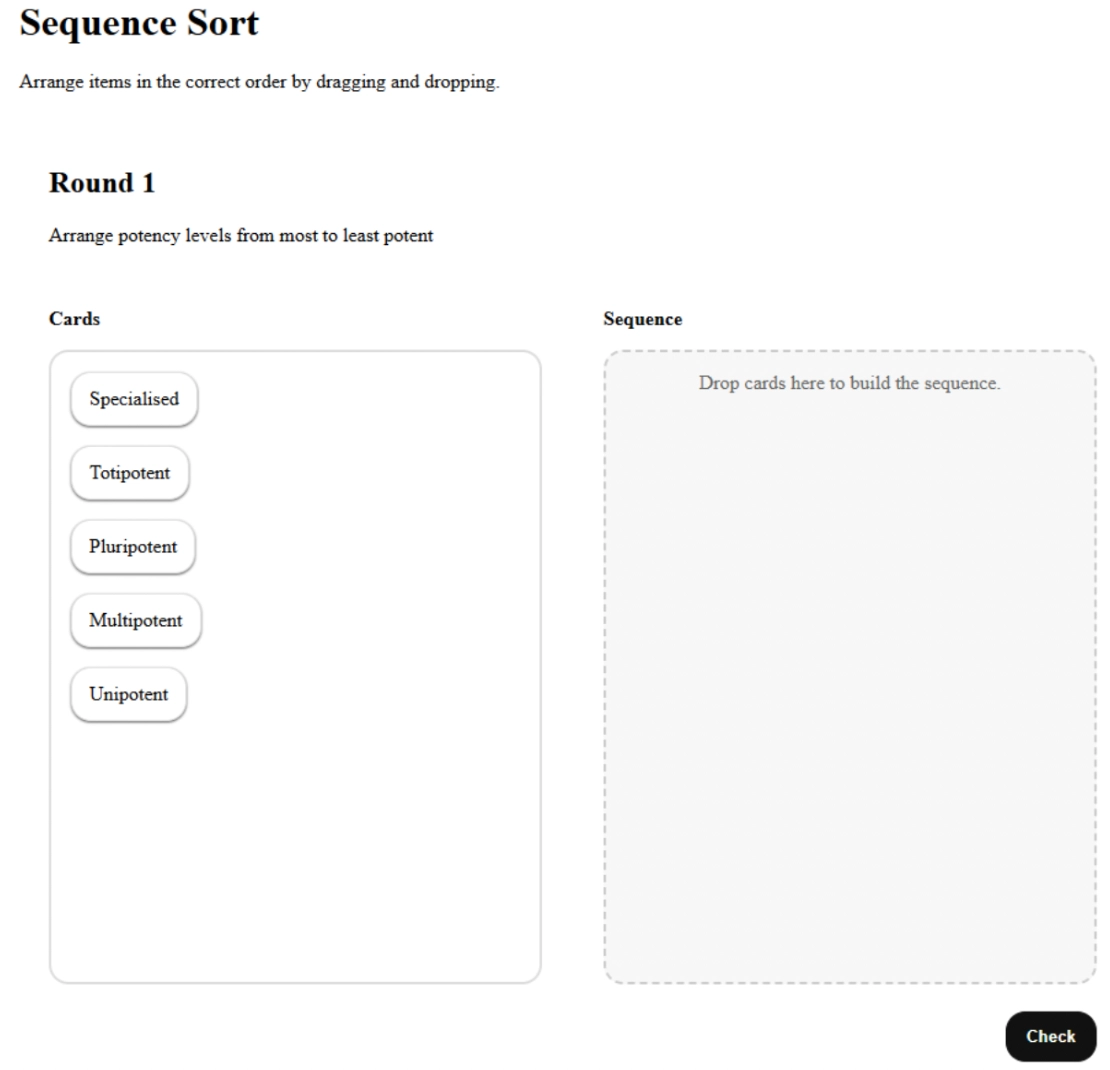
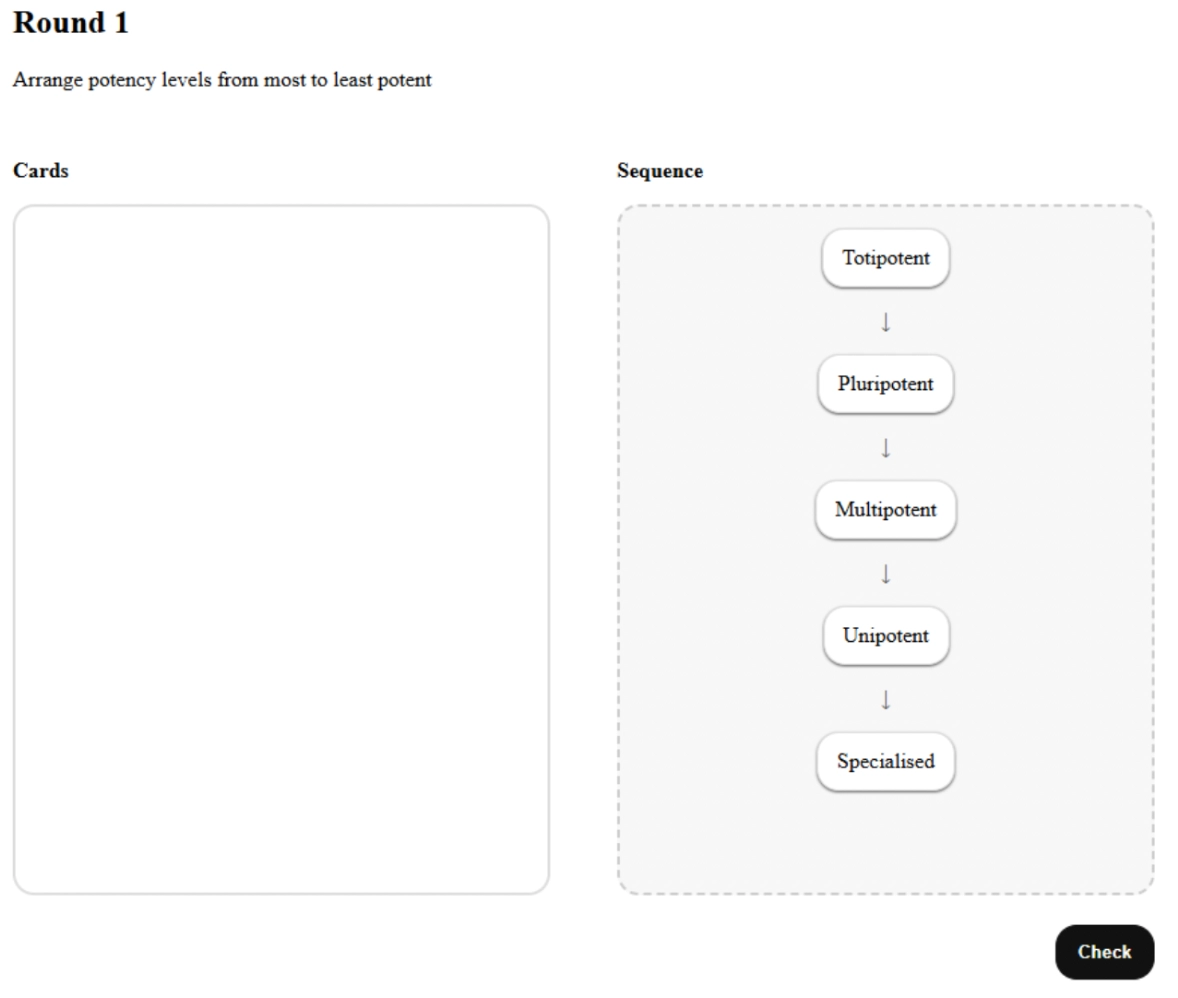
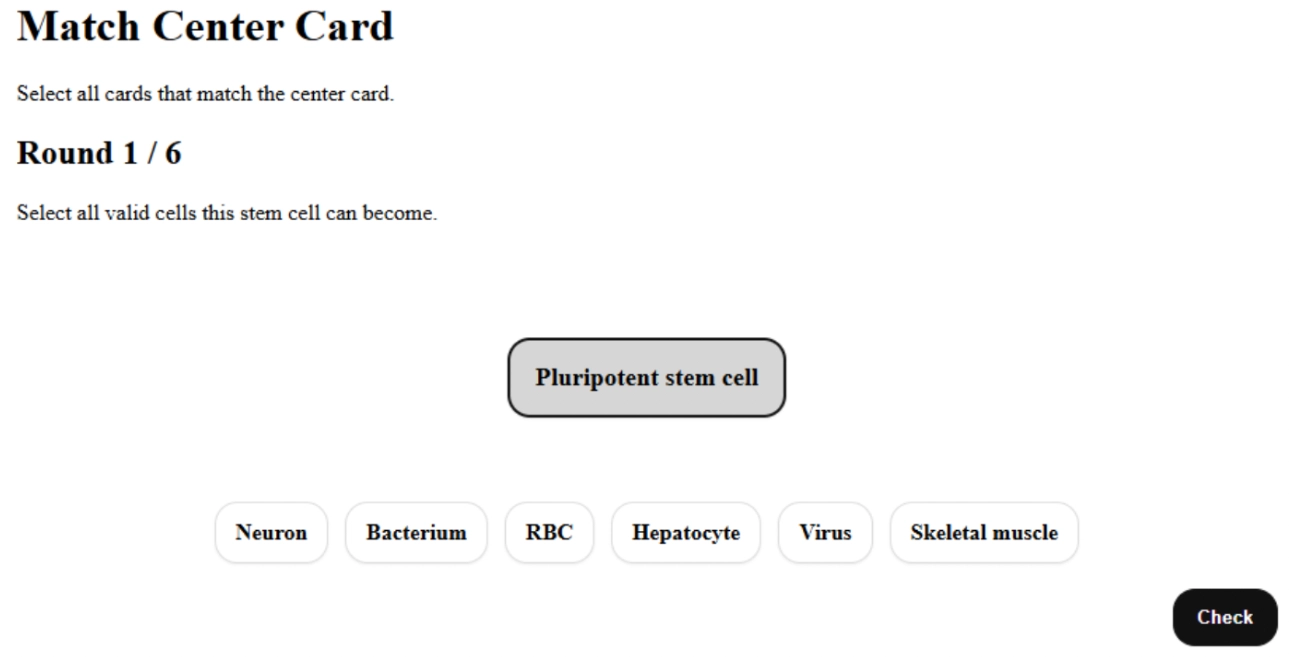
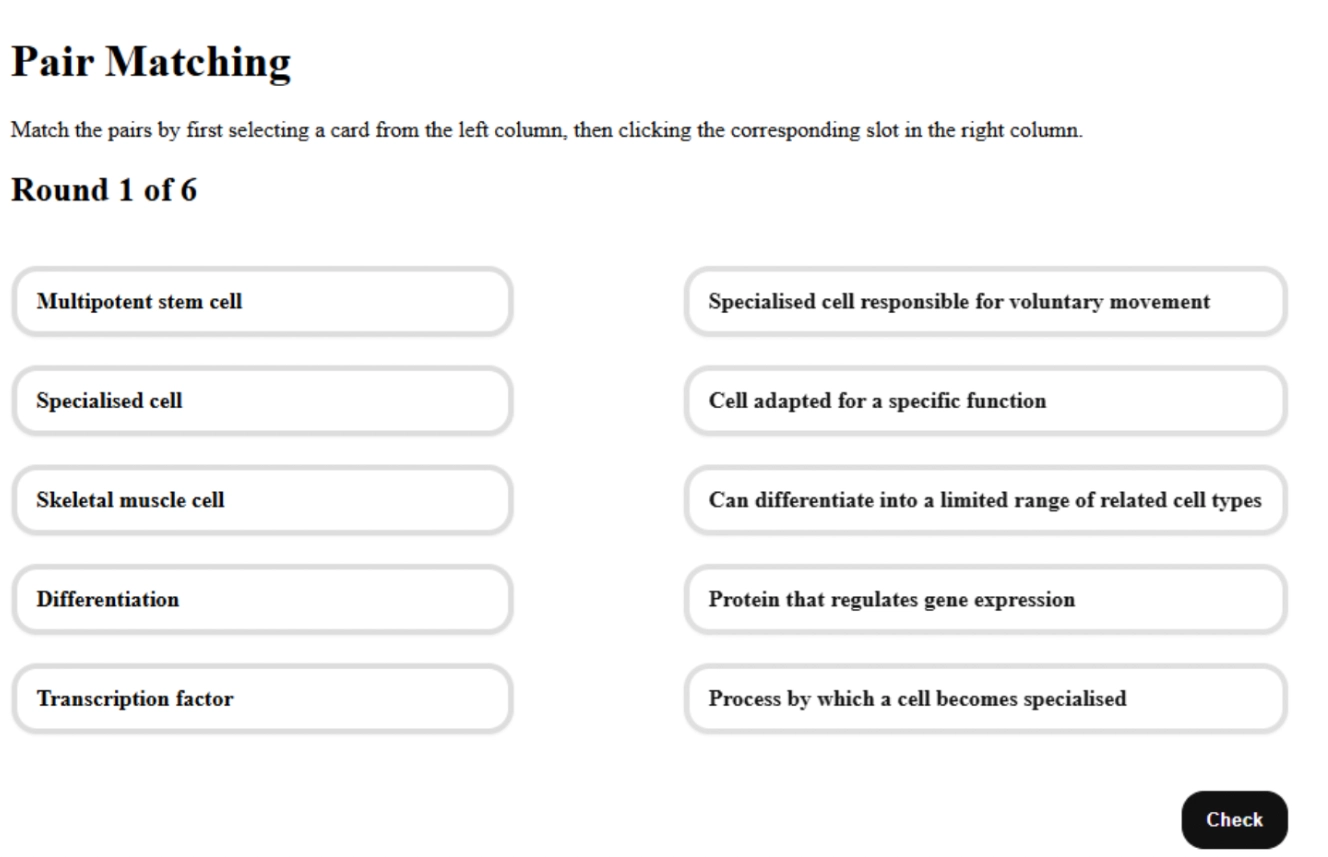
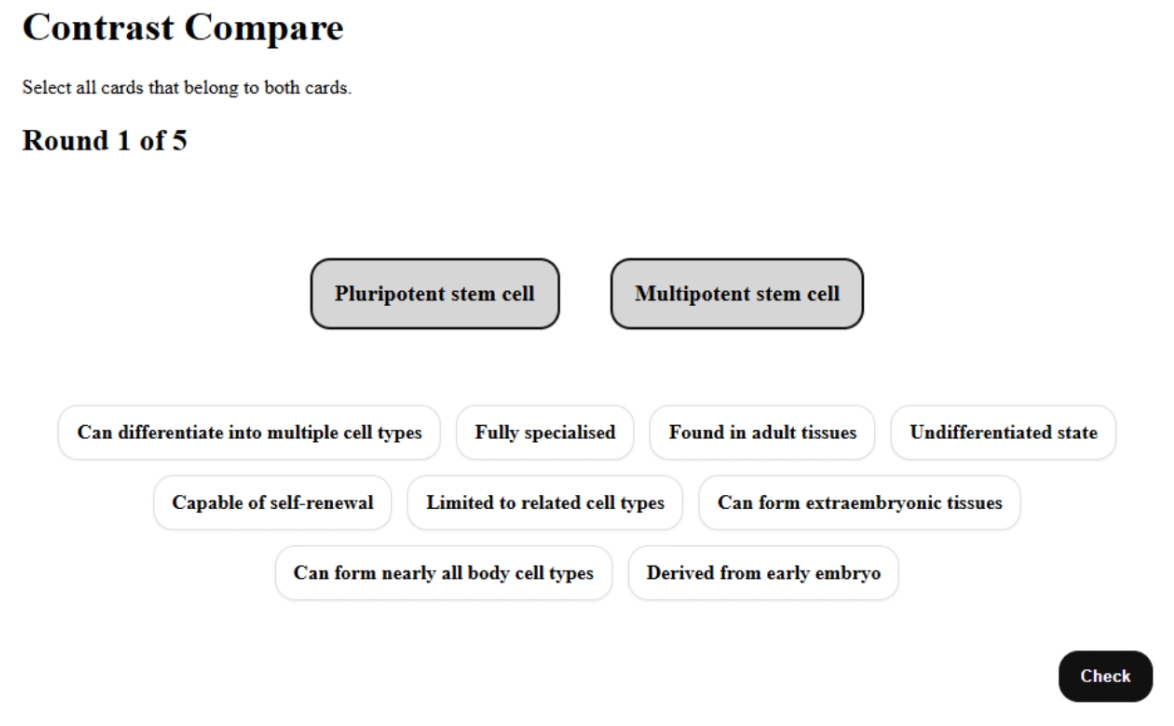
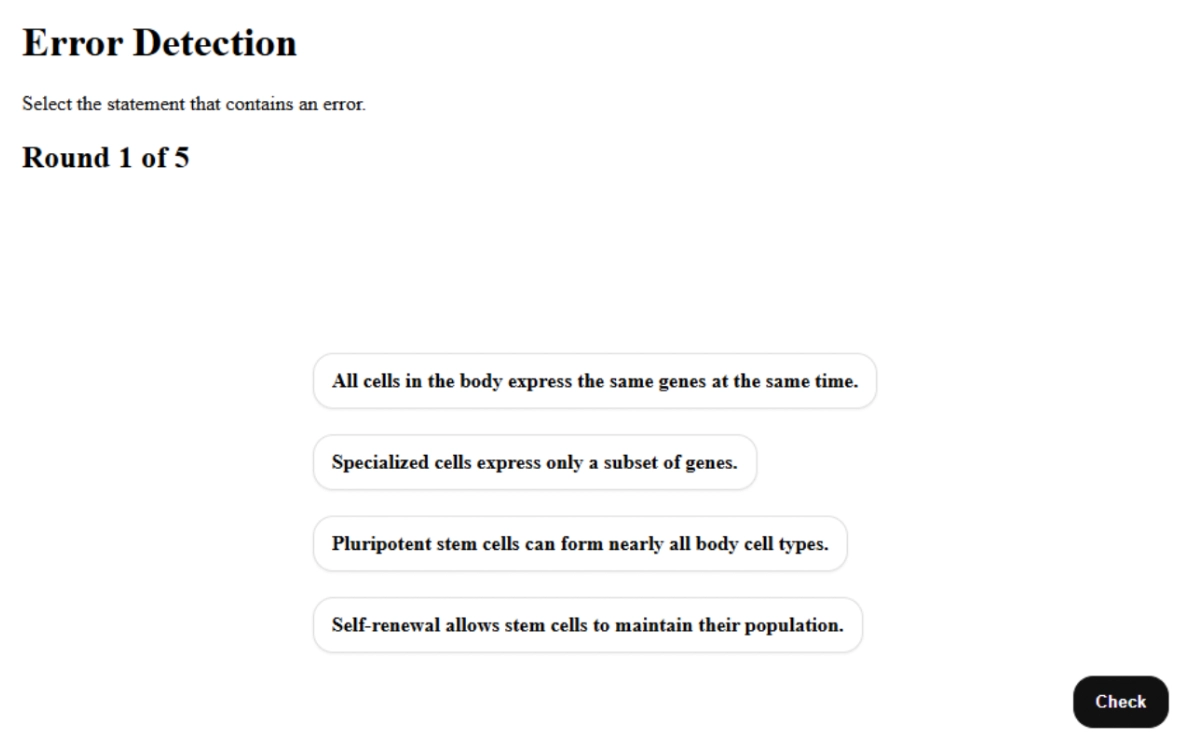
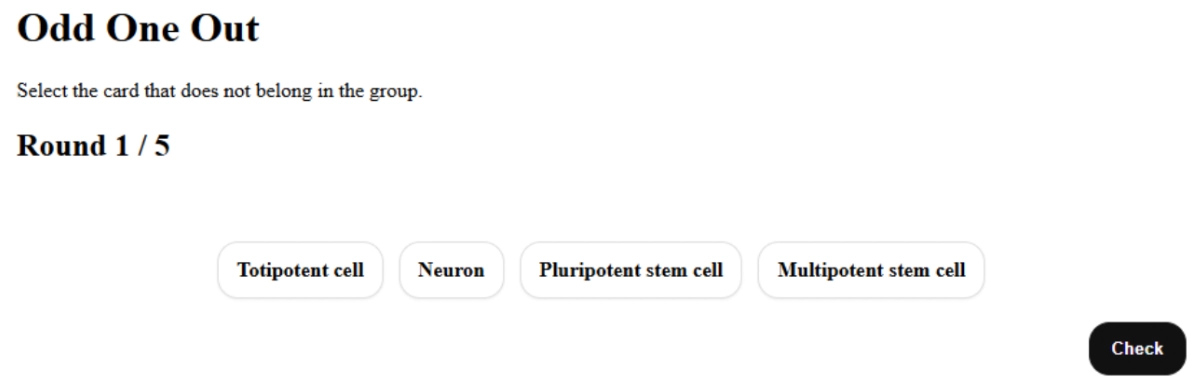
Each minigame contains multiple rounds. Example rounds are shown in the figures below.
Each round should be completable within 40 seconds by a student who mastered the corresponding subchapter.
The game is designed for individual subchapters, and all questions should be subchapter-specific.
The dataset for each minigame should cover the entire content of the corresponding subchapter without having repetitive or trivial questions.
Currently, the prototype contains test datasets for Biology – Cell Differentiation and Physics – Forces and Momentum, with each minigame containing 5 or 6 rounds.
Terminology
Card – a visual UI element displayed to the player during gameplay
Term – the content displayed inside a card (e.g., concept, word, or statement)
Target – a term that represents a correct selectable answer in each round
Distractor – a term that is intentionally incorrect but plausible
Minigames
•
Sequence Sort: Arrange the cards in the correct order by dragging and dropping.
•
Match Center Card: Select all cards that match the center card.
•
Pair Matching: Match the pairs by first selecting a card from the left column, then clicking the corresponding slot in the right column.
•
Contrast Compare: Select all cards that belong to both center cards.
•
Odd One Out: Select the card that does not belong in the group.
•
Error Detection: Select the statement that contains an error.

Data Structure
Sequence Sort:
•
Round ID: string
•
Sequence: string[] (list of the sequence terms, given in the correct order)
•
Instruction Text: string
Match Center Card:
•
Round ID: string
•
Start Cell: string (term in the center card)
•
Valid Targets: string[] (list of all correct answers)
•
Distractors: string[] (list of all incorrect answers)
•
Instruction Text: string
Pair Matching:
•
Round ID: string
•
Pair 1: string
•
Pair 2: string
Contrast Compare:
•
Round ID: string
•
A: string (term in the first center card)
•
B: string (term in the second center card)
•
Valid Targets: string[] (list of terms that apply to both A and B)
•
Only A: string[] (list of terms that apply only to A)
•
Only B: string[] (list of terms that apply only to B)
•
Neither: string[] (list of terms that apply to neither A nor B)
Odd One Out:
•
Round ID: string
•
Valid Targets: string[] (list of terms that have something in common)
•
Incorrect: string (the term that does not belong to the list – the odd one out)
Error Detection:
•
Round ID: string
•
Statement: string
•
Correct: Boolean (1 for correct and 0 for incorrect)
Constraints
Sequence Sort:
•
Only one valid order
•
Sequences should typically contain 4–7 terms
Match Center Card:
•
Each round should contain multiple correct answers and distractors
•
Distractors must be plausible but clearly incorrect for students who understand the theory
Pair Matching:
•
Each round has 5 random pairs drawn from the dataset
•
If the last round has fewer unused pairs, the remaining number of slots are filled by previously used pairs
Contrast Compare:
•
Each category (Valid Targets, Only A, Only B, Neither) should contain multiple terms where possible
•
Terms should represent clear conceptual relationships
Odd One Out:
•
Each round must contain exactly one incorrect term
•
The odd term should be unambiguously incorrect for someone familiar with the topic
Error Detection:
•
The dataset should contain 3 more correct statements than incorrect statements
•
Incorrect statements should represent common misconceptions where possible