

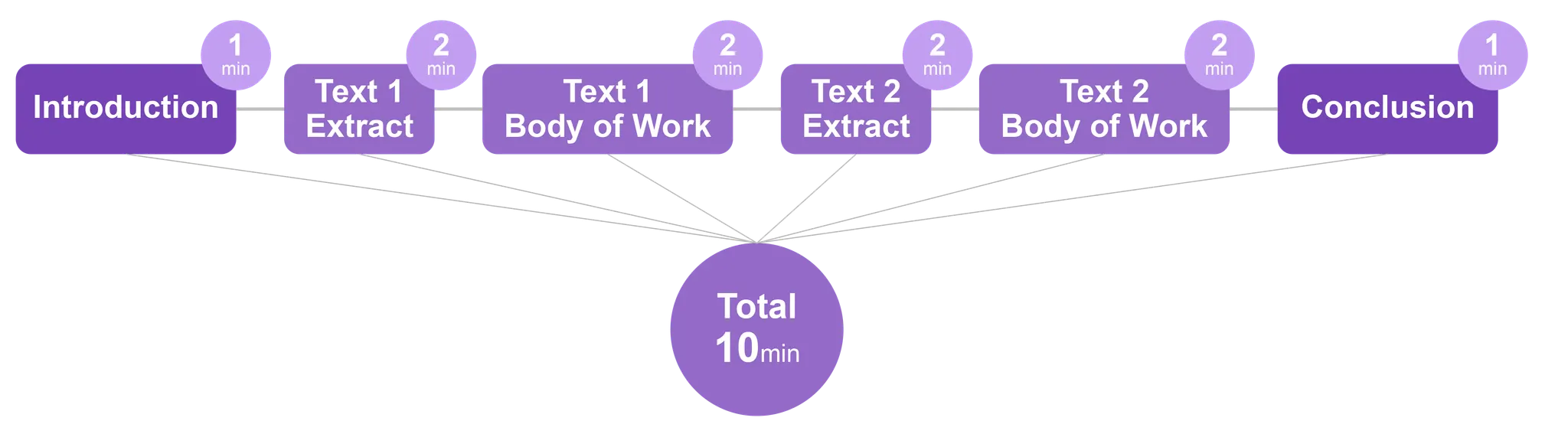
10 minute time allocation
Requirements
The structure (Criteria C) of your IO needs to fulfill two requirements:
•
Organization and Focus
◦
Do not list random techniques evident within your texts. Stay organized by connecting each point back to your global issue. Present points in a logical sequence, showing the deliberate choice behind your structure.
•
Balance
◦
Maintain 50-50 balance between literary and nonliterary text.
◦
Balance close analysis (extracts) with wide analysis (body of work) to demonstrate both detailed and broad comprehension.
a. Introduction
1.
State the global issue clearly. Avoid vague descriptions, and deliver 2-3 concise sentences that highlight why this global issue is both relevant and complex enough for an IO.
2.
Introduce the two texts by presenting only the essential details—author's name, publication date, text type, and source. Mention the page numbers of the extract or whether your text is from a collection if applicable. Clarify which text is literary and which is non-literary.
3.
Present your thesis statement that summarizes how each chosen work connects to your GI.
Tip: 100-150 words are often sufficient to provide the necessary details within 1 minute.
b. Extract
Approach this analysis like a Paper 1 response: cite specific quotes, imagery, or scenes from the extract (refer to specific lines). Go beyond superficial observations to analyze and find meaningful evaluative insights. Remember, both you and your examiner have a clean copy of your extract!
Ensuring that you analyze and evaluate your chosen extract is crucial to receive the highest band in Criteria B: Analysis and Evaluation. Here is a breakdown of the differences between the two requirements:
Analysis | Evaluation | |
Focus | Centers on identifying and explaining specific elements of the text—such as language, structure, tone, and authorial choices—and how these contribute to meaning. | Involves making a judgment about the effectiveness, impact, or significance of these choices. It often reflects on why the author made these choices and considers their implications within a larger context. |
Objective | The goal is to dissect how the text is crafted. This includes examining literary devices (e.g., metaphor, imagery, diction), structural choices, and character development to understand what the text is communicating. | The goal is to assess the purpose or effectiveness of the author’s choices in conveying a theme or engaging the audience. Evaluation connects the analysis back to the global issue, audience impact, or societal implications, deepening the interpretation. |
Example | Evidence: “In A Doll’s House, Helmer frequently addresses Nora using pet names like ‘my little skylark’ and ‘my squirrel.’” | Evidence: “In A Doll’s House, Helmer frequently addresses Nora using pet names like ‘my little skylark’ and ‘my squirrel.’” |
“This choice of language infantilizes Nora, portraying her as small, delicate, and even frivolous, similar to how one might regard a pet. As a result, these diminutive terms emphasize Nora’s subservient role in the marriage, positioning her as inferior and dependent on Helmer’s guidance and control.”
What these names suggest about Nora’s role and identity within the relationship was identified and explained. | “By using these pet names, Ibsen subtly critiques the restrictive norms of 19th-century marriage, where women were often confined to subordinate roles. Hence, Ibsen’s portrayal prompts the audience to reflect on how patriarchal language reinforces power imbalances, supporting the global issue of gender-based power imbalances and their impact on female identity and self-worth.”
Why Ibsen might have used these names and its link to a broader societal critique (bigger context) and effect on the audience was assessed. |
Here's how you can tell whether an evidence is insightful and can be evaluated.
The evidence…
•
includes a clear authorial choice.
•
clarifies the global issue and its root causes.
•
expands the global issue to its extremes, underscoring its effects.
•
introduces additional layers of nuance and perspective to the global issue.
•
exposes any bias, unreliability, or impartiality in the author's view of the global issue (if applicable).
•
reflects how the author’s choices affect the audience or provoke a specific reaction (if applicable).
•
suggests possible solutions to the global issue (if applicable).
I. Adding Insightful Analysis
Sample GI: "The effects of gender-based power imbalances on female psychology.”
Quality of Analysis | Example |
Level 0
Analyzing a scenario or an evidence without explicitly explaining how it's relevant to the global issue. | “In the extract, Ibsen explores the global issue by having Helmer call Nora ‘my squirrel’ and ‘my little skylark.’” |
Level 1
Mentioning a scenario and linking to a global issue without backing it up with analysis. | “In the extract, Ibsen explores the global issue through Helmer who calls Nora ‘my squirrel’ and ‘my little skylark’ to show that he views her as something small and cute. This highlights the power imbalance between them.” |
Level 2
Showing how an authorial choice demonstrates the global issue. | “In the extract, Ibsen explores the global issue through Helmer who metaphorically refers to Nora as ‘my squirrel’ and ‘my little skylark’ which portrays Nora as Helmer’s possession. These small animals not only suggest the insignificance of Nora’s presence in Helmer’s life, but also degrades her worth through dehumanization.” |
Level 3
Showing how an authorial choice reveals something interesting and non-obvious about the global issue.
Tip: To achieve Level 3, choose authorial choices that provide insight and can be evaluated. | “In the extract, Ibsen explores the global issue through Helmer who metaphorically refers to Nora as ‘my squirrel’ and ‘my little skylark’ which portrays Nora as Helmer’s possession. These small animals not only suggest the insignificance of Nora’s presence in Helmer’s life, but also degrades her worth through dehumanization. Ibsen deliberately makes Helmer resemble the way people talk to their domestic animals by using imperatives ‘come, come’ to set a condescending tone to convey how he assumes and therefore maintains dominance in their conversation." |
II. Adding Effective Evaluation
Sample GI: "The effects of gender-based power imbalances on female psychology."
Color code: Evidence Analysis Link to Global Issue Evaluation
Quality of Evaluation | Example |
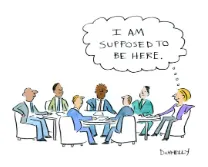
Initial Writing | "In the cartoon ‘Supposed to be here,’ with the only female protagonist wearing a purple blazer with pants in a business setting, Donnelly makes her external appearance resemble that of the male workers. However, the purple color signifies how she attempts to maintain aspects of her femininity with pride in order to avoid fully assimilating into masculinity. Therefore, it suggests the internal conflict that women face in settings with prevailing gender imbalances.” |
Improved Writing | "In the cartoon ‘Supposed to be here,’ with the female protagonist wearing a purple blazer with pants in a business setting, Donnelly makes her appearance resemble that of the male workers. However, the purple color signifies how she attempts to maintain aspects of her femininity with pride in order to avoid fully assimilating into masculinity. Simultaneously, this may effectively suggest that even with this self-conscious effort, she cannot achieve the equal possession of power as there will still be immutable external elements that differentiates her from men.” |
c. Body of Work
This is now similar to how you would analyze for a Paper 2 – you reference specific quotes, images, or scenes from memorization when making your analysis and evaluations in relation to the Global Issue. It’s important to provide enough contextual information and to select a wide range of evidence that reveals different perspectives of the author or the characters to unpack different layers within your GI.
I. Adding Insight & Evaluation
Sample GI: "The effects of gender-based power imbalances on female psychology."
Color code: Context Evidence Analysis Link to Global Issue Evaluation
Non-literary Extract
Body of Work
Example
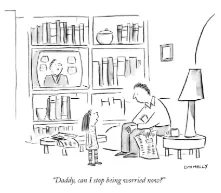
Another cartoon by Donnelly that similarly presents this issue features a little girl who asks her dad “Daddy, can I stop being worried now?” after seeing a news reporter on tv possibly talking about one of the unfortunate incidents women experience such as rape, sexual harrassent, or unfair distribution of income. Like this cartoon, Donnelly often selects young children as the main subject of her works to discuss various global issues including the gender-based power imbalance in society. This stylistic choice is significant as it sheds light to the seriousness of the ongoing issues where children, who represent innocence, are already worried for their future. This not only shocks the adult audience but also makes them feel a sense of responsibility to protect children from growing up in a problematic society. Hence the applicability of this global issue to a wide age range highlights the severity of gender imbalance and its impact even on young female’s psychology.
d. Conclusion
•
Restate your global issue and briefly summarize how each text connects to it in about 2-3 sentences. Bring together your key points to convey the author’s overall perspective on the issue.
•
Compare the two texts in terms of the global issue. Use this comparison to create a nuanced, compelling final statement that highlights the different facets of the issue. Remember, comparison is optional but can strengthen your conclusion.
Tip: Discuss the different techniques or methods used to explore the GI in each work. For instance, one author may have been extremely harsh, realistic or vivid while the other author may have used humor or satire to communicate a similar message.
•
Reflect on the broader relevance of the global issue. Include a general remark on its global impact, emphasizing why it inspires authors to explore it within their works and its significance in society and implication to the audience.
Tip: To discuss the implications, reflect what each work urges the audience to do about the issue. Is the work a call to action? Does the author attempt to increase awareness or find a solution?