

Understanding Market Failure
•
In a free market, price mechanism determines efficient allocation of scarce resources
◦
Scarce resources include land, labour, capital, and entrepreneurship
•
Market failure occurs when:
◦
Allocation of resources is less than optimal
◦
Society's needs aren't effectively met by market mechanisms
Externalities occur when there is an external impact on a third party not involved in the economic transaction between the buyer and seller e.g. passive smoking is considered to be a negative externality
•
Can be either positive or negative, known as spillover effects
•
Affect either production or consumption side of the market
Public goods are beneficial to society but are underprovided by a free market (E.g. Vaccination)
•
Non-excludable and nonrivalrous in consumption
•
Little opportunity for sellers to make profits
Common pool resources are resources with no private ownership, they are collectively shared and are finite (used up) in consumption (E.g. Fishing grounds)
•
These resources are non-excludable and rivalrous (limited in supply)
Market failure is created where the allocation of resources is not efficient from society's perspective.
•
Overprovision of demerit goods = over-allocation of resources (e.g. cigarettes)
•
Underprovision of public goods and merit goods = under-allocation of resources (e.g. school)
•
Common pool resources = overuse of a finite resource
Social Optimum Output and Allocative Efficiency
Key terminologies
1.
Marginal Private Benefit (MPB): Additional benefit from consuming or producing one more unit of output.
2.
Marginal Private Cost (MPC):
Additional cost incurred by consuming or producing one more unit of output.
3.
Marginal Social Benefit (MSB): Benefit to society from consuming or producing one more unit of output, including both private and external benefits.
•
Eg.) Improved air quality from using eco-friendly technologies, benefiting both consumers and the environment.
4.
Marginal Social Cost (MSC): Cost to society from consuming or producing one more unit of output, including both private and external costs.
•
Environmental damage caused by industrial pollution, imposing costs on society beyond those borne by the producer.
Social Optimum Output
When MSB = MSC
•
Represents the level of output where resources are allocated efficiently from society's perspective.
•
Reflects the ideal equilibrium accounting for externalities and market failures.
•
Signifies a state where resources are allocated optimally, without any market failure.
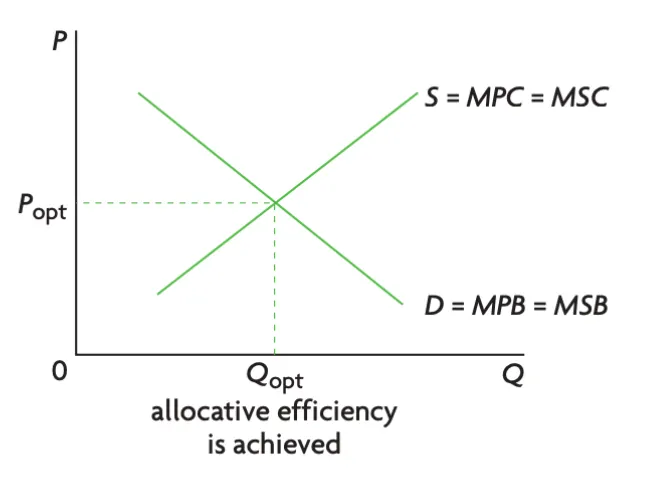
Figure 2.8.1 At the point of allocative efficiency, community surplus is maximised
Diagram Analysis
•
The Y-axis is labelled costs/benefits (instead of price)
•
The supply curve is labelled S=MSC as it represents the social cost
•
The demand curve is labelled D=MSB as it represents the social benefit
•
The socially optimal level of output is at Qopt - the point at which all external costs or benefits are accounted for
•
There is allocative efficiency at Qopt as this is where the community surplus (consumer + producer surplus) is maximised
Negative Externalities
Negative Externalities of Production
Arise during the production of goods and services that result in market failure due to overprovision
•
Producers only consider private costs, neglecting external costs due to self-interest
◦
If external costs were considered, the supply would decrease and sold at higher price
◦
E.g) Air pollution, water contamination, health problems
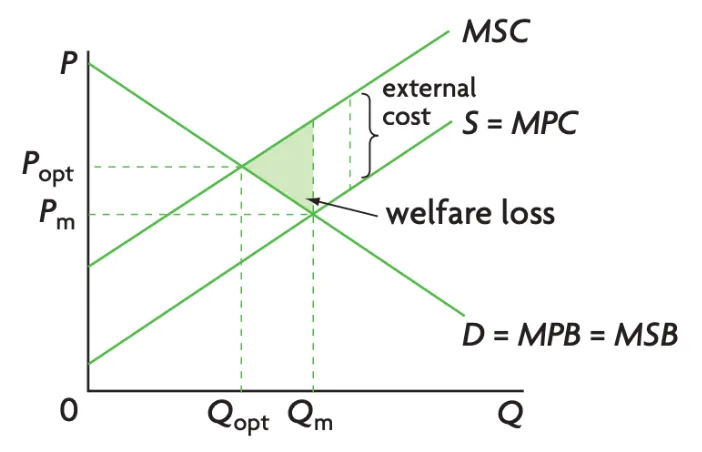
Figure 2.8.2.1: Negative Externality of Productions
Diagram Analysis:
•
MSB = MPB when focusing on the producer side of the market
•
Free-market equilibrium occurs at PeQe, this is where MPC = MSB
•
The larger the external costs in production = wider gap between MPC and MSC
•
Optimal resource allocation, socially optimal point, from society’s perspective is MSB = MSC at PoptQopt
◦
No market failure at this equilibrium
•
Market failure arise by excess quantity Qe-Qopt
•
Over provision represents welfare loss to society (triangle)
Negative Externalities of Consumption
Arise during the consumption of goods and services that result in market failure due to overconsumption
•
Consumers only consider private cost vice versa
◦
Factoring in external costs would reduce demand, leading to lower prices.
◦
E.g) Cigarettes, alcohol, fatty foods, and single-use plastic products.
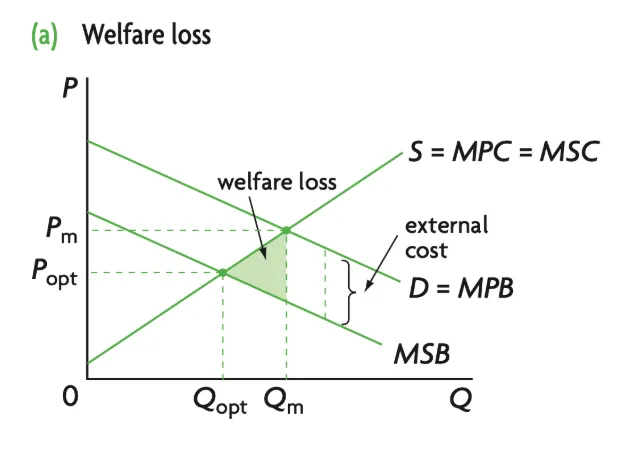
Figure 2.8.2.2: Negative Externalities of Consumption
Demerit Goods
Goods which have external costs in consumption.
•
Addictive and harmful for consumers and third-party
◦
Alcohol, drugs, sugary foods/drinks
•
Government intervention often involves regulations aimed at raising prices or limiting quantity demanded.
External Costs in Production:
•
Producer activities can result in significant external costs.
◦
Pollution from coal-burning power stations during electricity production.
•
Electricity itself is considered a merit good.
•
Smoke is a by-product and not the actual good/service.
Positive Externalities
Positive Externalities of Production
Occur during productions of goods and services that lead to market failure due to under-provision.
•
Producers only consider private benefits, ignoring external benefits
•
External benefits considered = ↑ supply and lower prices.
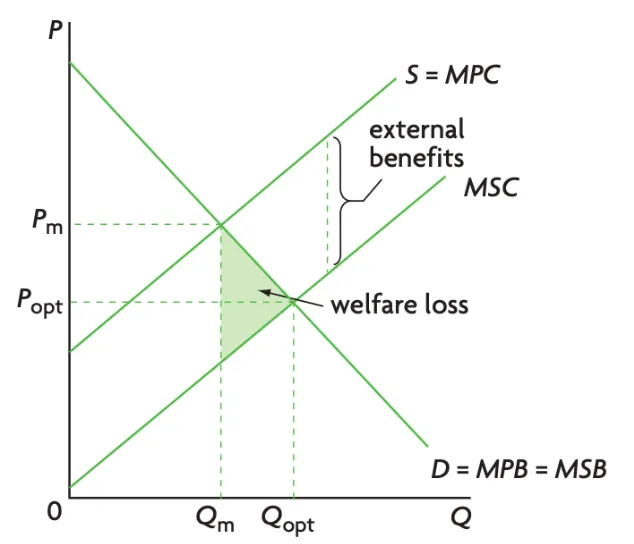
Figure 2.8.2.3: Positive Externalities of Production
Diagram Analysis
•
Free-market equilibrium at PeQe where MPC equals MSB.
•
Larger external benefits widen the gap between MPC and MSC.
•
Optimal allocation at PoptQopt where MSB=MSC, no market failure.
•
Market under-provides the good/service by Qopt - Qe.
•
Welfare loss from unmaximized external benefits
Positive Externalities of Consumption
Occur during consumption of good and services
•
Consumers only consider private benefits, ignoring external benefits.
•
External benefits considered = ↑ Demand and higher prices
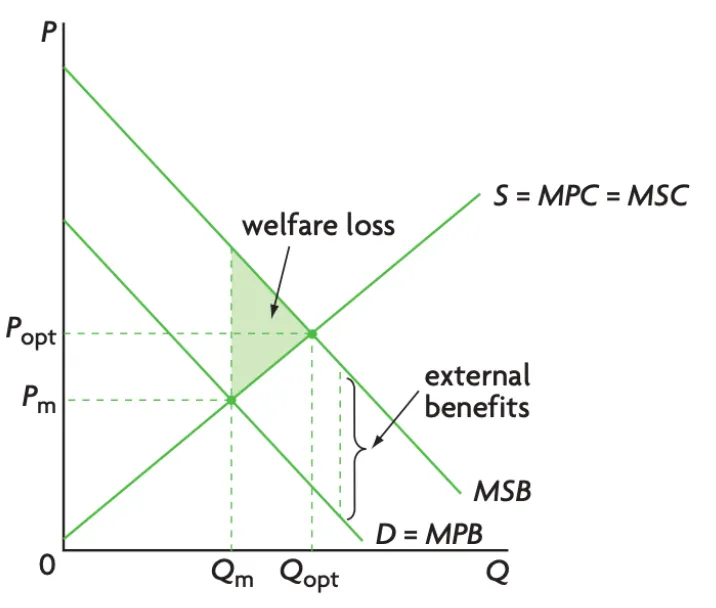
Figure 2.8.2.4: Positive Externalities of Production
Diagram Analysis
•
Free-market equilibrium at PeQe where MPB equals MSC.
•
Larger external benefits widen the gap between MPB and MSB.
•
Optimal allocation at PoptQopt where MSB=MSC, no market failure.
•
Underconsumption of the good/service by Qopt - Qe.
•
Welfare loss from unmaximized external benefits = where social welfare should be gained
Common Pool (Access) Resources
Definition & Characteristics
Common Pool Resources:
•
Non-excludable but rivalrous in consumption.
•
Non-excludable: Accessible to all without payment due to lack of private ownership.
•
Rivalrous: Usage by one reduces availability for others; finite supply.
Tragedy of the Commons:
•
Occurs when common pool resources are unsustainably used in production.
•
Results in negative externalities of production, including pollution, environmental damage, and resource depletion.
Examples:
•
Ocean fishing (especially in international waters).
•
Communal grazing land.
•
Water sources such as rivers.
•
Natural forests and rainforests.
Government Intervention to Address Market Failure
Market Based Strategies
1.
Specific Tax on a Negative Externality of Production
•
Tax on products with harmful side effects to increase price and reduce quantity demanded or supplied.
•
Addresses market failure where goods are over-provided.
◦
Pigouvian tax or indirect tax
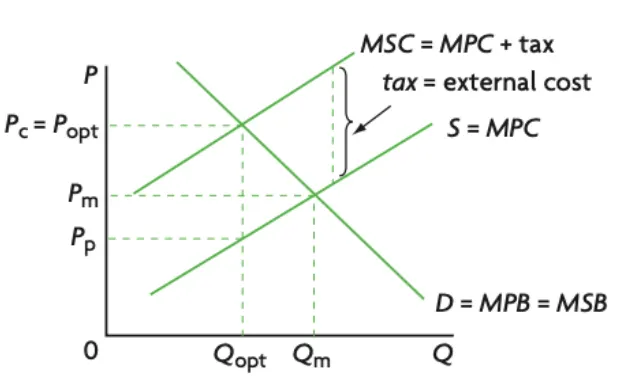
Figure 2.8.5.1: Indirect Tax on Negative Externality of Production
Diagram Analysis
•
Specific tax shifts supply curve left from S to S1 due to increased production costs.
•
Reduces welfare loss but doesn't eliminate it, bringing the market closer to optimum output level (Qopt).
•
New equilibrium at PoptQopt with higher price and lower output.
•
Decreases over-provision, mitigating market failure.
•
Reduces external costs.
2.
Specific Tax on a Negative Externality of Consumption
•
Governments frequently tax demerit goods such as cigarettes, alcohol, fatty foods, and polluting vehicles
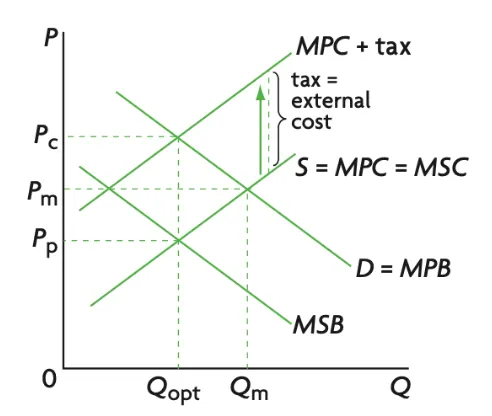
Figure 2.8.5.2: Indirect Tax on Negative Externality of Consumption
Diagram Analysis:
•
Shifts supply curve left from S to S1 due to increased production costs.
•
Doesn't eliminate welfare loss but moves the market closer to optimum output (Qopt).
•
Reduces welfare loss as depicted in the diagram.
•
New Market Equilibrium: At PcQopt with higher price and lower output.
•
Less over-consumption, mitigating market failure.
•
Decreased external costs, approaching socially optimal output level Qopt.
Evaluating the use of Indirect Taxes to Address Market Failure
Advantages | Disadvantages |
• External costs are paid by those causing them, promoting fairness.
• Taxes raise prices and reduce demand for demerit goods, improving resource allocation.
• Taxes decrease external costs associated with consumption and production.
• Taxes generate revenue for government programs. | • Tax effectiveness in reducing demerit goods usage hinges on the price elasticity of demand (PED).
• Consumers of price inelastic goods may persist despite tax increases.
• Tax implementation might spur illegal markets as consumers seek to evade taxation.
• Higher prices leading to reduced output could compel producers to lay off workers. |
3.
Subsidies on Positive Externalities of Consumption
•
Government grants fixed money per unit produced to lower costs or increase output.
•
Addresses market failure where goods are under-provided or consumed.
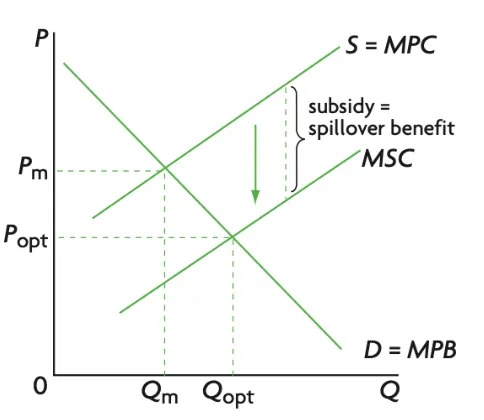
Figure 2.8.5.3: Subsidies
Diagram Analysis:
•
Shifts supply curve right from S to S1 by lowering production costs.
•
Doesn't eliminate potential welfare gain but moves the market closer to optimum output (Qopt).
•
New Market Equilibrium: At P1Q1 with lower price and higher output.
•
Less under-consumption, mitigating market failure.
Evaluating the use of Indirect Subsidies to Address Market Failure
Advantages | Disadvantages |
• Subsidies can aid specific domestic industries.
• Lowering prices increases demand for merit goods.
• Subsidising goods like electric cars encourages consumer adoption over time.
• Subsidies help domestic firms compete internationally. | • Resource Allocation Distortion: Subsidies, like in agricultural markets, often lead to excess supply, disrupting market balance.
• Opportunity Cost: Government expenditure on subsidies raises questions about alternative, potentially more beneficial uses of funds.
• Political Influence: Subsidies are susceptible to lobbying and political pressure, benefiting powerful business interests like oil companies.
• Efficiency and Competitiveness: Subsidies can discourage firms from improving efficiency or competitiveness by providing extra funds, reducing the incentive for innovation. |
4.
Carbon Taxes on Negative Externality of Production
•
Tax on producers emitting greenhouse gases to raise production costs and reduce supply.
•
Useful for markets with high carbon footprint
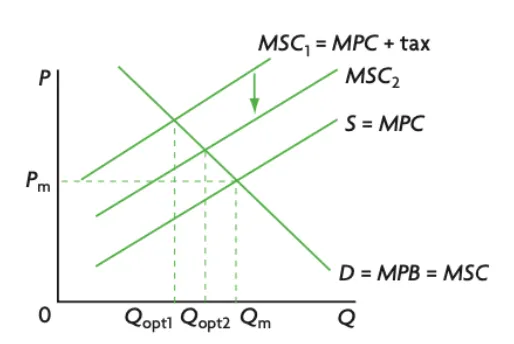
Figure 2.8.5.4: Carbon Tax (Tax on emission of gas)
5. Tradable Permits on Negative Externalities of Production
•
Mechanism allowing firms to buy/sell permits to pollute, increasing production costs.
•
Reduces supply, addresses market failure.
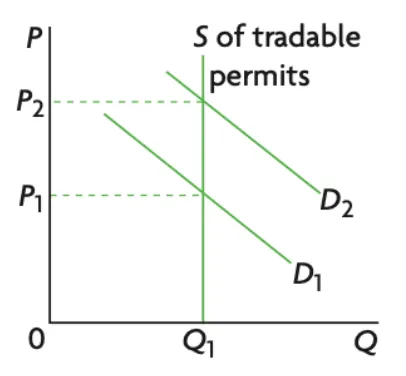
Figure 2.8.5.5: Tradable Permits
Diagram Analysis
•
If the cost of additional permits is more than the cost of investing in new pollution technology
◦
firms will be incentivised to switch to cleaner technology
◦
Sells permit to firms that needs it
◦
Shift in D
•
Firms can then sell their spare permits and gain additional revenue
Evaluating the use of Tradable Permits
Evaluation Point | Explanation |
Challenges in Measuring Externalities | Accurately calculating CO2 emissions is difficult and fluctuates, affecting the initial permit allocation. Overestimating permits makes them ineffective. |
Degree of Effectiveness | Permits allow pollution but can reduce emissions if correctly calculated. Larger firms may monopolise permits, and firms might pass costs to consumers if demand is inelastic. |
Consequences for Stakeholders | Firms: Face higher costs; may invest in technology or struggle to compete.
Consumers: Face higher prices.
Market: Some firms may relocate to avoid permit schemes. |
Legislation & Regulation
6.
Legislation aimed at the consumer side
7.
Legislation aimed at the producer side
Education
8.
Educating consumers on the benefits of merit goods
9.
Educating consumers on the dangers of consuming demerit goods
Other Interventions to Address Market Failure
1.
International Agreements
International Agreements aim to address the negative externalities of production and consumption that are global in nature.
Evaluating the use of International Agreements
Advantages | Disadvantages |
• Greater Welfare Reduction: Coordinated global response yields larger reductions in welfare loss.
• Resource Pooling: Combined resources can be used more effectively for global benefits. •
• Increased Cooperation: Enhances international cooperation and interdependence. | Challenges for Less Economically Developed Countries (LEDCs)
• Pressure on LEDCs: LEDCs are pressured to reduce 'dirty technology' use, which could hinder their economic growth, unlike MEDCs that developed using such technologies.
• Lack of Legal Consequences: There are often no legal penalties for withdrawing from international agreements.
• Political Instability: New political parties may alter or withdraw from agreements, as seen with President Trump's withdrawal from the Paris Climate Agreement. |
2.
Collective Self-governance
•
Stakeholder Collaboration: Community stakeholders work together to address negative externalities.
•
Common Pool Resources: Focuses on managing and protecting shared resources effectively.
Evaluating the use of Collective Self-governance
Advantages | Disadvantages |
• Community Building: Fosters a common purpose and strengthens community bonds.
• Sustainable Resource Management: Local knowledge ensures effective and sustainable use of scarce resources.
• Employment Opportunities: Creates jobs related to resource management.
• Promotion of Ecotourism: Supports sustainable tourism initiatives, such as in the Borneo rainforests. Reduced
• Welfare Loss: Decreases negative externalities, improving overall welfare. | • Disagreements: Conflicts may arise over the best methods for managing resources.
• Confrontations: Reclaiming control from multinational corporations or organised crime can be violent and confrontational.
• Private Property Rights: The strategy is more effective when communities have ownership rights over the natural resources. |
3.
Government Provision
•
Market Failure: Both merit goods and public goods are under-provided by the market.
•
Public Goods:
◦
Benefits: Essential for society, not supplied by private firms due to the free rider problem.
◦
Funding: Provided free at consumption point, funded through taxation.
◦
Examples: Roads, parks, lighthouses, national defence.
•
Merit Goods:
◦
Benefits: Important for society but often inaccessible to consumers due to high costs.
◦
Examples: Private education, healthcare.
•
Government Provision: To address under-provision, governments often step in to provide these goods and services.
Evaluating the use of Government Provision
Advantages | Disadvantages |
• Free at Point of Consumption: Essential and valuable goods/services are often provided without direct charge to consumers.
• Accessibility: Accessible to all, regardless of income or financial status.
• Private and External Benefits: These goods/services typically offer benefits both to individuals and to society as a whole. | • Financed by Taxation: These goods/services are funded through general taxation rather than direct charges to consumers.
• Opportunity Cost: Providing these goods/services incurs the opportunity cost of forgoing other potential uses of tax revenue.
• Excess Demand and Waiting Times: Free provision may lead to excess demand and long waiting times, especially evident in public healthcare services like procedures at hospitals. |