

Reasons for government intervention in markets
Influencing market outcomes in order to:
1.
Earn government revenue
•
Governments earn revenue through indirect taxes, which are taxes on goods and services.
•
The more price inelastic the demand for the good is, the greater the amount of tax revenue earned.
2.
Support firms
•
To support small firms that have just been set up and require financial assistance.
•
Support firms in an industry whose growth the government would like to encourage (e.g. environmental-friendly firms).
3.
Support households on low incomes
•
Subsidies, price ceilings, direct provision of services (e.g. free provision of education and health care).
•
Transfer payments, which include unemployment benefits, child benefits, maternity benefits, etc.
4.
Influence level of production
•
The government provides protection to firms through subsidies, trade protection, price floors, etc. → increase firm’s revenue.
•
Indirect tax has the opposite effect.
5.
Influence level of consumption
•
Influence consumers to consume a greater quantity of merit goods (e.g. direct provision or subsidies).
•
Reduce consumption of demerit goods (e.g. indirect tax, nudges).
6.
Correct market failure
•
Market failure: failure of the market to achieve allocative efficiency.
•
Market failure requires government intervention to address it, such as indirect taxes, subsidies, nudges, direct provision of services, and command and control methods.
7.
Promote equity (equality)
•
The market system as a rule cannot achieve an equitable distribution of income.
•
The government redistributes income through price ceilings and subsidies.
Main forms of government intervention in markets
1. Price controls - Price ceilings
•
Price ceiling: maximum price set below the equilibrium price, in order to make the goods more affordable to people on low incomes.
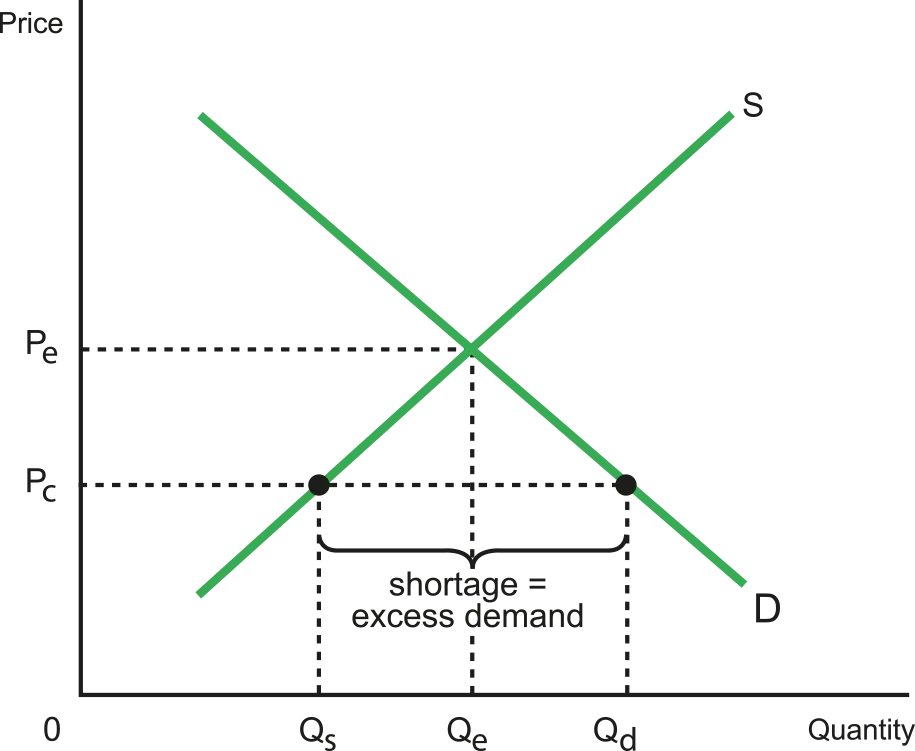
Figure 2.7.1 Price ceiling (maximum price) and market outcomes
Consequences for the market:
•
Shortages
◦
Price ceiling Pc set by the government below equilibrium price Pe → Qd > Qs → shortage (excess demand) equal to Qd-Qs
◦
At Pc, not all interested buyers who are willing and able to buy the good are able to do so because there is not enough of the good being supplied.
•
Non-price rationing
◦
Once a shortage arises due to a price ceiling, the price mechanism no longer achieves its rationing function. Therefore, Qs can only be distributed among all interested buyers through non-price rationing methods, including:
▪
Waiting in line and the first-come-first-served principle: those who come first buy the good.
▪
Coupon distribution to all interested buyers: they can purchase a fixed amount of the good in a given time period.
▪
Favouritism: sellers can sell the good to their preferred customers.
•
Underground (or parallel) markets
◦
Underground markets: buying/selling transactions that are unrecorded and usually illegal.
◦
Underground markets may arise when there are dissatisfied people who have not succeeded in buying the good because there was not enough of it, and are willing to pay more than the ceiling price.
•
Underallocation of resources to the good and allocative inefficiency
◦
Price ceiling results in a smaller Qs → not enough resources are allocated to the production of a good (underallocation) → underproduction relative to the social optimum → allocative inefficiency
•
Negative welfare impacts
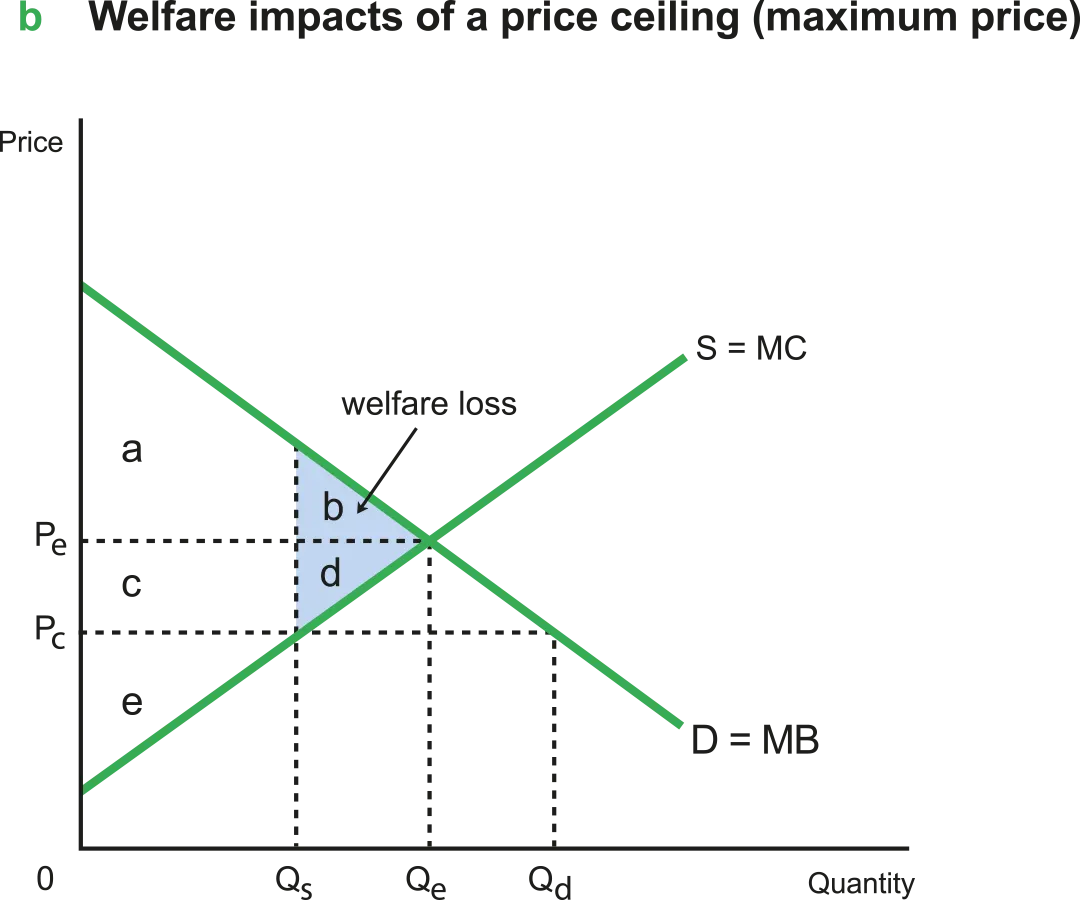
Figure 2.7.2 Effects of a price ceiling (maximum price) on consumer and producer surplus
◦
Consumer surplus:a+b → a+c
◦
Producer surplus: c+d+e → e
◦
Total social surplus: a+b+c+d+e → a+c+e (shaded areas b+d have been lost as a welfare loss)
Consequences for the stakeholders:
•
Consumers partly gain and partly lose
◦
Consumers who are able to buy the good at lower P are better off, but some consumers who cannot buy the good at all remain unsatisfied.
•
Producers are worse off
◦
hey sell a smaller Q of the good at a lower P → their revenues drop
•
Workers worse off
◦
a fall in output (Qe → Qs) means some workers are likely to be fired.
•
Government has no gains or losses
◦
overnment budget is unaffected.
◦
Yet, the government may gain political popularity among consumers who are better off due to the price ceiling.
Example 1. Rent Control
•
Rent controls are the maximum legal rent on housing, which is below the market-determined level of rent, undertaken by the government.
◦
Consequences: housing becomes more affordable to low-income earners; a shortage of housing, since Qd>Qs; long waiting lists of interested tenants waiting for their turn to secure housing; an underground market where tenants sublet their apartments at rents above the legal maximum rises; run-down and poorly maintained rental housing because it is unprofitable for landlords to maintain or renovate their rental units since low rents result in low revenue.
Example 2. Food Price Controls
•
Some governments use food price controls to make food more affordable to low-income earners.
◦
Consequences lower food prices and greater affordability; food shortages as Qd>Q; non-price rationing methods (e.g. queues) to deal with shortages; development of underground markets; falling farmer incomes due to lower revenues; more unemployment in the agricultural sector; misallocation of resources; possible greater popularity for the government among consumers who benefit.
2. Price controls - Price floors
•
Price floor: minimum price set above the equilibrium price, in order to provide income support to farmers or to increase the wages of low-skilled workers.
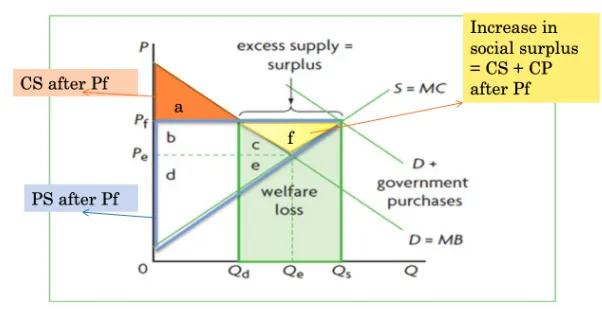
Figure 2.7.3 An agricultural product market with price floor and government purchases of the surplus
Consequences for the market
•
Surpluses
◦
At Pf, Qs>Qd, → surplus (excess supply) of Qs-Qd
•
Government measures to dispose of surpluses
◦
The government buys up the excess supply to maintain the price floor at Pf, and there are several methods about what to do with the surplus it purchases:
▪
store the surplus (giving rise to additional costs for storage)
▪
export the surplus (granting a subsidy to lower the P of the good, involving costs)
•
Firm inefficiency
◦
Inefficient firms with high costs of production do not face incentives to cut costs by using more efficient production methods because high P offers them protection against lower-cost competitors.
•
Overallocation of resources to the production of the good and allocative inefficiency
◦
Too many goods are allocated to the production of a good (Qs) compared to the optimum quantity (Qe).
•
Negative welfare impacts
◦
Consumer surplus: a+b+c → a
◦
Producer surplus: d+e → d+e+b+c+f
◦
Total social surplus: a+b+c+d+e → a+b+c+d+e+f (increased by f)
◦
Government spending to buy the excess supply = Pf x (Qs-Qd)
◦
There is a gain in surplus of f & a loss of Pf x (Qs-Qd). Subtracting the loss from the gain, the welfare loss is the green shaded area, indicating allocative inefficiency that society would be better off if less of the goods were produced.
Consequences for the stakeholders
•
Consumers are worse off
◦
They pay a higher P, while buying a smaller Q of it.
•
Producers are better off
◦
They receive higher P and produce a larger Q, and the government buys up the surplus, → producer revenues increase (Pe x Qs → Pf x Qs)
•
Workers are better off
◦
Greater production of the good → employment increases
•
Government is worse off
◦
Government buys the excess supply→ burden on budget → fewer government funds to spend on other desirable activities in the economy.
•
Stakeholders in other countries
◦
surpluses are sometimes exported → lower world prices due to extra supply made available in world markets
◦
Countries that do not have price supporters are forced to sell their agricultural products at low P → signals local farmers to reduce production → global misallocation of resources since it causes high-cost producers to produce more and low-cost producers to produce less than the social optimum.
Minimum Wage
•
Minimum wage: the price that determines the minimum price of labour that an employer must pay, in order to guarantee an adequate income to low-income workers who tend to be mostly unskilled.
Impacts of minimum wages on market outcomes:
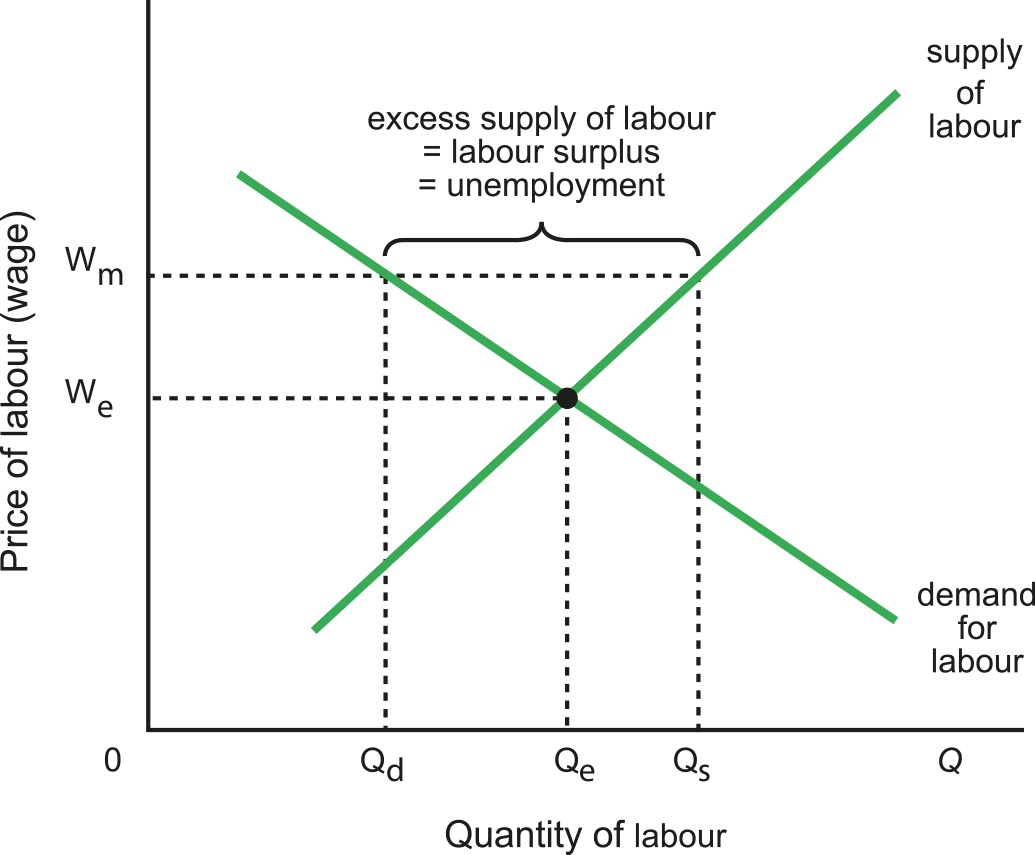
Figure 2.7.4 Labour market with minimum wage (price floor)
•
The minimum wage, Wm, lies above the equilibrium wage, We.
•
At Wm, Q of labour supplied, Qs, is larger than the labour supplied when the labour market is in equilibrium, Qe. The Q of labour demanded (Qd) is less than the Qd at equilibrium, Qe.
•
Results in a surplus of labour in the market (Qs-Qd) = unemployment
Consequences of minimum wages for the economy:
•
Labour surplus (excess supply) and unemployment
◦
Minimum wage creates a surplus of labour equal to Qs-Qd, which is unemployment.
•
Illegal workers at wages below the minimum wage
◦
Often involve illegal immigrants who may be willing to supply their labour at very low wages.
•
Misallocation of labour resources
◦
Industries that rely heavily on unskilled workers will hire less unskilled labor
•
Misallocation in product markets
◦
Firms relying heavily on unskilled workers experience an increase in their costs of production → leftward shift in their product supply curve → smaller Q of output produced.
Consequences of minimum wages for the stakeholders:
•
Firms (employers of labour) are worse off
◦
They face higher costs of production due to higher labour costs.
•
Workers (suppliers of labour) partly gain and partly lose
◦
Some gain because they receive a higher wage than previously (Wm>We); some lose because they lose their jobs.
•
Consumers are worse off
◦
An increase in labour costs → decrease in supply of products→ higher P and lower Q.
3. Indirect taxes
•
Indirect tax are taxes levied on goods and services which is passed on to the consumer in a form of a higher price
•
Levied on producers, indirect taxes result in a shift in the supply curve.
Why governments impose indirect tax
•
To increase government revenue.
•
To discourage the consumption of goods that are harmful to individuals.
•
To redistribute income, by imposing an excise tax on luxury goods.
•
To improve the allocation of resources by correcting negative externalities.
Distinguishing between specific and ad valorem taxes
•
Specific tax: a fixed amount of tax per unit of the good or service sold
◦
e.g.,$3 per packet of cigarettes
•
Ad valorem tax: a fixed % of the P of the good or service
◦
the amount of tax increases as the P of the good or service increases
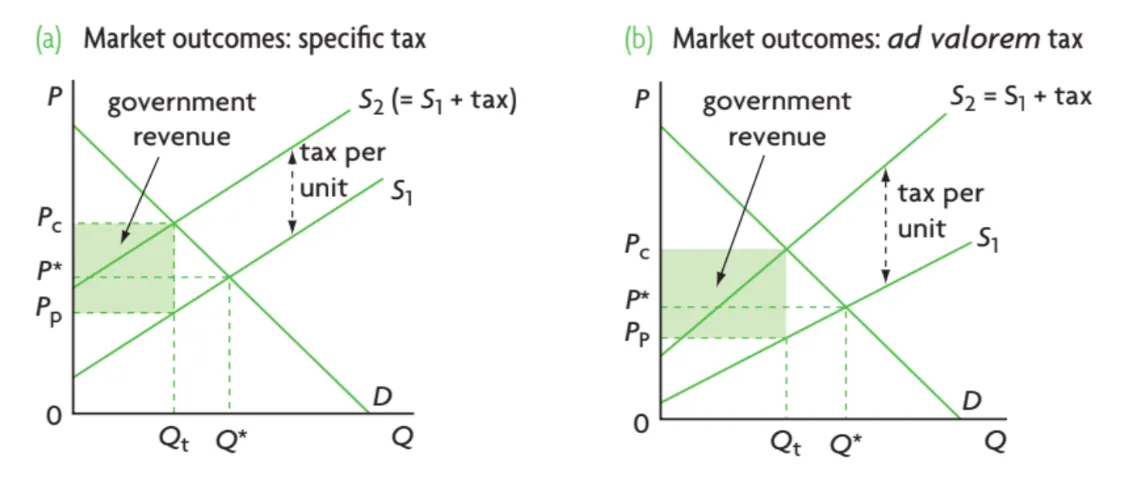
Figure 2.7.5 Supply curve shifts due to an indirect tax
•
Pre-tax equilibrium at P*, Q*
•
Government imposes a specific tax on the good → S curve shifts upwards to S2 by the amount of tax.
•
The D curve remains constant since D is not affected.
•
The new market equilibrium is determined by S2 and D.
◦
P paid by consumers increases to Pc
◦
Q purchased falls to Qt
•
The amount of tax paid per unit of output = vertical difference between the two S curves = Pc-Pp
•
Whereas producers receive from consumers Pc per unit, they must pay the government Pc-Pp per unit.
•
Pp = final P received by producers after paying tax.
Consequences of indirect taxes for various stakeholders
•
Consumers are worse off
◦
Pay a higher P (P* → Pc) and receive less Q of the goods (Q* → Qt).
•
Producers are worse off
◦
Receive a smaller P (P* → Pp) and sell less quantity (Q* → Qt) → fall in revenues ( P* x Q* → Pp x Qt).
•
Government is better off
◦
Earns revenue equal to (Pc-Pp) x Qt → increase in government budget
•
Workers are worse off
◦
Lower amount of output (Q*→Qt) → fewer workers needed to produce it → unemployment
•
Society is worse off
◦
Underallocation of resources to the production of the good (Qt<Q*).
◦
After-tax social surplus is less than pre-tax social surplus by the amount of triangles a+b, which is welfare loss.
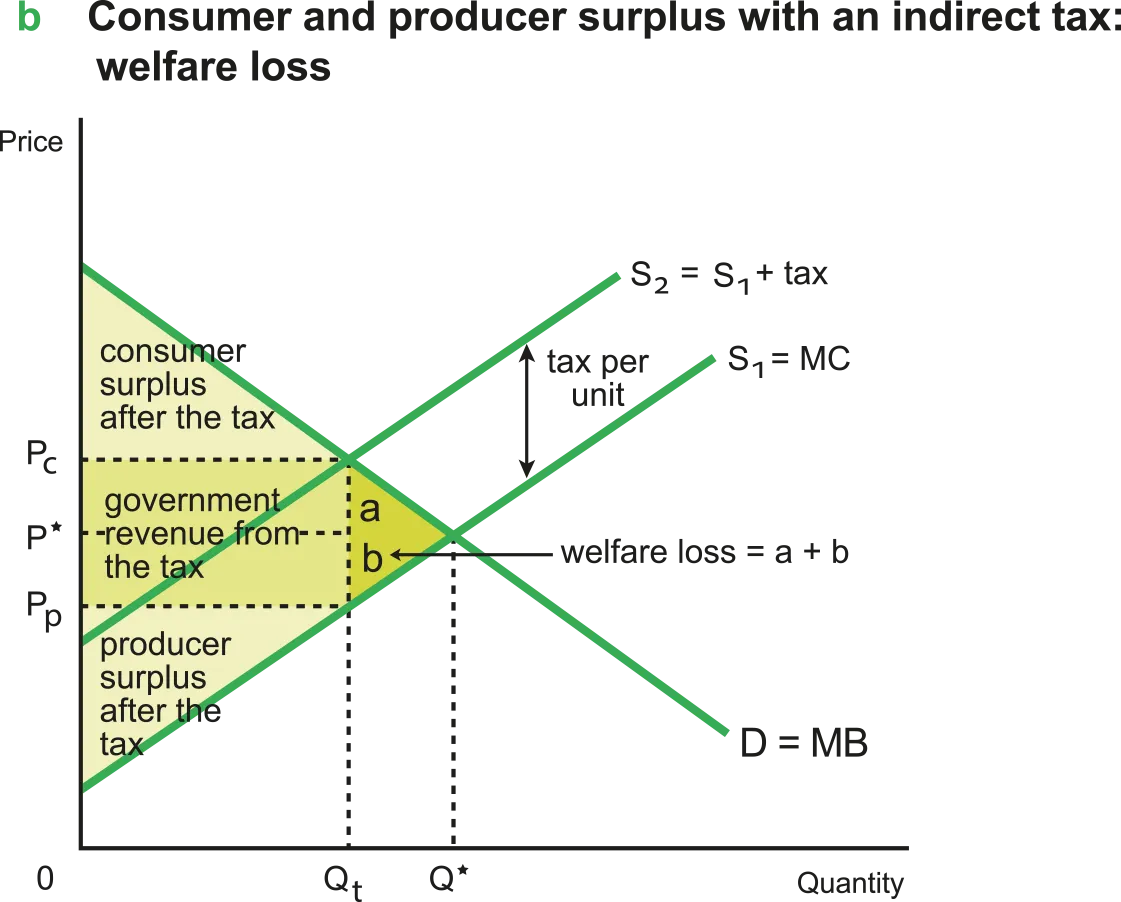
Figure 2.7.6 Effects of indirect taxes on consumer and producer surplus
4. Subsidies
•
Subsidies: assistance by the government to individuals or groups of individuals, such as firms, consumers, industries or sectors of an economy.
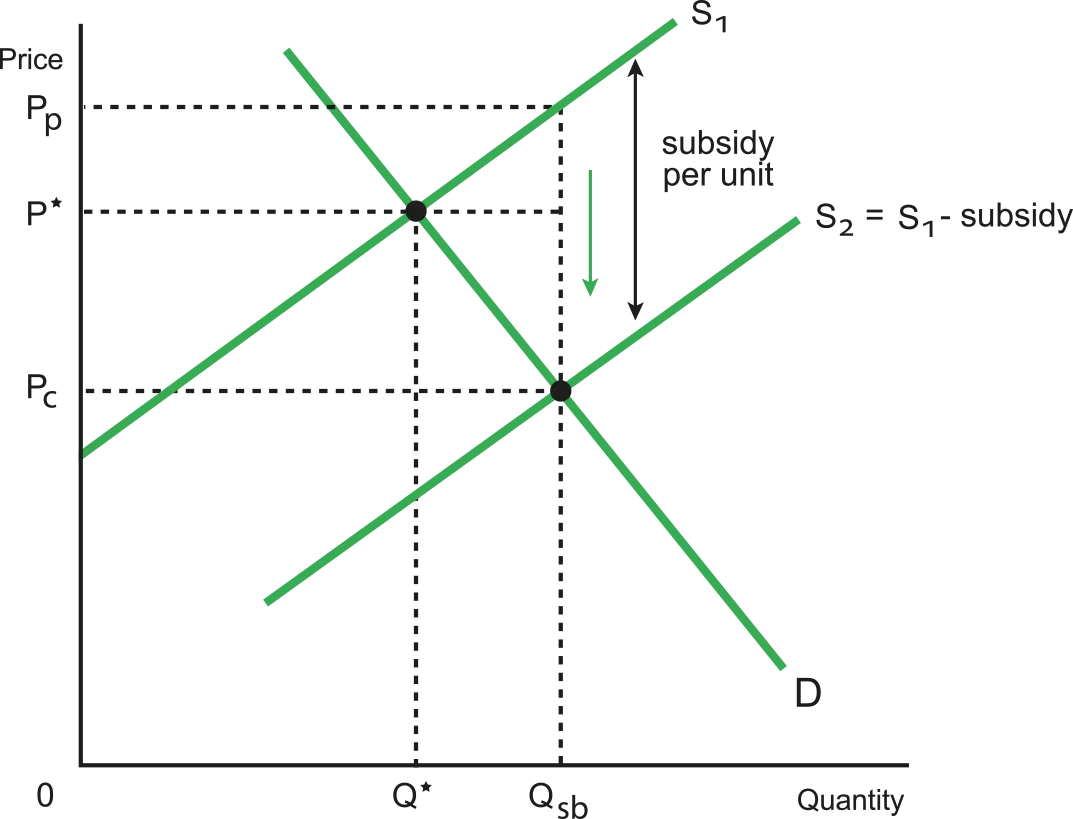
Figure 2.7.7 Impacts of subsidies on market outcomes
Why governments grant subsidies
•
To increase the revenues (and hence incomes) of producers.
•
make necessities affordable to low-income consumers.
•
To encourage the production and consumption of particular goods and services that are desirable for consumers (e.g., education).
•
To support the growth of particular industries in the economy (e.g., solar industry).
•
To encourage exports of particular goods.
•
To improve the allocation of resources by correcting positive externalities.
5. Direct provision of services
•
Public goods and services, such as healthcare, are essential for improving lives.
•
Governments provide these to ensure fairness and equal access for all.
◦
Eg.) healthcare services guarantee universal access to medical treatment.
An Explanation and Evaluation of the State Provision of Public Services
Explanation | Advantages | Disadvantages |
Public goods benefit society and aren't supplied by private firms because of the free rider problem.
Eg.) Roads, parks, lighthouses, national defence. | Provided free at the point of consumption.
Accessible to everyone regardless of income.
Typically offer both private and external benefits to society. | Funded through general taxation.
Opportunity cost involved in their provision.
Free products may lead to excess demand and long waiting times, such as procedures at public hospitals. |
6. Command and control regulation and legislation
•
Legislation is the process of creating laws
•
Regulation is the process of monitoring and enforcing the laws
•
The use of legislation and regulation are referred to as command and control as it involves ongoing government intervention
Evaluation of Government Regulation & Legislation
Explanation | Advantages | Disadvantages |
Governments establish laws to minimise harm from external costs of consumption/production.
Regulatory agencies are often created to ensure compliance with these laws. | Individuals or firms may face fines or imprisonment for rule violations selling cigarettes to minors.
These measures help to decrease the external costs of demerit goods.
Fines can also generate additional government revenue. | Enforcing laws necessitates the government to recruit more staff for regulatory agencies.
May be challenging to enforce laws as it involves complex processes to identify law violations by firms/consumers.
Regulations may lead to underground (illegal) markets, potentially amplifying external costs on society. |
7. Consumer nudges (HL only)
Governments utilise consumer nudges to influence individual behaviours and choices without imposing stringent regulations.
•
Nudges guide people towards certain decisions while preserving their freedom of choice.
◦
These interventions, based on behavioural economics principles, aim to steer individuals towards beneficial decisions for themselves and society.
•
Nudges should prioritise transparency, respect for autonomy, and clear societal benefits.
◦
Ethical considerations are crucial to avoid manipulative or coercive interventions.
Examples of Nudging Methods used by Governments
1.
Provision of Information
•
Provide more information to consumers = help consumers make more informed choices
◦
E.g) Products with nutritional info
2.
Default Options
•
Pre-selected choices that people tend to stick with
3.
Framing and Presentation
•
Framing techniques to highlight the positive aspects
◦
Promoting the consumption of fruits and vegetables
4.
Incentives and Disincentives
•
By encourage or discourage specific behaviours
5.
Social Norms & Peer Influence
•
Public campaigns that showcase positive role models
◦
E.g) Appeals to individuals' desire to conform to social norms
6.
Feedback and Reminders
•
E.g) Encourages households to reduce their electricity consumption to match that of their housing peers
•
Cost-effective compared to other policy measures.
•
Preserves freedom of choice while guiding individuals towards certain decisions.
•
Effective in promoting healthier behaviours and improving public health.
•
Facilitates bettAdvantageser decision-making by simplifying complex information.
•
Contributes to environmental sustainability without imposing strict regulations.
Disadvantages:
•
Ethical concerns arise regarding manipulation and lack of individual awareness.
•
Lack of transparency makes it challenging for individuals to understand or question the influences behind their choices.
•
Unintended consequences may arise as citizens become accustomed to nudges and actively resist them.
•
Variable success rates due to differences in cognitive biases, cultural backgrounds, or personal circumstances