

Exchange rate: the value of one currency expressed in terms of another currency.
Exchange rate systems
•
Free floating exchange rate system: the value of a currency is determined by market forces.
•
Fixed exchange rate system: exchange rate set by the government and is maintained through appropriate central bank intervention.
•
Managed exchange rate system: exchange rate is allowed to float but there is periodic intervention by the central bank
Evaluating free floating exchange rate system
Advantages | Disadvantages |
Adjust to correct the current account deficit.
• Current account deficit → depreciation → help decrease current account deficit.
Doesn’t need to be manipulated by interest rates.
• Leaves monetary policy free to pursue other macroeconomic objectives (e.g. low inflation).
Doesn’t need to be manipulated by the buying and selling of foreign reserves. | Increased uncertainty → more difficult to trade.
• Firms have more uncertainty when calculating the costs of their imported raw materials.
May not readjust to eliminate a current account deficit.
Increase inflation.
• Depreciating currency → increase cost of imports → inflationary pressures. |
Appreciation, depreciation, revaluation, devaluation
•
Appreciation: increase in the value of a currency in terms of another currency in a floating exchange rate system.
•
Depreciation: fall in the value of a currency in terms of another currency due to market forces in a floating exchange rate system.
•
Revaluation: increase in the value of a currency (fixed exchange rate system).
•
Devaluation: decrease in the value of a currency (fixed exchange rate system).
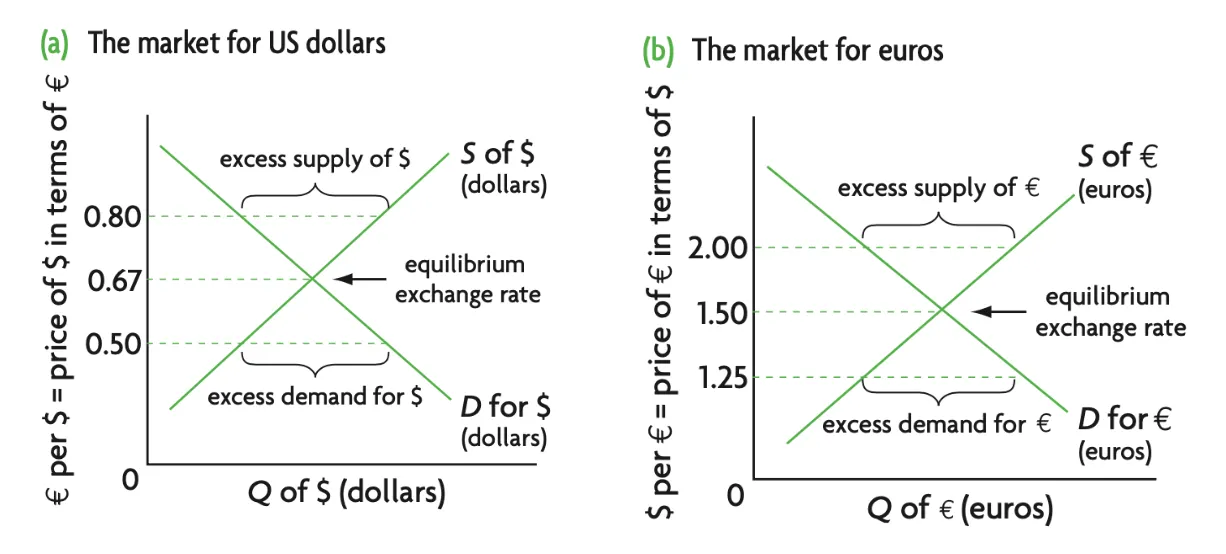
Figure 4.5.1 Free Floating Exchange rateMarket for pounds (in USD)
Diagram Analysis
Currency Pricing:
◦
Prices of currencies are expressed in terms of another currency (e.g., dollar in euros).
◦
No independent unit to measure the value of currencies.
Equilibrium Exchange Rate:
◦
Intersection of demand and supply curves.
◦
Example equilibrium rate: 0.67 euro per dollar.
◦
Higher rate (e.g., 0.8 euro per dollar) → excess supply of dollars.
◦
Lower rate (e.g., 0.5 euro per dollar) → excess demand for dollars.
◦
Forces of demand and supply balance the quantity demanded and supplied.
Market for Euros:
◦
Similar principles as the dollar market.
◦
Equilibrium rate: 1 euro = 1.5 dollars.
◦
Higher euro price → excess supply of euros.
◦
Lower euro price → excess demand for euros.
Causes of changes in the exchange rate of a currency
Factors that affect the demand for a currency
Exports and factors affecting exports
◦
Demand for exported goods.
▪
If the demand for a country’s exports rises, then thethan demand for their currency will also rise.
◦
Demand for exported services.
◦
Inflation rate.
▪
If a country has a relatively low rate of inflation then its exports will become more competitive.
▪
This will increase the demand for exports and therefore the demand for their currency.
◦
Higher inflation rates in Indonesia will decrease demand for the rupiah (D1 for Rp → D2 for Rp) since its exports will become less competitive. Therefore, the rupiah will depreciate (e1 → e2).
◦
Relative growth rates.
▪
If a country’s trading partners experience economic growth they are likely to demand more of the country’s exports. This increases the demand for the currency.
◦
Indonesian economic growth increases → incomes increase → Indonesian purchase more imports → supply of rupiahs increases (S1 of Rp → S2 of Rp) → the rupiah will depreciate (e1 → e2).
Investment and factors affecting investment
•
Inward foreign direct investment (FDI).
◦
FDI: investment by a multinational corporation based in one country in productive assets in another country.
◦
e.g. Samsung builds factories in Vietnam - in order for Samsung to invest in Vietnam, they need to purchase VND, thus increasing the demand for VND.
•
Inward portfolio investment.
◦
Portfolio investment: financial investments in stocks and bonds.
◦
In order for foreign investors to purchase stocks or bonds they first need to purchase the relevant currency.
Other factors that affect demand for a currency
•
Interest rates
◦
Increases in interest rates increase the incentive to save in that currency.
◦
In order to save in a country, you first need to purchase then that country’s currency . Therefore, it increases the → demand for that currency ↑.
•
Inward flow of remittances
◦
Remittances: transfers of money from foreign workers back to their home country.
◦
e.g. if a Vietnamese worker in the United States wishes to send money back home to their family they would have to buy VND. → This increases demand for VND ↑ .
•
Speculation that a currency may speculate
◦
If there is speculation that a currency may appreciate, then speculators will demand more of it .→ demand for currency ↑
Factors that affect the supply of a currency
Imports and factors affecting imports
•
Domestic demand for imported goods.
◦
If Vietnamese consumers wish to purchase more imports, then they must sell more VND to the foreign exchange market to buy the foreign currency to purchase the imports. This increases the supply of VND.
•
Domestic demand for imported services.
•
Inflation rate.
◦
If a country has a relatively high inflation rate, then imports will become more competitive. This increases the supply of imports and supply for their currency.
•
Relative growth rates.
◦
If a country’s trading partners experience a recession and falling incomes then the country will supply more imports since imports are income elastic. This increases the supply of the currency.
Investment and factors affecting investment
•
Outward FDI.
◦
Outward FDI: Investment by MNCs in productive facilities outside the home country.
◦
If MNCs want to invest out of Vietnam they will need to sell VND and there would be an increase in the supply of VND.
•
Outward portfolio investment.
Other factors that affect the supply of a currency
•
Interest rates.
◦
Lower interest rates increase the supply of a currency: more savers sell the currency to save their money in a country with higher interest rates (higher reward for saving).
•
Outward flow of remittances.
•
Speculation that the currency might depreciate.
◦
If currency speculators expect the currency to depreciate, they sell the currency in the hope of buying it later after its depreciation.
Exchange rate changes: appreciation and depreciation
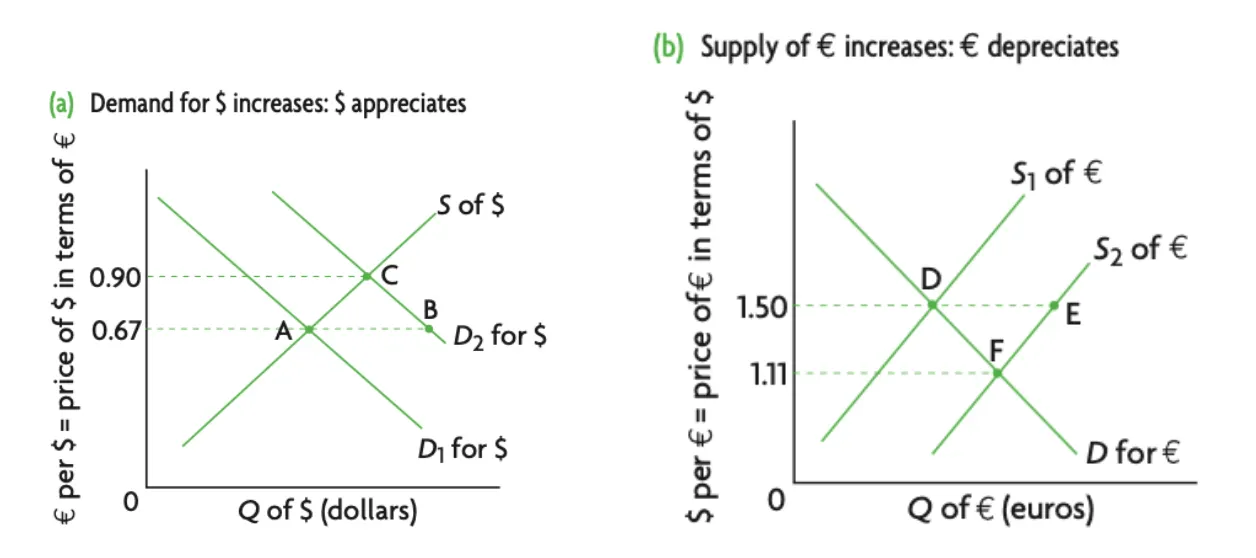
Figure 4.5.2 Market for USD (in Euro)
Diagram Analysis
Figure (a): Appreciation of the Dollar
Occurs when:
•
Increase in demand for dollars (demand curve shifts right).
•
Decrease in supply of dollars (supply curve shifts left).
•
Example:
◦
Euro zone consumers want to import more from the US.
◦
Demand for dollars increases, shifting the demand curve right (D1 to D2).
◦
Equilibrium exchange rate rises to 0.90 euro = 1 dollar.
◦
Dollar appreciates (increases in value relative to the euro).
Figure(b): Depreciation of the Euro
Occurs when:
•
Decrease in demand for dollars (demand curve shifts left).
•
Increase in supply of dollars (supply curve shifts right).
•
Example:
◦
Increased supply of euros as eurozone consumers buy more dollars.
◦
Supply of euros increases, shifting the supply curve right (S1 to S2).
◦
Equilibrium exchange rate rises to 1.11 dollar = 1 euro.
◦
Euro depreciates (decreases in value relative to the dollar).
General Principles
Interdependence of Currency Movements:
•
Appreciation of one currency involves depreciation of another.
•
Applies to all currencies in a floating exchange rate system:
◦
When one currency appreciates, all others depreciate relative to it.
◦
When one currency depreciates, all others appreciate relative to it.
Consequences of changes in the exchange rate
Impact on the current account balance
Appreciation | Depreciation |
• Import prices ↓
• Make exports appear more expensive → demand for imports ↑, and decrease demand for exports ↓
• Value of imports (M) ↑ and value of exports (X) ↓
• AD ↓ | • Import prices ↑ and make exports cheaper
• Demand for imports ↓, and demand for exports ↑
• Value of imports (M) ↓, decrease and value of exports (X) ↑increase
• AD ↑ |
Impact on economic growth
Appreciation | Depreciation |
• Decrease import prices ↓
• Make exports appear more expensive
• Demand for imports ↑, and demand for exports ↓
• Value of imports (M) ↑, increase and value of exports (X) ↓
• AD ↓
• Economic growth ↓ | • Import prices ↑ and make exports cheaper
• Demand for imports ↓, and demand for exports ↑
• Value of imports (M) ↓ and value of exports (X) ↑
• AD ↑
• Economic growth ↑ |
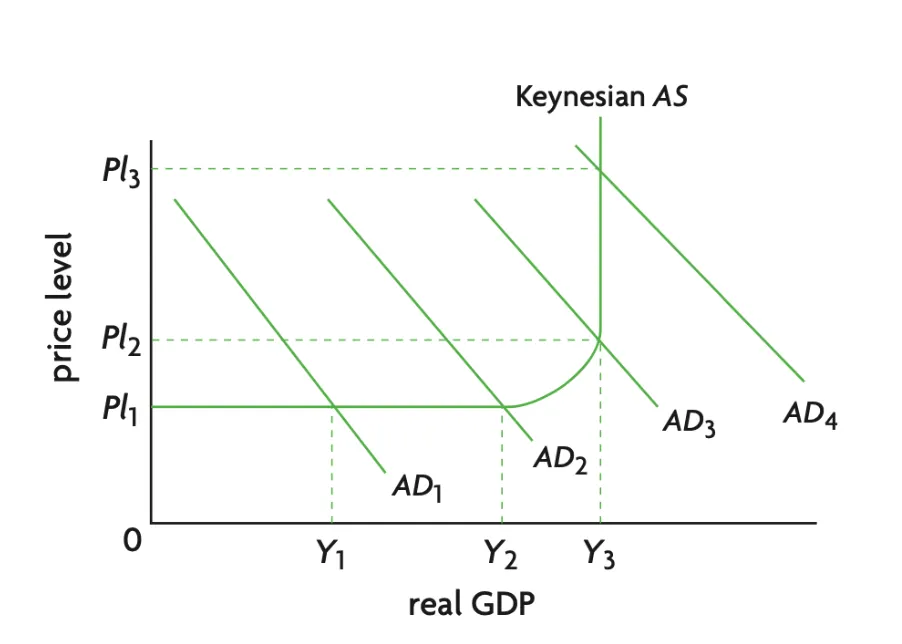
Figure 4.5.8 Increase in real output from depreciation
Diagram Analysis
•
Depreciation → cheaper exports and more expensive imports → increase the value of net exports (X-M) ↑ → X-M is a component of AD → AD ↑increase (AD1 → AD2) → real output ↑increase (Y1 → Y2).
Impact on unemployment
Appreciation | Depreciation |
• Decrease import prices ↓
• Make exports appear more expensive
• Increase demand for imports ↑, and decrease demand for exports
• Value of imports (M) ↑, and value of exports (X) ↓
• AD ↓
• Labour is derived demand → unemployment increase | • Increase import prices ↑ and make exports cheaper
• Decrease demand for ↓ , imports and increase demand for exports ↑
• Value of imports (M) ↓ and value of exports (X) ↑ increase
• AD ↑
• Labour is derived demand → unemployment ↓ |
Impact on inflation
Appreciation | Depreciation |
• Decrease import prices ↓
• Make exports appear more expensive
• Increase demand for imports ↑, and demand for exports ↓
• Value of imports (M) ↑ and value of exports (X) ↓
• AD ↓
• Demand pull inflation ↓ | • Increase import prices ↑ and make exports cheaper
• Decrease demand for imports ↓, and demand for exports ↑
• Value of imports (M) ↓ and value of exports (X) ↑
• AD ↑
• Demand pull inflation ↑ |
Fixed exchange rates
•
Exchange rates are fixed by the central bank and do not change with supply and demand.
•
Maintaining the fixed rate requires constant intervention by the central bank or government.
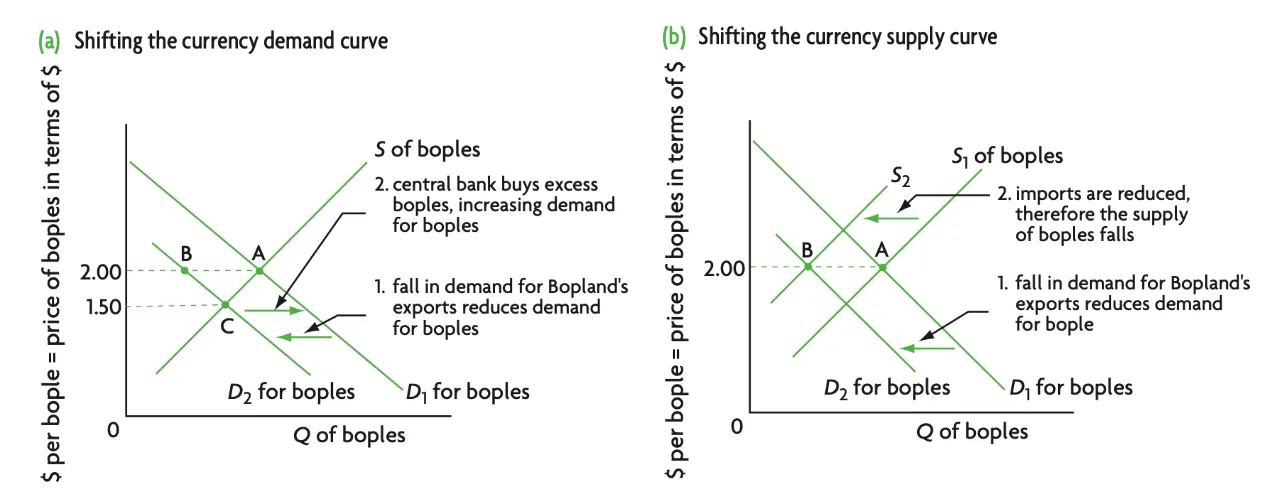
Figure 4.5.9 Fixed Exchange Rate
Diagram Analysis
Example: Bopland and the Bople
•
Initial State: Fixed exchange rate at 2 USD = 1 bople.
•
Demand Decrease:
◦
Demand for boples shifts left (D1 to D2), creating excess supply.
◦
Under floating rates, the exchange rate would drop to 1.50 USD = 1 bople.
◦
Central bank intervention required to maintain 2 USD = 1 bople.
Central Bank Actions
•
Excess Supply:
◦
Central bank buys excess boples using foreign reserves.
◦
Shifts demand curve back to D1.
•
Excess Demand:
◦
Central bank sells boples, buying USD to reduce excess demand.
Long-Term Issues
•
Sustained Excess Supply:
◦
Central bank may exhaust foreign reserves.
◦
Requires additional measures to maintain fixed rate.
•
Sustained Excess Demand:
Central bank sells domestic currency, buys foreign exchange to maintain rate
Types of central bank intervention to maintain a fixed exchange rate
•
Foreign currency reserves.
•
Change in interest rates.
The Exchange rate is lower than desired | The Exchange rate is higher than desired | |
Foreign currency reserves | Sell foreign currency reserves and purchase domestic currency. | Sell domestic currency and purchase foreign currency. |
Change in interest rates | Increase interest rates → increase demand for currency. | Decrease interest rates → increase supply of currency. |
Evaluating fixed exchange rates
Advantages | Disadvantages |
Reduced uncertainty for firms regarding prices of raw materials bought from abroad and revenue from goods sold abroad. | High cost of maintaining fixed exchange rates. |
Governments are forced to keep inflation under control. | Difficult to select the correct exchange rate. |
Ensure that there is no speculative demand for the currency. |
Comparing fixed and floating exchange rates (HL only)
Floating exchange rate | Floating exchange rate | |
Degree of certainty for stakeholders. | Consumers and firms have high certainty about future exchange rates.
• Encourage trade and investment → economic growth. | Cause uncertainty for consumers and firms. |
The role of foreign currency reserves. | The centralCentral bank is required to hold significant foreign currency reserves. | The centralCentral bank is not required to hold significant foreign currency reserves. |
Effects on inflation. | Great incentive to maintain low inflation.
• Cannot rely on currency depreciation.
• Government adopts contractionary policies. | Less concern to lower inflation.
• Rising export prices → reduce demand for exports → reduce demand for currency. |
Policy flexibility. | The centralCentral bank has to use the interest rate.
• Monetary policy cannot be used.
• Cautious about implementing expansionary fiscal policy. | Both monetary and fiscal policies can be used freely. |
Effects of speculation. | Limited speculation - currency cannot change in value. | Currency speculation → exchange rate fluctuations.
• Speculators believe a currency is about to depreciate → sell the currency → increase the supply of currency. |
Managed exchange rates
Managed exchange rates:
exchange rate is determined by market forces, but the government intervenes from time to time to keep the currency within limits.
Overvalued currency | Undervalued currency |
The vValue of a currency exceeds its free market value.
• Fixed or managed exchange rate system. | The valueValue of a currency is less than its free market value.
• Fixed or managed exchange rate system. |
Evaluating overvalued currency
Advantages | Disadvantages |
Downward pressure on inflation.
• Appreciation → imports cost less.
• Imported raw materials are cheaper for firms → decrease cost-push inflation ↓.
• Imported finished goods are cheaper in shops → decrease inflationary pressure ↓. | Exports are more expensive → current account deficit.
• Decrease demand for country’s exports ↓ → current account deficit → unemployment. |
Improves living standards.
• Cheaper imports → domestic citizens can buy more foreign goods. | Increased pressure on domestic industries.
• Cheaper imports → lower demand ↓ → higher unemployment ↑. |
No need for higher interest rates to support the currency. |
Evaluating undervalued currency
Advantages | Disadvantages |
Cheaper exports.
• Depreciation → cheaper exports → increase demand for exports ↑ → increase employment ↑ in domestic firms . | Upward pressure on inflation.
• Depreciation → more expensive imports.
• Imported raw materials are more expensive for firms → increase cost-push inflation ↑.
• Imported finished goods are more expensive in shops → increase inflationary pressures ↑. |
Decreased pressure on domestic industries.
• Imports become more expensive. | Decrease standard of living.
• More expensive imports → domestic citizens can buy fewer foreign goods → decrease standard of living ↓. |