

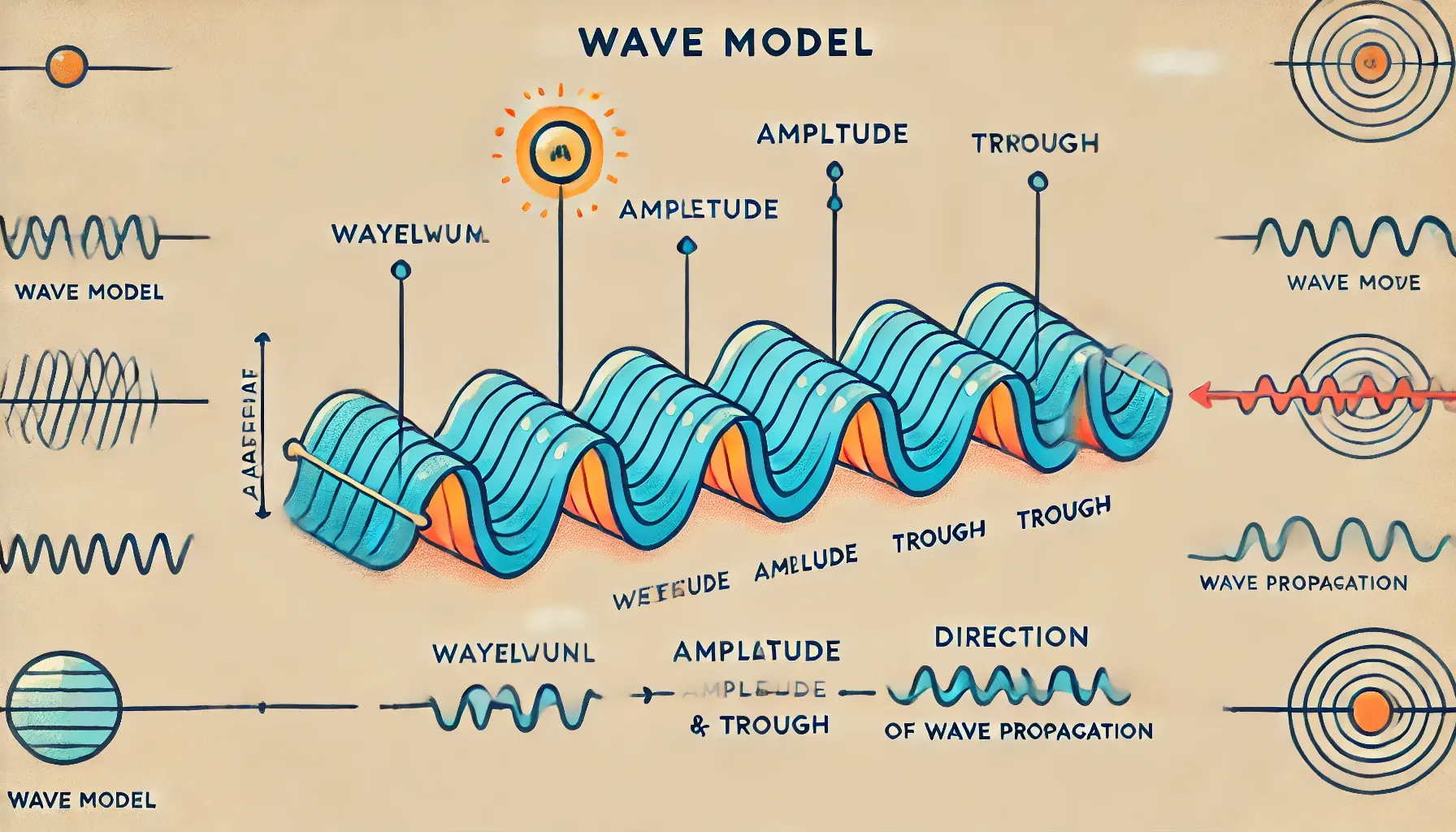
C.2.1 Traveling waves, wave properties, transverse and longitudinal waves
Key Terms
Terminology | Definition |
oscillating source | sources that generates waves in certain directions |
electromagnetic waves | waves of the electromagnetic field which can travel through vacuum |
medium | Matter that mechanical waves uses for passing through |
crest | point on a wave that has the maximum value of upward displacement |
Traveling waves
•
continuous disturbance in a medium that travels in the direction of propagation
•
Energy is transferred by waves, but matter is not transferred by waves
•
Waves are generated by oscillating sources
•
Oscillations can propagate through a medium or in vacuum, depending on the type of wave
•
Direction of a wave is defined as the direction of the propagation of energy
•
continuous waves → succession of individual oscillations, wave pulse → one oscillation

C.2.1-1 Graph showing the progression of travelling wave
Types of Waves (Transverse / Longitudinal)
Real life Examples
Transverse
Water ripples: ‘up and down’ motion of the floating object
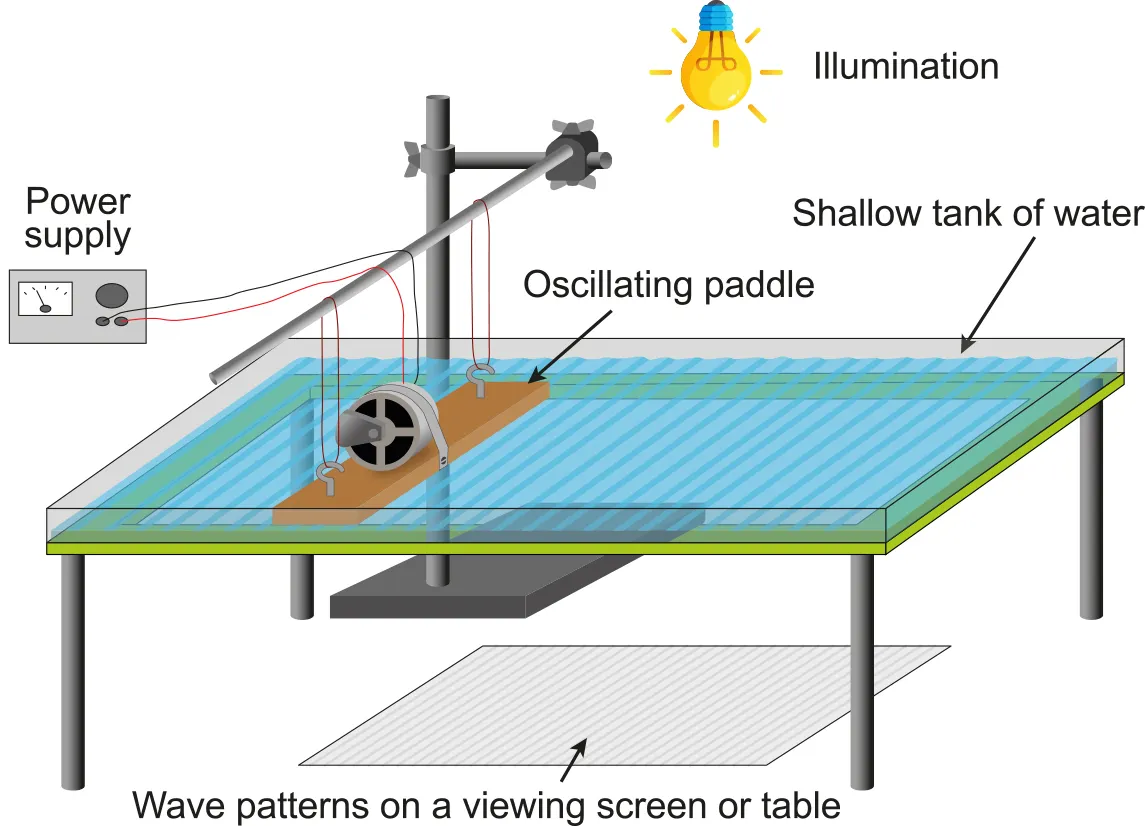
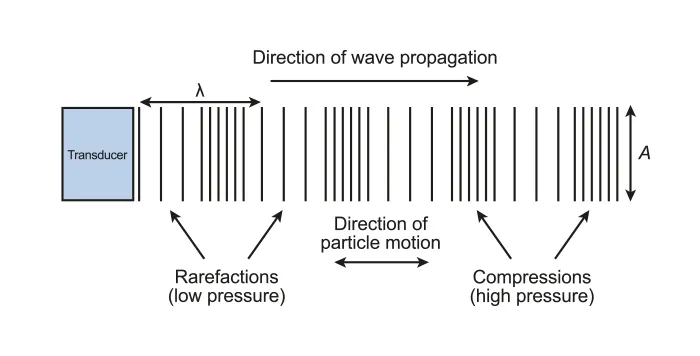
Longitudinal
Sound waves
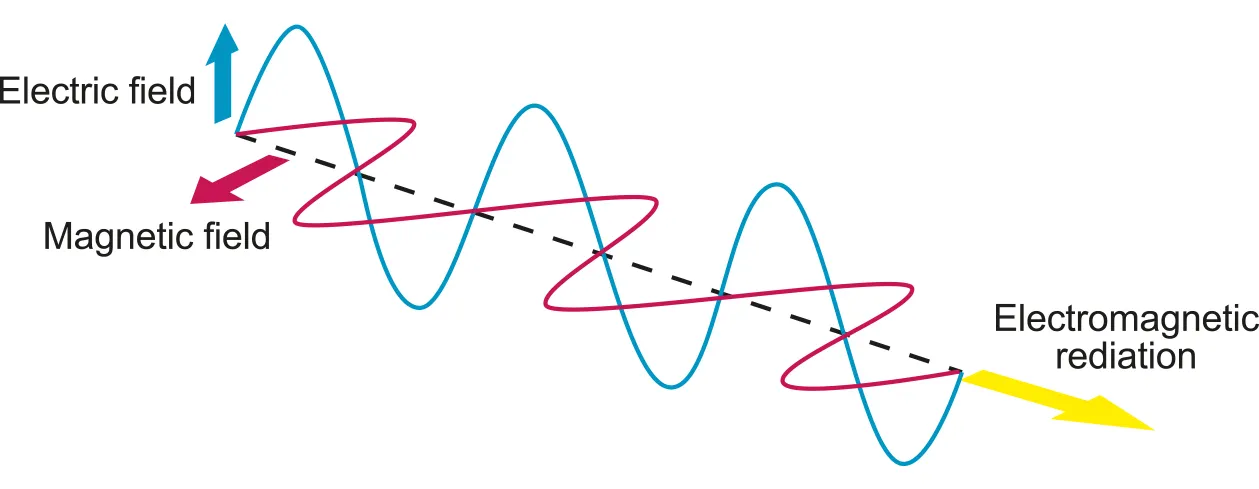
Light waves
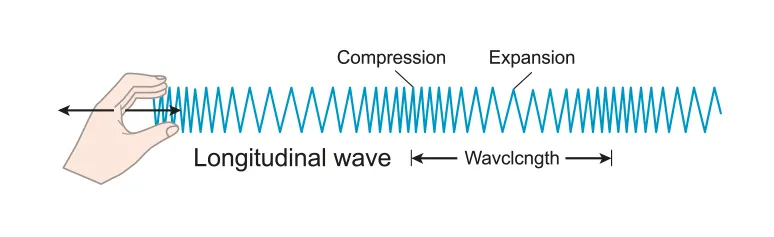
Compression waves down a spring
Transverse waves
•
crest: top of the wave; trough: bottom of the wave
•
wavefronts: parts of the wave that are moving together; indication of wave pattern movement
•
rays: indication of the direction of energy transfer
•
Direction of particle oscillation is perpendicular to the direction of energy transfer

C.2.1-2 annotated graph of transverse wave
•
Transverse mechanical waves cannot be propagated through fluids
Longitudinal waves
•
Direction of particle oscillation is parallel to the direction of motion and direction of energy transfer
•
Compression: point on the wave with high pressure with the particles being closer to each other
•
Rarefaction: point on the wave with low pressure with the particles being further apart from each other

C.2.1-3 annotated graph of longitudinal wave
Wave equations
Wave Graphs
•
There are two types of graphs that represents the wave
◦
can be represented by displacement - distance graph and displacement - time graph
Displacement - Distance Graph
•
represents displacement of particles on the wave at a fixed time
•
formed by distance traveled by wave and displacement of particles

C.2.1-4 Displacement- Distance wave graph with key terms annnotated
•
can observe value of amplitude and wavelength from the graph
Displacement - Time Graph
•
Represents variation of the displacement of one particle with time
•
formed by time and displacement of particles

C.2.1-5 Displacement - time wave graph with key terms annotated
•
can observe value of period and amplitude from the graph
C.2.2 The nature of electromagnetic waves
Electromagnetic Waves : wave that is generated by combined oscillation of an electric and a magnetic field
•
Electric and magnetic field oscillate perpendicular to each other and to the direction of wave propagation

C.2.2-1 Diagram of electromagnetic wave
•
All electromagnetic (EM) waves travel at the speed of
•
c=3108ms-1 in vacuum
•
EM waves are transverse waves
•
EM waves form a continuous spectrum based on their frequency

C.2.2-2 alined diagram of waves in their wavelength
Wavelength of Electromagnetic Waves
Electromagnetic Wave | Wavelength (m) |
radio wave | |
microwave | |
infrared | |
visible light | |
ultraviolet | |
X-ray | |
gamma ray |
C.2.3 The nature of sound waves
Sound Waves
•
Sound waves travel at the speed of approximately 343.2ms-1 (in 20 degrees Celsius dry air).
•
Sound waves are longitudinal waves, so requires a medium in which to propagate
•
Since the sound wave is longitudinal wave, as the sound wave travels series of compression and rarefactions happens

C.2.3-1 Diagram of sound wave
Factors of Sound Waves
•
Nature of material
•
Density
•
Temperature (c ∝ T for an ideal gas)
•
Humidity (for air)