Mission
People
Join Us
Pricing
FAQ
Mentoring Program Curriculum (1)
/
Subjects
/
Physics
/
Topics
/
C. Wave behaviour
Mentoring Program Curriculum (1)
/
Subjects
/
Physics
/
Topics
/
C. Wave behaviour
Share
Mission
People
Join Us
Pricing
FAQ
C. Wave behaviour
Created
2024/06/24 03:17
Tags
갤러리 보기
Search
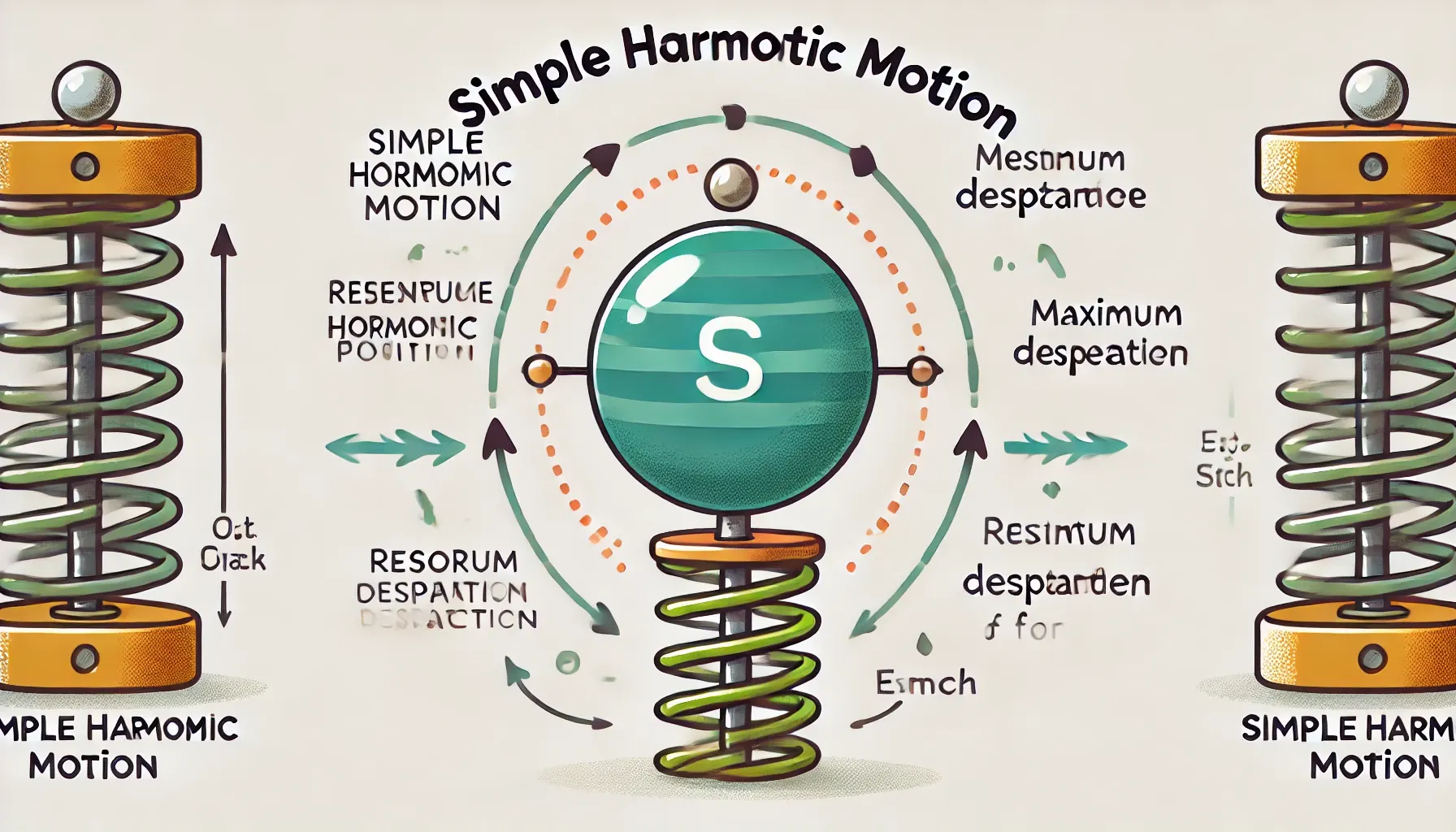
C.1.1 Simple harmonic oscillations and its conditions
Oscillation: periodic motions which center around an equilibrium position
Wave: transfer of energy without transfer of matter
Simple harmonic motion (SHM)
: motion in which the restoring force (acceleration) is directly proportional to the displacement of the body from its equilibrium point
•
Period and amplitude are constant
•
Period is independent of amplitude
C.1 Simple Harmonic Motion
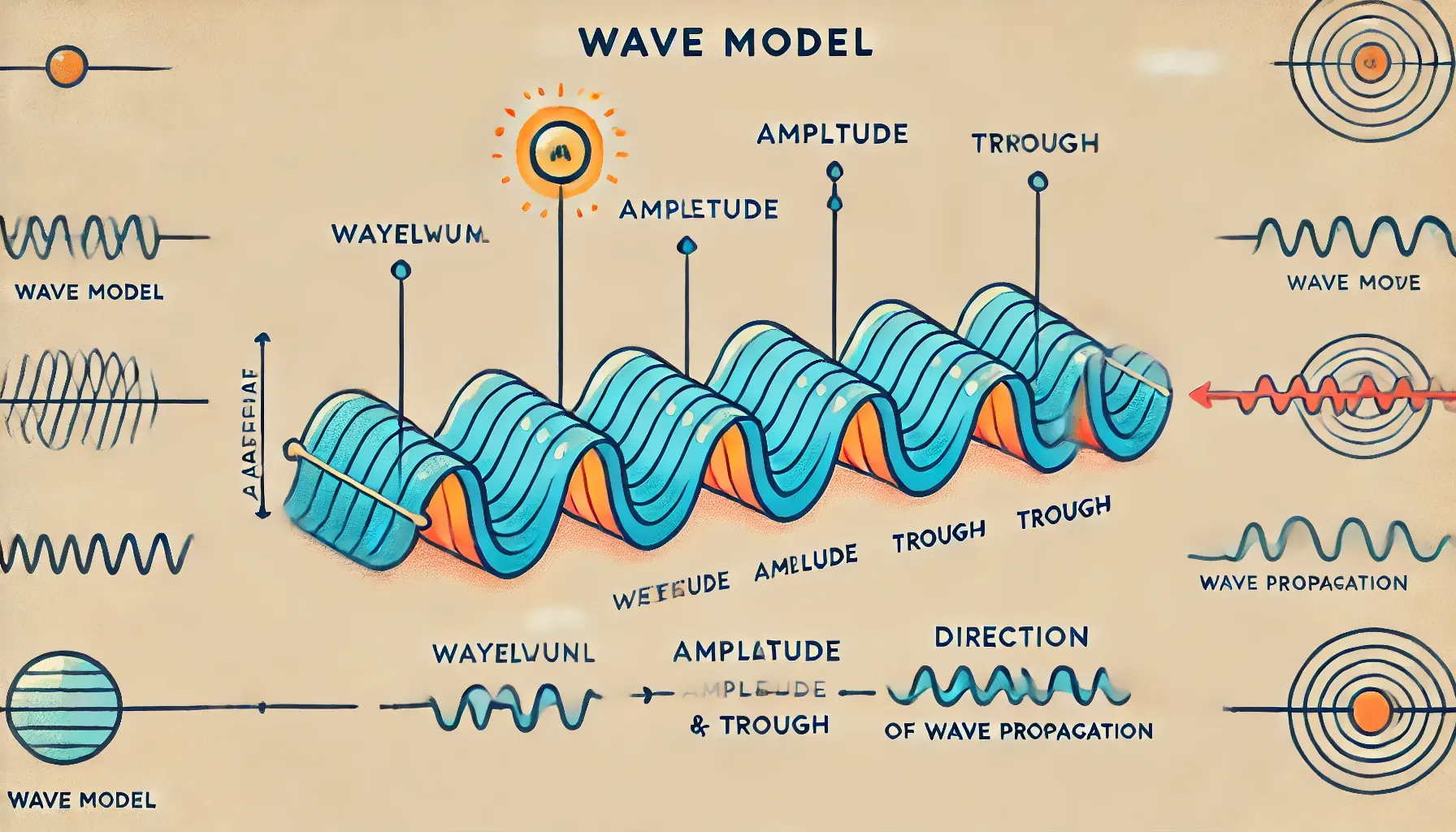
C.2.1 Traveling waves, wave properties, transverse and longitudinal waves
Key Terms
Traveling waves
•
continuous disturbance in a medium that travels in the direction of propagation
•
Energy is transferred by waves, but matter is not transferred by waves
•
Waves are generated by oscillating sources
C.2 Wave Model
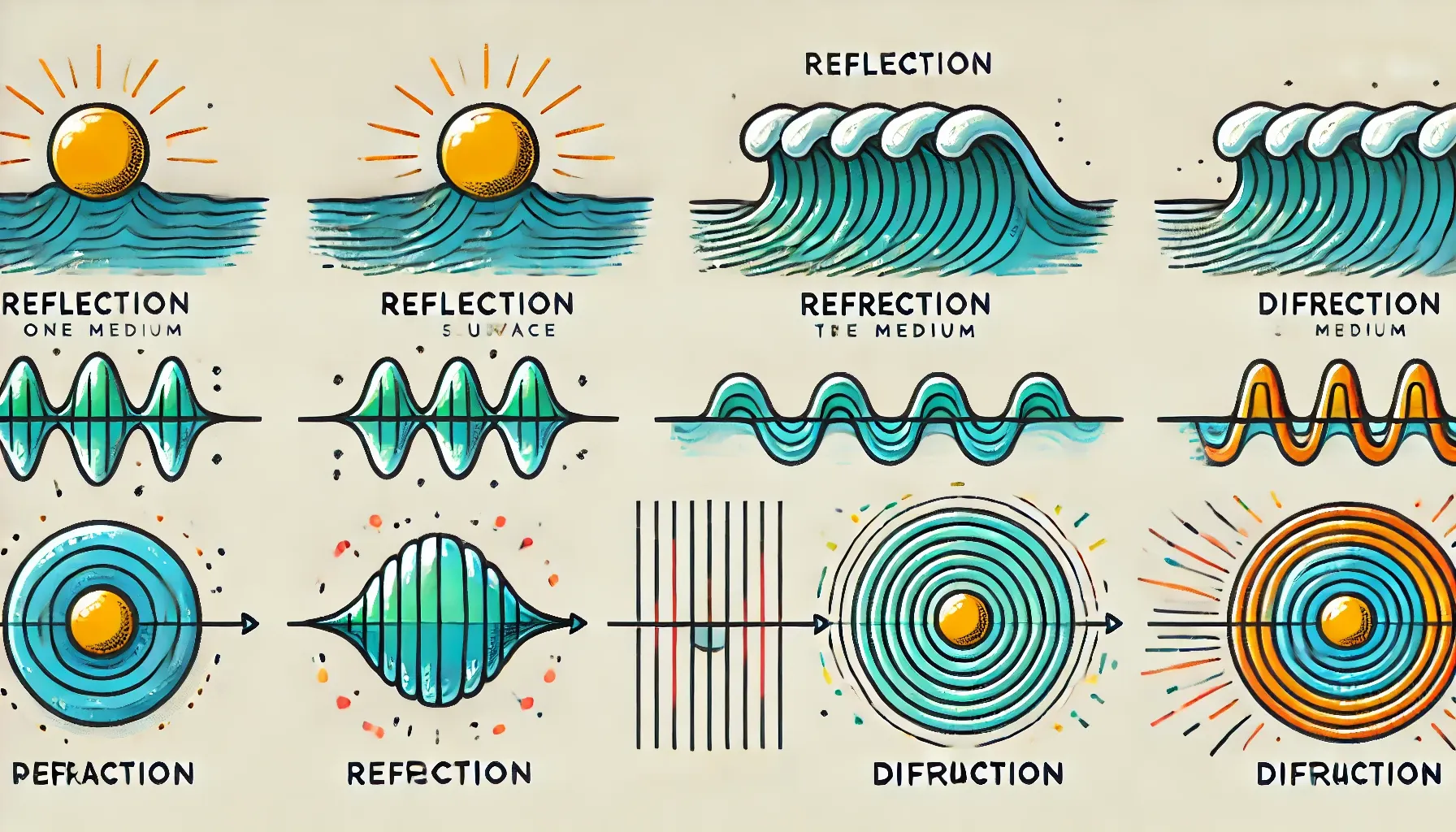
C.3.1 Wavefronts and rays, Amplitude and Intensity
Wave characteristics and definitions
Waves can be described in terms of the motion of a wavefront and/or in terms of rays.
Wavefronts: surface joining neighboring points where oscillations are in phase with each other
•
Can be curves or straight lines
•
Always perpendicular to the direction of wave propagation
C.3 Wave Phenomena
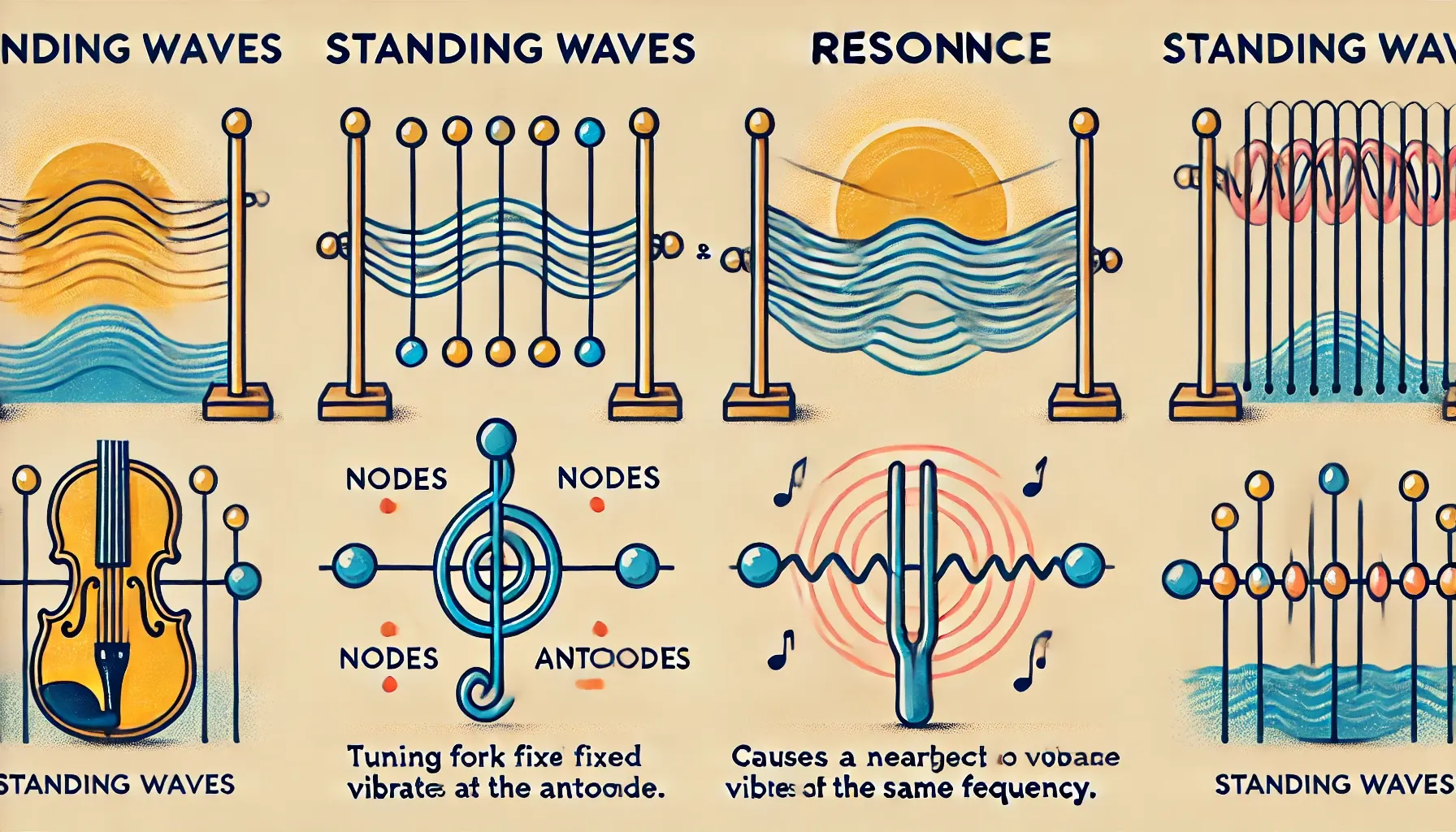
C.4.1 The nature of standing waves
Standing waves result from the superposition of two opposite identical waves:
Standing waves are formed when the two waves interfere with:
•
the same amplitude
•
the same frequency
•
traveling in opposite directions
In standing waves:
C.4 Standing Waves and Resonance
C.5.1 The Doppler Effect
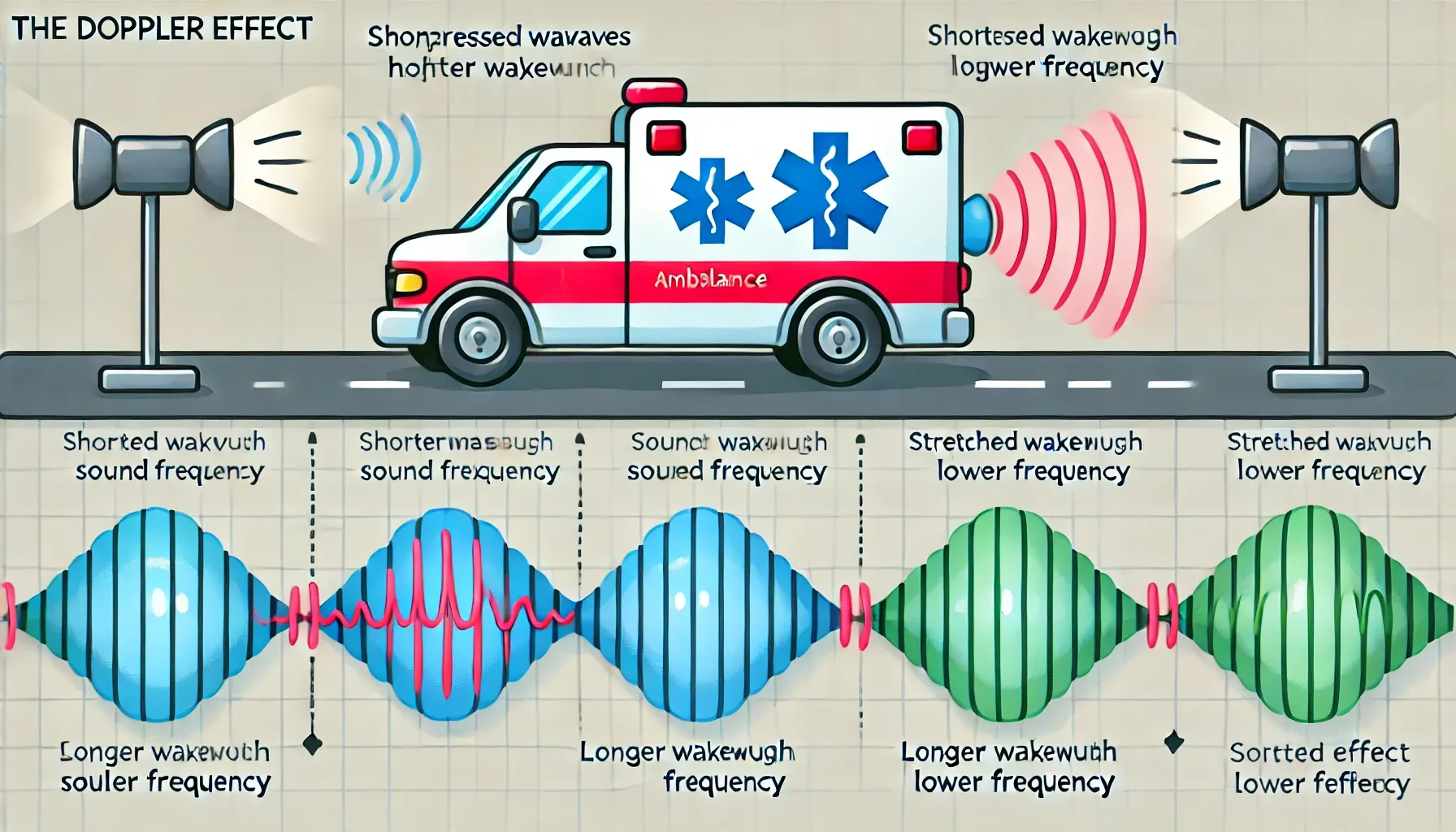
The Doppler effect
•
When a source of sound, such as the whistle of a train or the siren of an ambulance, moves away from an observer :
◦
It appears to decrease in frequency, i.e. it sounds lower in pitch
◦
Although, the source of the sound remains at a constant frequency
•
When the observer and the source of wave are both stationary :
◦
The waves appear to remain at the same frequency for both the observer and the source
C.5.1-1 Diagram of doppler effect (stationary)
•
When the source starts to move towards the observer, the wavelength of the waves is shortened
◦
The sound, therefore, appears at a higher frequency to the observer
C.5 Doppler Effect