


Guiding questions
•
How are rhetorical and figurative devices used to engage the listener?
•
What assumptions are made and what values are implied in this talk?
Task 1. Before reading the article, consider your personal relationship with books. What value do they hold in your life?
ex) Books are a source of knowledge and entertainment for me, but they also serve as a way to escape into different worlds and perspectives. They hold immense emotional value because they allow me to reflect on my own experiences while learning about others.
Task 2. Read the article and identify the followings:
1.
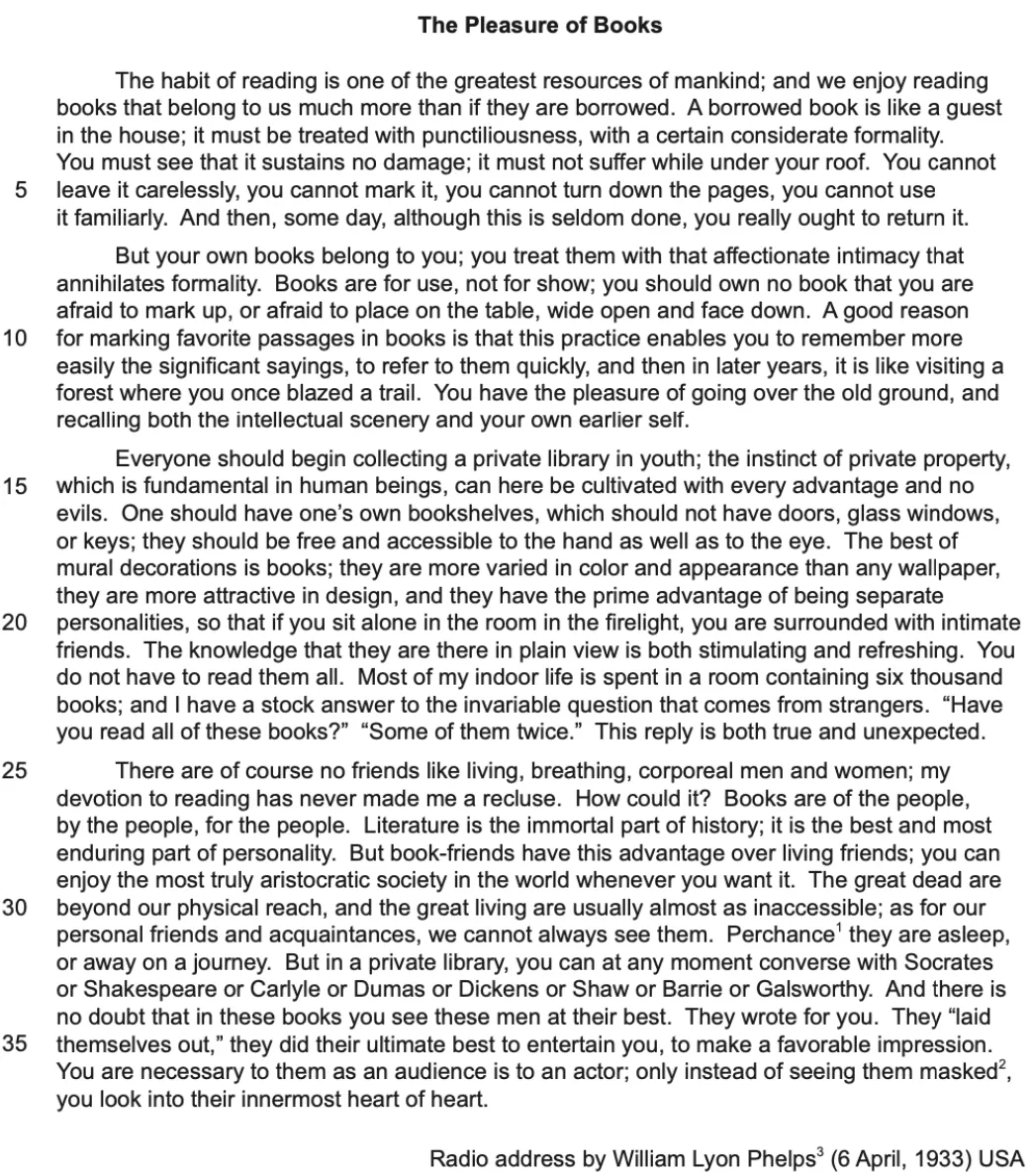
What view does the author share about how one should treat their books?
ex) The author believes borrowed books should be treated with great care and respect, emphasizing their formal nature, while personal books should be handled with affectionate intimacy. He encourages marking passages and using books actively, rather than keeping them for display, as this deepens the reader’s connection to them.
2.
What assumptions can you make about the author’s core values and beliefs?
ex) The author values intellectual growth, personal connection to literature, and the cultivation of private libraries as a reflection of individuality. He believes books are more than objects—they are companions that nurture the mind and soul, reflecting his deep respect for literature and its role in human development.
Task 3. Guiding question: comment on the various techniques used by the author to share their views on book ownership
1.
The author implements a confident voice throughout the speech. What elements of the text contribute to creating this tone?
ex) The confident tone is established through declarative statements like “You cannot leave it carelessly” and “Everyone should begin collecting a private library in youth.” The use of authoritative language and definitive advice conveys certainty about his views on book ownership.
2.
What devices does the author use to maintain the audience’s focus?
ex) The author uses vivid imagery, such as comparing marked passages to trails in a forest, to engage readers’ imagination. He also employs rhetorical questions like “Have you read all of these books?” to provoke thought and maintain interest. Additionally, contrasting borrowed books with personal ones adds variety and depth to his argument, keeping the audience engaged.