

 Understanding points
C3.1.1 System integration
C3.1.2 Cells, tissues, organs and body systems as a hierarchy of subsystems that are integrated in a multicellular living organism
C3.1.3 Integration of organs in animal bodies by hormonal and nervous signalling and by transport of materials and energy
C3.1.4 The brain as a central information integration organ
C3.1.5 The spinal cord as an integrating centre for unconscious processes
C3.1.6 Input to the spinal cord and cerebral hemispheres of the brain through sensory neurons
C3.1.7 Output from the cerebral hemispheres of the brain to muscles through motor neurons
C3.1.8 Nerves as bundles of nerve fibres of both sensory and motor neurons
C3.1.9 Pain reflex arcs as an example of involuntary responses with skeletal muscle as the effector
C3.1.10 Role of the cerebellum in coordinating skeletal muscle contraction and balance
C3.1.11 Modulation of sleep patterns by melatonin secretion as a part of circadian rhythms
C3.1.12 Epinephrine secretion by the adrenal glands to prepare the body for vigorous activity
C3.1.13 Control of the endocrine system by the hypothalamus and pituitary gland
C3.1.14 Feedback control of heart rate following sensory input from baroreceptors and chemoreceptors
C3.1.15 Feedback control of ventilation rate following sensory input from chemoreceptors
C3.1.16 Control of peristalsis in the digestive system by the central nervous system and enteric nervous system
C3.1.17 Observations of tropic responses in seedlings (HL only)
C3.1.18 Positive phototropism as a directional growth response to lateral light in plant shoots (HL only)
C3.1.19 Phytohormones as signalling chemicals controlling growth, development and response to stimuli in plants (HL only)
C3.1.20 Auxin efflux carriers as an example of maintaining concentration gradients of phytohormones (HL only)
C3.1.21 Promotion of cell growth by auxin (HL only)
C3.1.22 Interactions between auxin and cytokinin as a means of regulating root and shoot growth (HL only)
C3.1.23 Positive feedback in fruit ripening and ethylene production (HL only) |
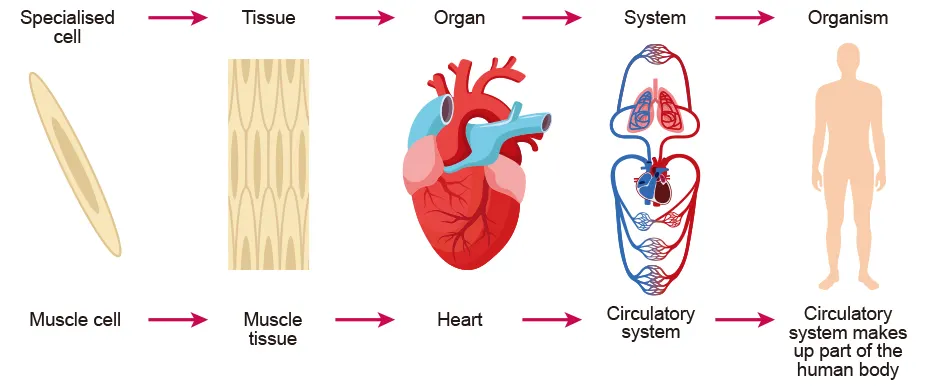
Levels of organisation
Hormonal vs neuronal signaling
Hormonal | Neuronal | |
Type of signal | Chemical | Electrical |
Transmission route | Blood | Neurons |
Effectors | Target cells in any tissue | Muscles and glands |
Speed of response | Slower | Fast |
Duration of response | Long | Short |
Central nervous system
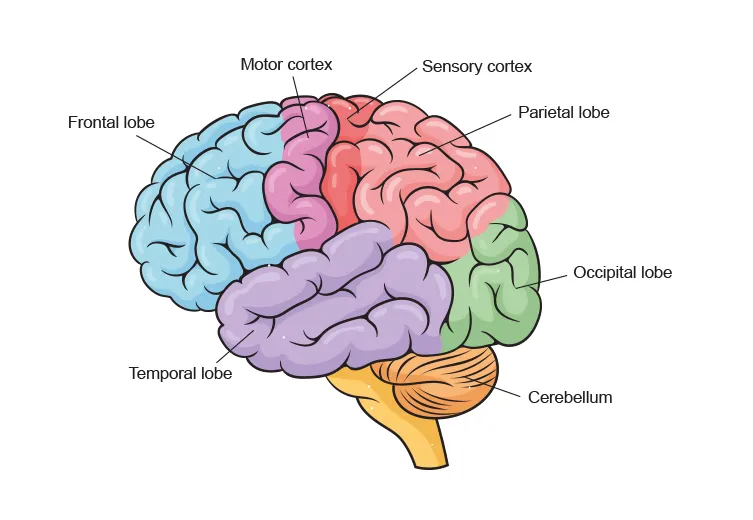
Brain
Stores, processes, and integrates information received from the body
•
Cerebellum coordinates balance and skeletal muscle contraction
•
Hypothalamus maintains homeostasis: body temp., blood glucose, osmolarity
•
Anterior pituitary: secretes LH, FSH
•
Posterior pituitary: secretes ADH, oxytocin
Spinal cord
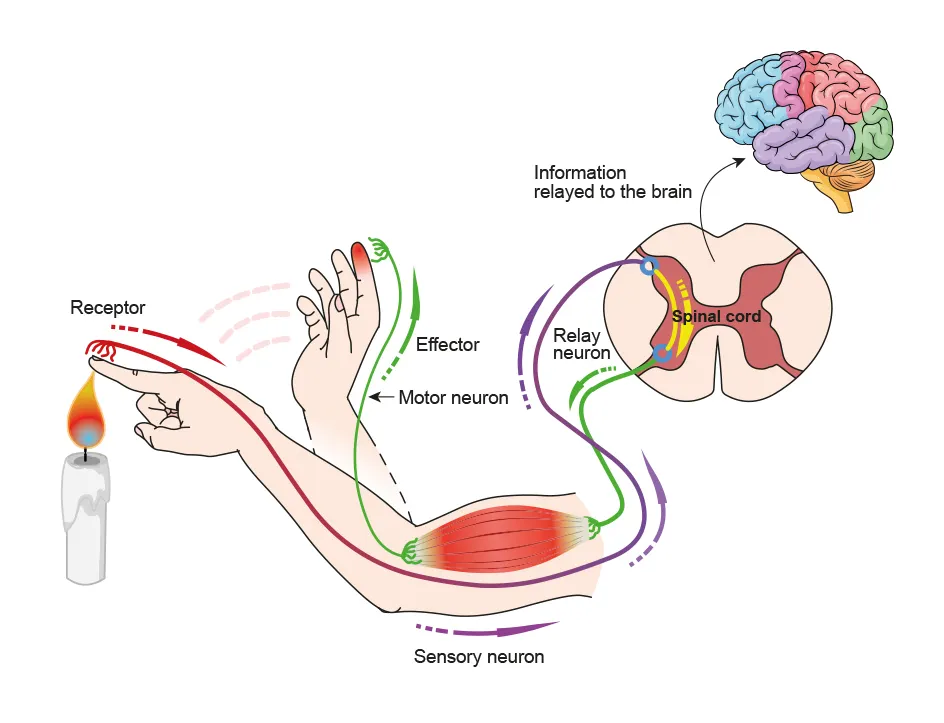
Integration center for unconscious processes such as reflexes
Most nerves contain nerve fibers of both sensory and motor neurons
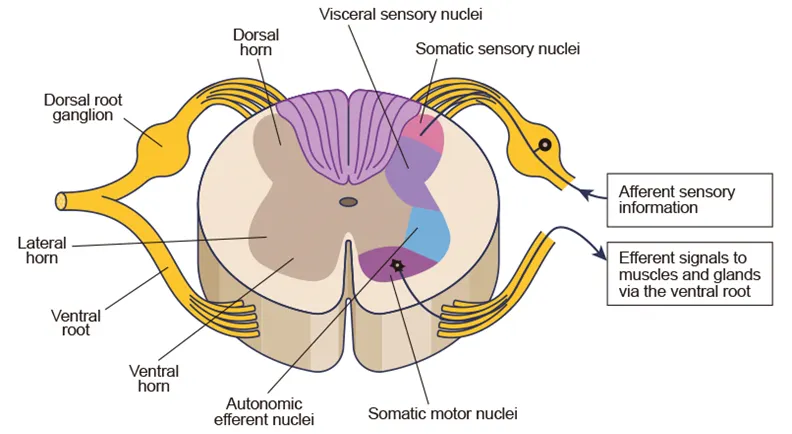
Reflex arc
•
A rapid, involuntary response to a specific stimulus such as pain
Melatonin
•
Secreted by the pineal gland at night, drops to a low level at dawn
•
Causes drowsiness and promotes sleep
•
The hypothalamus and suprachiasmatic nucleus (SCN) set the circadian rhythm by modulating melatonin secretion
Epinephrine
•
“Fight-or-flight” hormone
•
Secreted by the adrenal gland in preparation for vigorous physical activity
•
Converts glycogen to glucose, widens airways, increases cardiac output and blood flow to muscles
Control of heart rate
Negative feedback mechanisms causes heart rate to rise in response to:
- Low pH, O₂, blood pressure
- High CO₂ |
Walls of aorta and carotid arteries
Baroreceptors monitor blood pressure + Chemoreceptors monitor blood O₂, CO₂, pH
↓
Cardiovascular center in the medulla oblongata
↓
Sinoatrial (SA) node in the right atrium sets heart rate |
Control of ventilation rate
Negative feedback mechanisms keep blood pH between 7.35-7.45 |
Chemoreceptors in aorta and carotid arteries monitor blood pH and pO₂
↓
Respiratory center in the brainstem adjusts ventilation rate
↓
Diaphragm and external intercostal muscles contract → inhalation
or
Abdomen wall and internal intercostal muscles contract → exhalation |
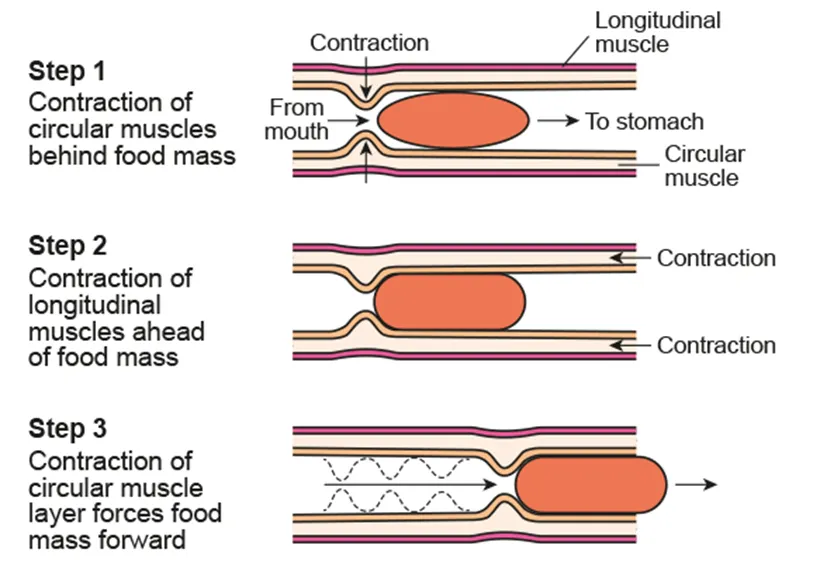
Control of peristalsis
•
Peristalsis: wave of contraction and relaxation in intestine walls that pushes food along the gut
•
Controlled by the enteric nervous system: involuntary
•
Contrarily, control of swallowing and defecation is voluntary
*(AHL)
Tropism
•
Positive: growth towards the stimulus
•
Negative: growth away from the stimulus
•
Roots are positively gravitropic: grow towards the direction of gravity
•
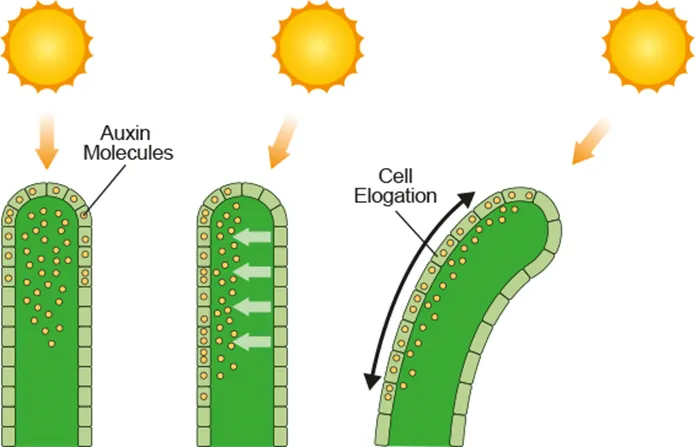
Shoots are positively phototropic and negatively gravitropic: grow towards sunlight
•
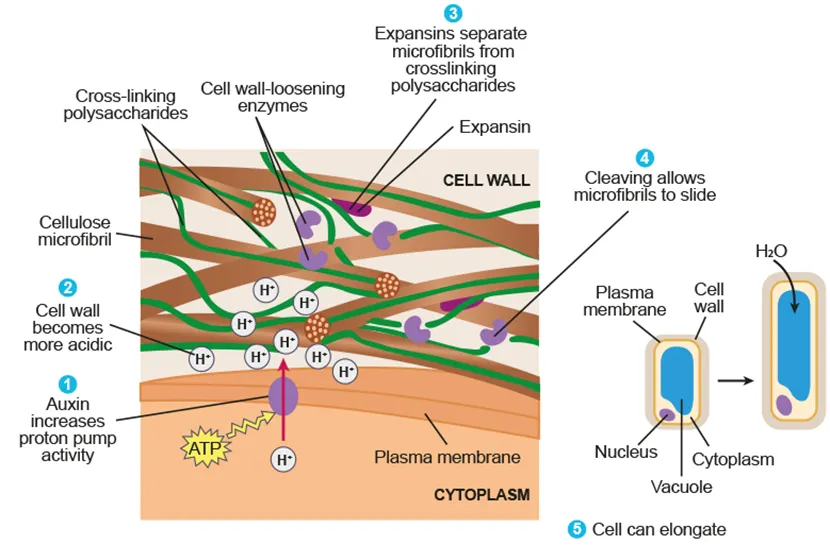
Differential growth is achieved by redistribution of auxin, a growth-promoting hormone
Plant hormones
Auxin
Promotes cell growth, involved in phototropism
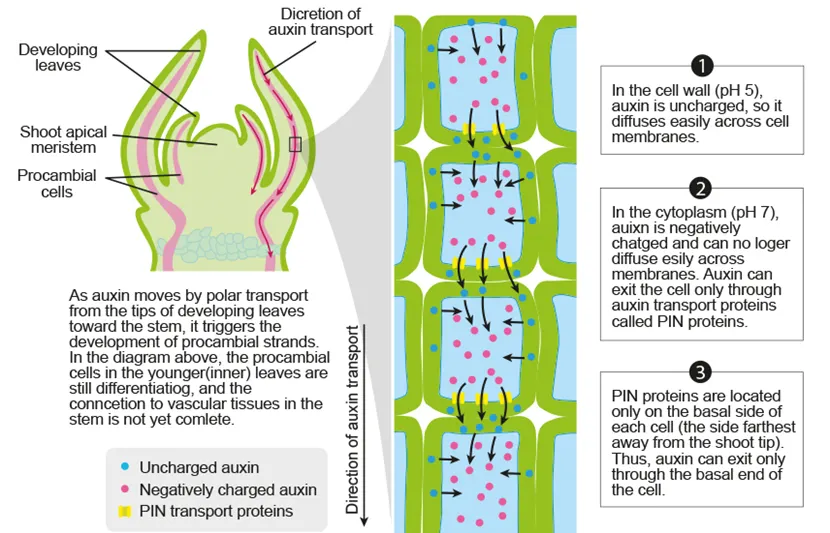
Produced in shoot tips and transported via phloem down to stems and roots
Cytokinin
Produced in root tips and transported via xylem up to stems
Synergism with auxin promotes cell division and growth in meristems
Promotes branching of stems and inhibits branching of roots (auxin does the opposite)
Ethylene
Promotes the ripening of fruit
Volatility and positive feedback leads to rapid synchronized ripening
Gibberellin
Promotes stem growth by increasing cell division and enlargement