
 Understanding points
C1.2.1 ATP as the molecule that distributes energy within cells
C1.2.2 Life processes within cells that ATP supplies with energy
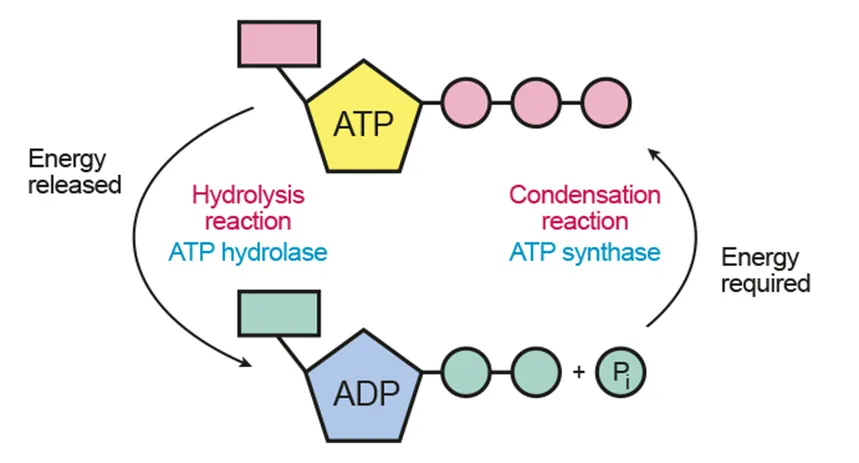
C1.2.3 Energy transfers during interconversions between ATP and ADP
C1.2.4 Cell respiration as a system for producing ATP within the cell using energy released from carbon compounds
C1.2.5 Differences between anaerobic and aerobic cell respiration in humans
C1.2.6 Variables affecting the rate of cell respiration
C1.2.7 Role of NAD as a carrier of hydrogen and oxidation by removal of hydrogen during cell respiration (HL only)
C1.2.8 Conversion of glucose to pyruvate by stepwise reactions in glycolysis with a net yield of ATP and reduced NAD (HL only)
C1.2.9 Conversion of pyruvate to lactate as a means of regenerating NAD in anaerobic cell respiration (HL only)
C1.2.10 Anaerobic cell respiration in yeast and its use in brewing and baking (HL only)
C1.2.11 Oxidation and decarboxylation of pyruvate as a link reaction in aerobic cell respiration (HL only)
C1.2.12 Oxidation and decarboxylation of acetyl groups in the Krebs cycle with a yield of ATP and reduced NAD (HL only)
C1.2.13 Transfer of energy by reduced NAD to the electron transport chain in the mitochondrion (HL only)
C1.2.14 Generation of a proton gradient by flow of electrons along the electron transport chain (HL only)
C1.2.15 Chemiosmosis and the synthesis of ATP in the mitochondrion (HL only)
C1.2.16 Role of oxygen as terminal electron acceptor in aerobic cell respiration (HL only)
C1.2.17 Differences between lipids and carbohydrates as respiratory substrates (HL only) |
ATP
•
Adenosine triphosphate
•
Energy currency of the cell
•
Water soluble, chemically stable at neutral pH
•
Used for active transport, cell motility, macromolecule synthesis
•
Produced by cell respiration


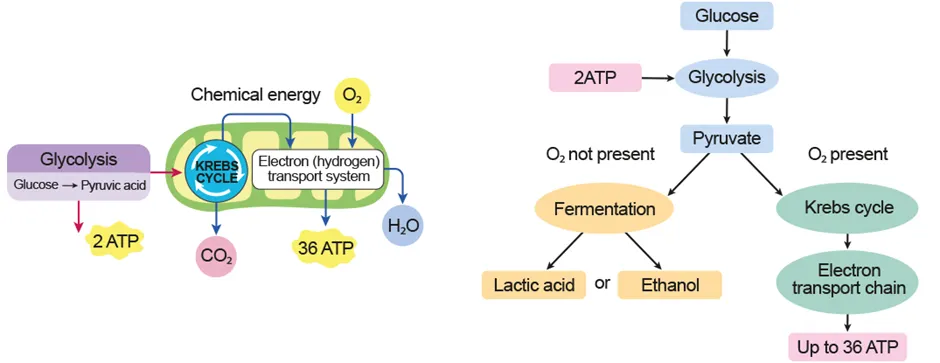
Types of respiration
Aerobic | Anaerobic | |
Use of oxygen | Yes | No |
Substrate | Sugars, lipids | Glucose |
ATP yield per glucose | Large | Small |
Waste products | CO₂ + H₂O | Lactate |
Location in cell | Cytoplasm + mitochondria | Cytoplasm |


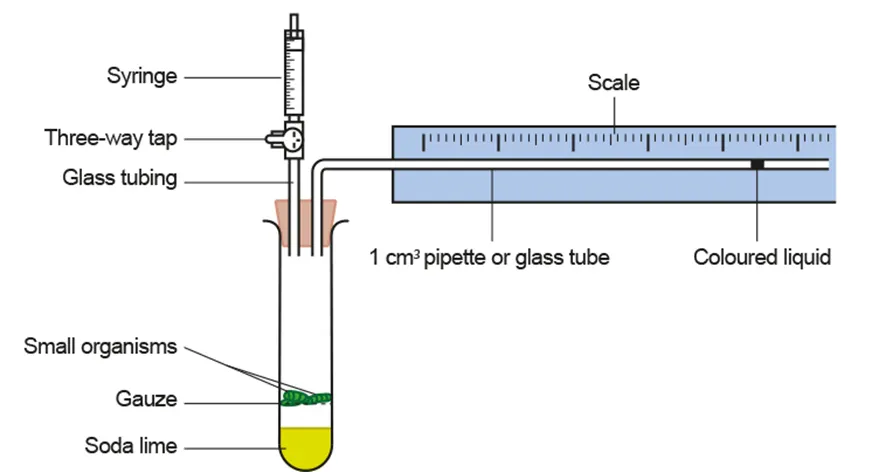
Respirometer
•
Used to measure the rate of cell respiration
•
O₂ uptake: measured by decrease in air pressure
•
CO₂ release: measured by decrease in pH


*(AHL)
Redox reactions
Oxidation | Reduction |
Loss of electrons / hydrogens | Gain of electrons / hydrogens |
Gain of oxygen | Loss of oxygen |
•
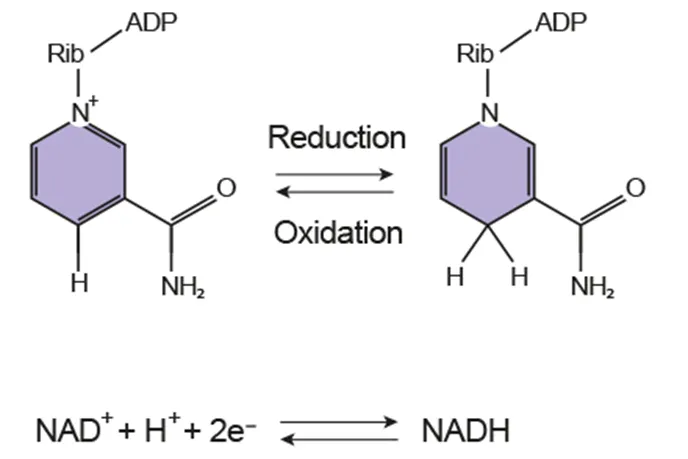
NAD: hydrogen carrier used in cell respiration (NAD⁺ technically speaking)
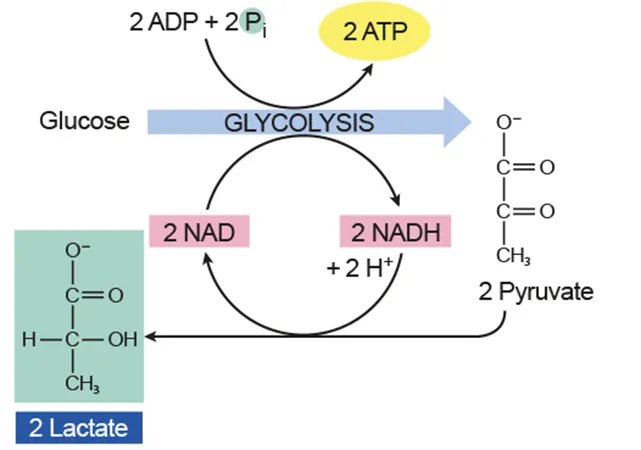
Anaerobic cell respiration
Lactic acid fermentation
Regeneration of NAD
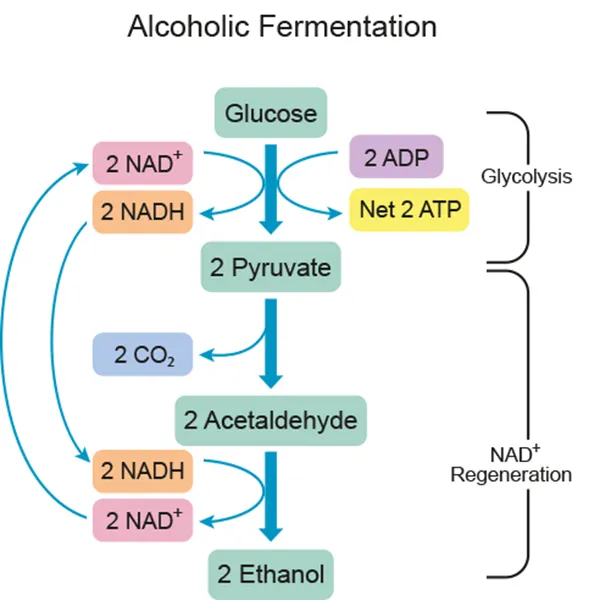
Ethanol fermentation
CO₂ used in baking industry
Ethanol used in brewing industry
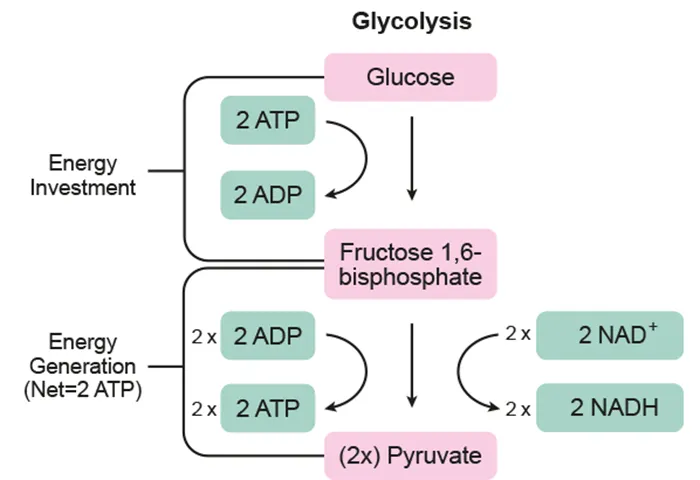
Glycolysis
•
In cytoplasm
Phosphorylation: glucose is phosphorylated by (ATP → ADP + Pᵢ )*2
↓
Lysis: 2 * 3C-P (triose phosphate) → another phosphorylation with free ion
↓
Oxidation: removing hydrogen + conversion of NAD → NADH + H⁺
↓
ATP synthesis: 2* dephosphorylation of 3C compound producing ( ADP +Pᵢ → ATP ) * 2
↓
Net gain of 2 ATP + 2 Pyruvate |


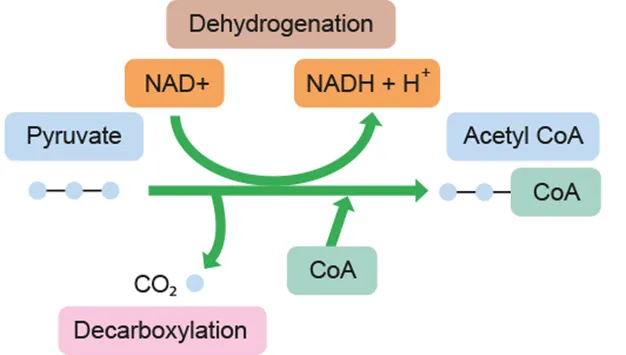
Link reaction
•
Oxidative decarboxylation
•
In mitochondrial matrix


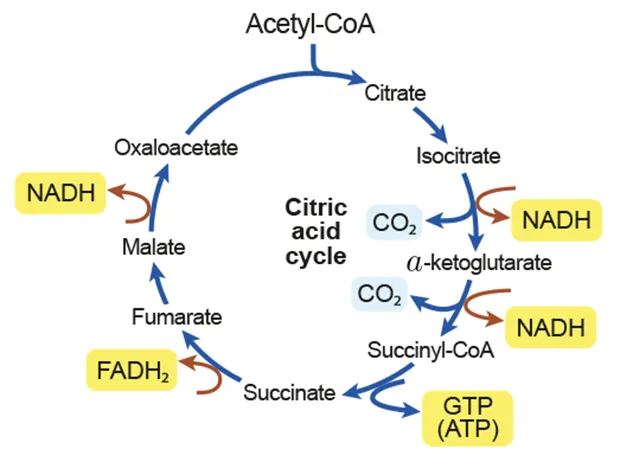
Krebs cycle
•
In mitochondrial matrix
•
Produces ATP directly by substrate level phosphorylation


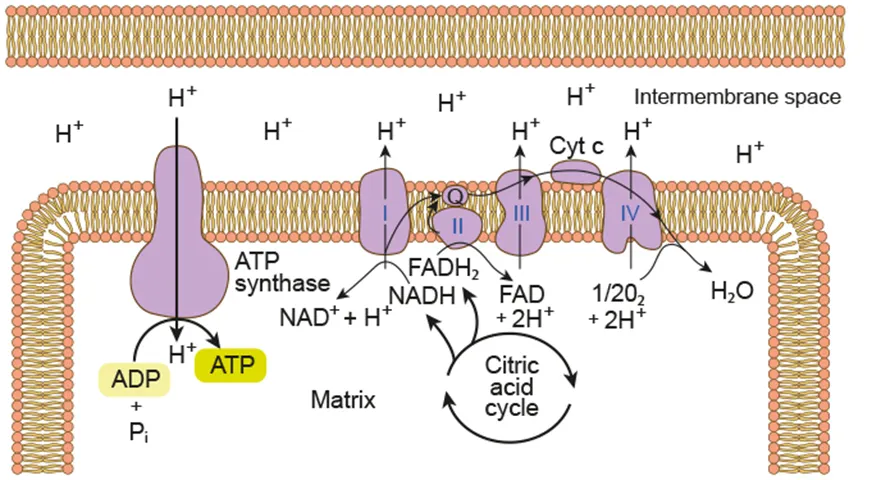
Chemiosmosis
•
The movement of protons/hydrogen ions to produce ATP
•
In mitochondrial membrane (cristae)
Hydrogen/electrons are passed between e⁻ carriers along ETC, releasing energy
↓
Protons move against their con. gradient into intermembrane space
↓
Protons flow back to the matrix due to con. gradient through ATP synthase/synthetase
↓
Energy is released which produces more ATP
↓
Oxygen acts as terminal electron acceptor
↓
Formation of water |