

Gallery
Search
 Understanding Points
A1.1.1 Water as the medium for life
A1.1.2 Hydrogen bonds as a consequence of the polar covalent bonds within water molecules
A1.1.3 Cohesion of water molecules due to hydrogen bonding and consequences for organisms
A1.1.4 Adhesion of water to materials that are polar or charged and impacts for organisms
A1.1.5 Solvent properties of water linked to its role as a medium for metabolism and for transport in plants and animals
A1.1.6 Physical properties of water and the consequences for animals in aquatic habitats
A1.1.7 Extraplanetary origin of water on Earth and reasons for its retention (HL only)
A1.1.8 The relationship between the search for extraterrestrial life and the presence of water (HL only) |
Structure of water
•
Polar covalent bonds: unequal sharing of e⁻ → partially negative O atom, partially positive H atoms
•
Hydrogen bonding: intermolecular force between the O and H of different H₂O molecules
A1.1 Water
Understanding points
A1.2.1 DNA as the genetic material of all living organisms
A1.2.2 Components of a nucleotide
A1.2.3 Sugar–phosphate bonding and the sugar–phosphate ‘backbone’ of DNA and RNA
A1.2.4 Bases in each nucleic acid that form the basis of a code
A1.2.5 RNA as a polymer formed by condensation of nucleotide monomers
A1.2.6 DNA as a double helix made of two antiparallel strands of nucleotides with two strands linked by hydrogen bonding between complementary base pairs
A1.2.7 Differences between DNA and RNA
A1.2.8 Role of complementary base pairing in allowing genetic information to be replicated and expressed
A1.2.9 Diversity of possible DNA base sequences and the limitless capacity of DNA for storing information
A1.2.10 Conservation of the genetic code across all life forms as evidence of universal common ancestry
A1.2.11 Directionality of RNA and DNA (HL only)
A1.2.12 Purine-to-pyrimidine bonding as a component of DNA helix stability (HL only)
A1.2.13 Structure of a nucleosome (HL only)
A1.2.14 Evidence from the Hershey–Chase experiment for DNA as the genetic material (HL only)
A1.2.15 Chargaff’s data on the relative amounts of pyrimidine and purine bases across diverse life forms (HL only) |
Structure of DNA
•
DNA (deoxyribonucleic acid) and RNA (ribonucleic acid) are the genetic material of all species
•
Nucleotide = phosphate group + pentose + nitrogenous base
A1.2 Nucleic acids
Understanding points
B1.1.1 Chemical properties of a carbon atom allowing for the formation of diverse compounds upon which life is based
B1.1.2 Production of macromolecules by condensation reactions that link monomers to form a polymer
B1.1.3 Digestion of polymers into monomers by hydrolysis reactions
B1.1.4 Form and function of monosaccharides
B1.1.5 Polysaccharides as energy storage compounds
B1.1.6 Structure of cellulose related to its function as a structural polysaccharide in plants
B1.1.7 Role of glycoproteins in cell–cell recognition
B1.1.8 Hydrophobic properties of lipids
B1.1.9 Formation of triglycerides and phospholipids by condensation reactions
B1.1.10 Difference between saturated, monounsaturated and polyunsaturated fatty acids
B1.1.11 Triglycerides in adipose tissues for energy storage and thermal insulation
B1.1.12 Formation of phospholipid bilayers as a consequence of the hydrophobic and hydrophilic regions
B1.1.13 Ability of non-polar steroids to pass through the phospholipid bilayer |
Carbon as the basis of life
•
Forms strong covalent bonds with other atoms to form stable molecules
•
Can form up to 4 covalent bonds and give rise to molecules with complex structures
B1.1 Carbohydrates and lipids
Understanding points
B1.2.1 Generalized structure of an amino acid
B1.2.2 Condensation reactions forming dipeptides and longer chains of amino acids
B1.2.3 Dietary requirements for amino acids
B1.2.4 Infinite variety of possible peptide chains
B1.2.5 Effect of pH and temperature on protein structure
B1.2.6 Chemical diversity in the R-groups of amino acids as a basis for the immense diversity in protein form and function (HL only)
B1.2.7 Impact of primary structure on the conformation of proteins (HL only)
B1.2.8 Pleating and coiling of secondary structure of proteins (HL only)
B1.2.9 Dependence of tertiary structure on hydrogen bonds, ionic bonds, disulfide covalent bonds and hydrophobic interactions (HL only)
B1.2.10 Effect of polar and non-polar amino acids on tertiary structure of proteins (HL only)
B1.2.11 Quaternary structure of non-conjugated and conjugated proteins (HL only)
B1.2.12 Relationship of form and function in globular and fibrous proteins (HL only) |
Amino acids
•
20 different types of naturally occurring 𝛼𝛼
•
*(AHL) R groups can be hydrophobic, hydrophilic, or charged
B1.2 Proteins
Understanding points
C1.1.1 Enzymes as catalysts
C1.1.2 Role of enzymes in metabolism
C1.1.3 Anabolic and catabolic reactions
C1.1.4 Enzymes as globular proteins with an active site for catalysis
C1.1.5 Interactions between substrate and active site to allow induced-fit binding
C1.1.6 Role of molecular motion and substrate–active site collisions in enzyme catalysis
C1.1.7 Relationships between the structure of the active site, enzyme–substrate specificity and denaturation
C1.1.8 Effects of temperature, pH and substrate concentration on the rate of enzyme activity
C1.1.9 Measurements in enzyme-catalysed reactions
C1.1.10 Effect of enzymes on activation energy
C1.1.11 Intracellular and extracellular enzyme-catalysed reactions (HL only)
C1.1.12 Generation of heat energy by the reactions of metabolism (HL only)
C1.1.13 Cyclical and linear pathways in metabolism (HL only)
C1.1.14 Allosteric sites and non-competitive inhibition (HL only)
C1.1.15 Competitive inhibition as a consequence of an inhibitor binding reversibly to an active site (HL only)
C1.1.16 Regulation of metabolic pathways by feedback inhibition (HL only)
C1.1.17 Mechanism-based inhibition as a consequence of chemical changes to the active site caused by the irreversible binding of an inhibitor (HL only) |
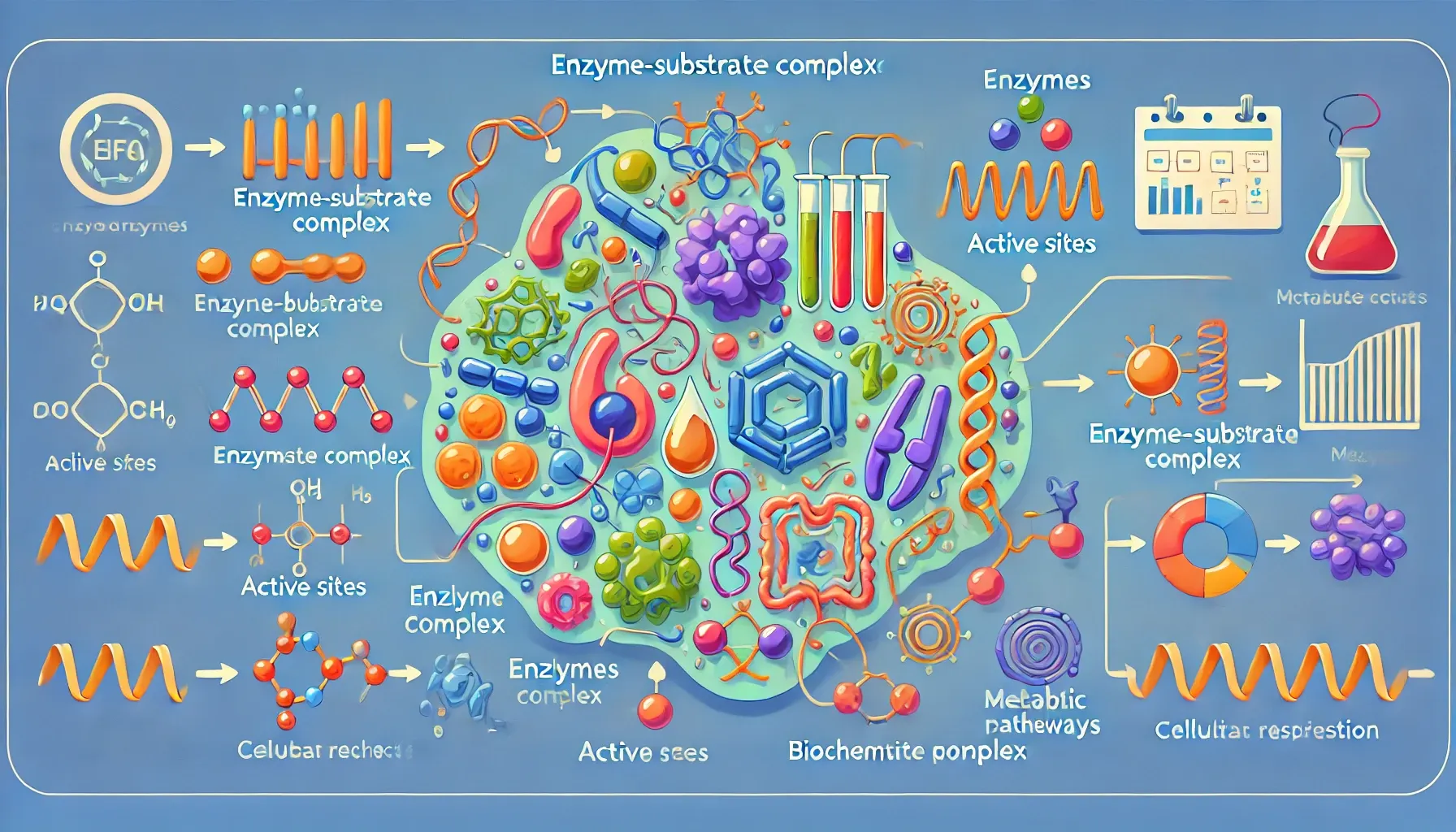
Enzymes
•
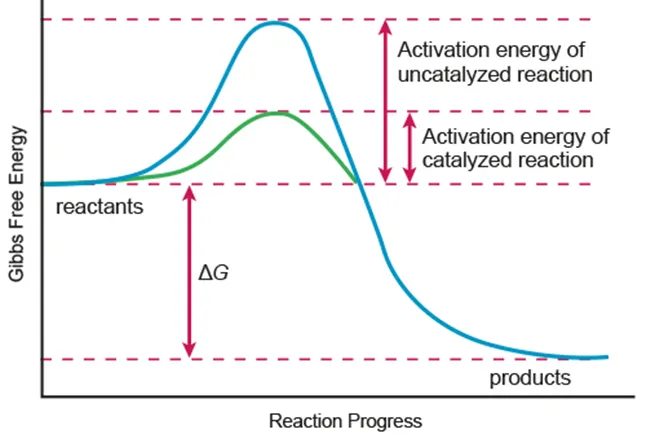
Biological catalysts that speed up the rate of reaction
•
Lower the activation energy (Eₐ) by providing alternative mechanism for the reaction
◦
Eₐ: minimum E required to initiate a reaction
•
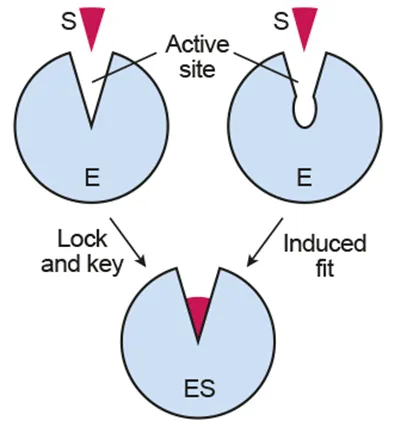
Active site: the specific binding site of a substrate
◦
Lock and key model: the enzyme has specificity for the substrate that fits in the active site
◦
Induced fit model: the active site changes its shape slightly so that substrate can fit
C1.1 Enzymes and metabolism
Understanding points
C1.2.1 ATP as the molecule that distributes energy within cells
C1.2.2 Life processes within cells that ATP supplies with energy
C1.2.3 Energy transfers during interconversions between ATP and ADP
C1.2.4 Cell respiration as a system for producing ATP within the cell using energy released from carbon compounds
C1.2.5 Differences between anaerobic and aerobic cell respiration in humans
C1.2.6 Variables affecting the rate of cell respiration
C1.2.7 Role of NAD as a carrier of hydrogen and oxidation by removal of hydrogen during cell respiration (HL only)
C1.2.8 Conversion of glucose to pyruvate by stepwise reactions in glycolysis with a net yield of ATP and reduced NAD (HL only)
C1.2.9 Conversion of pyruvate to lactate as a means of regenerating NAD in anaerobic cell respiration (HL only)
C1.2.10 Anaerobic cell respiration in yeast and its use in brewing and baking (HL only)
C1.2.11 Oxidation and decarboxylation of pyruvate as a link reaction in aerobic cell respiration (HL only)
C1.2.12 Oxidation and decarboxylation of acetyl groups in the Krebs cycle with a yield of ATP and reduced NAD (HL only)
C1.2.13 Transfer of energy by reduced NAD to the electron transport chain in the mitochondrion (HL only)
C1.2.14 Generation of a proton gradient by flow of electrons along the electron transport chain (HL only)
C1.2.15 Chemiosmosis and the synthesis of ATP in the mitochondrion (HL only)
C1.2.16 Role of oxygen as terminal electron acceptor in aerobic cell respiration (HL only)
C1.2.17 Differences between lipids and carbohydrates as respiratory substrates (HL only) |
ATP
•
Adenosine triphosphate
•
Energy currency of the cell
C1.2 Cell respiration
Understanding points
C1.3.1 Transformation of light energy to chemical energy when carbon compounds are produced in photosynthesis
C1.3.2 Conversion of carbon dioxide to glucose in photosynthesis using hydrogen obtained by splitting water
C1.3.3 Oxygen as a by-product of photosynthesis in plants, algae and cyanobacteria
C1.3.4 Separation and identification of photosynthetic pigments by chromatography
C1.3.5 Absorption of specific wavelengths of light by photosynthetic pigments
C1.3.6 Similarities and differences of absorption and action spectra
C1.3.7 Techniques for varying concentrations of carbon dioxide, light intensity or temperature experimentally to investigate the effects of limiting factors on the rate of photosynthesis
C1.3.8 Carbon dioxide enrichment experiments as a means of predicting future rates of photosynthesis and plant growth
C1.3.9 Photosystems as arrays of pigment molecules that can generate and emit excited electrons (HL only)
C1.3.10 Advantages of the structured array of different types of pigment molecules in a photosystem (HL only)
C1.3.11 Generation of oxygen by the photolysis of water in photosystem II (HL only)
C1.3.12 ATP production by chemiosmosis in thylakoids (HL only)
C1.3.13 Reduction of NADP by photosystem I (HL only)
C1.3.14 Thylakoids as systems for performing the light-dependent reactions of photosynthesis (HL only)
C1.3.15 Carbon fixation by rubisco (HL only)
C1.3.16 Synthesis of triose phosphate using reduced NADP and ATP (HL only)
C1.3.17 Regeneration of RuBP in the Calvin cycle using ATP (HL only)
C1.3.18 Synthesis of carbohydrates, amino acids and other carbon compounds using the products of the Calvin cycle and mineral nutrients (HL only)
C1.3.19 Interdependence of the light-dependent and light-independent reactions (HL only) |
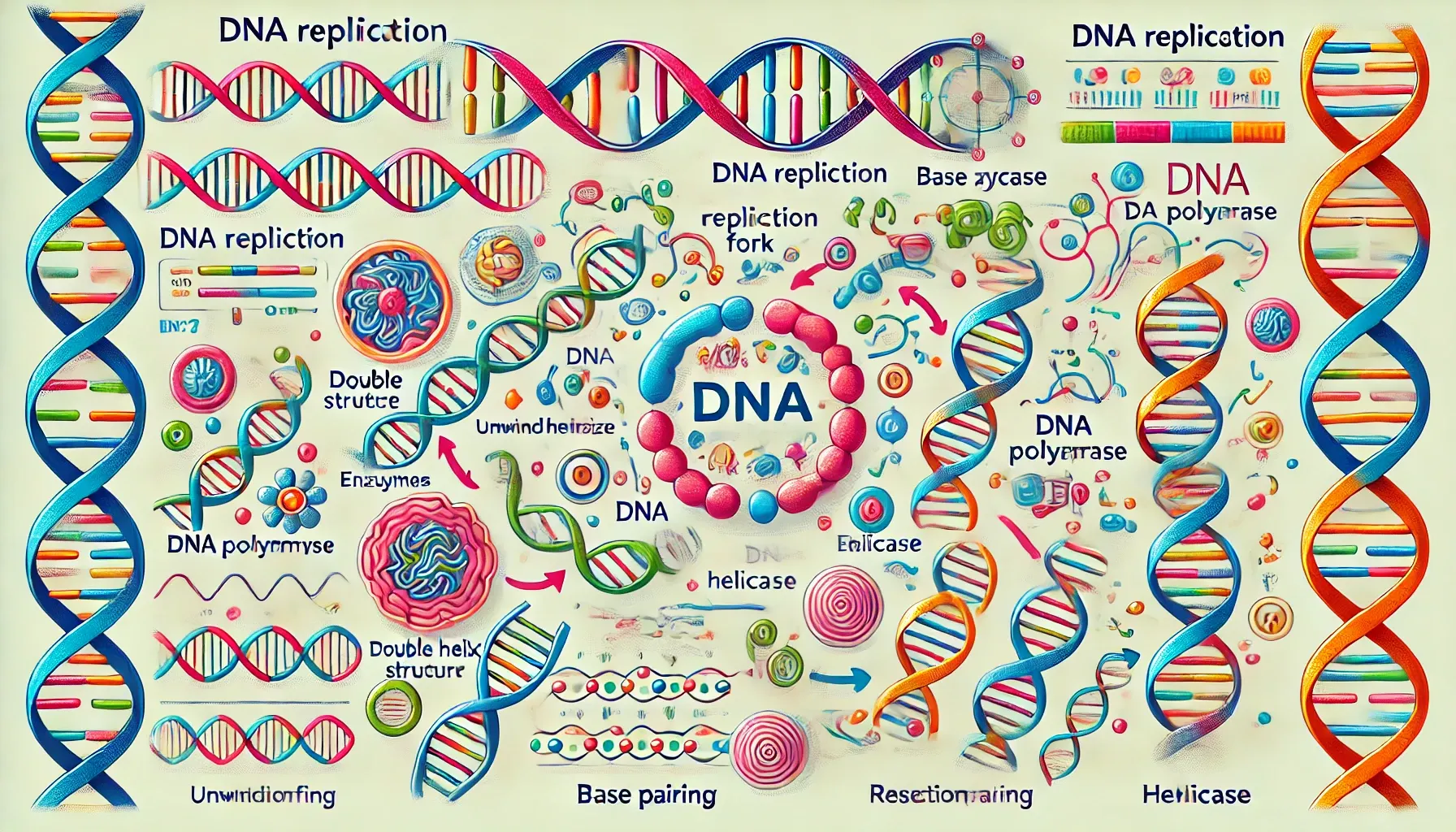
Photosynthesis
•
Conversion of light energy to chemical energy by algae, plants, cyanobacteria
•
6CO₂ + 6H₂O → C₆H₁₂O₆ + 6O₂
•
Limiting factors: temperature, light intensity, CO₂ conc
C1.3 Photosynthesis
Understanding points
D1.1.1 DNA replication as production of exact copies of DNA with identical base sequences
D1.1.2 Semi-conservative nature of DNA replication and role of complementary base pairing
D1.1.3 Role of helicase and DNA polymerase in DNA replication
D1.1.4 Polymerase chain reaction and gel electrophoresis as tools for amplifying and separating DNA
D1.1.5 Applications of polymerase chain reaction and gel electrophoresis
D1.1.6 Directionality of DNA polymerases (HL only)
D1.1.7 Differences between replication on the leading strand and the lagging strand (HL only)
D1.1.8 Functions of DNA primase, DNA polymerase I, DNA polymerase III and DNA ligase in replication (HL only)
D1.1.9 DNA proofreading (HL only) |
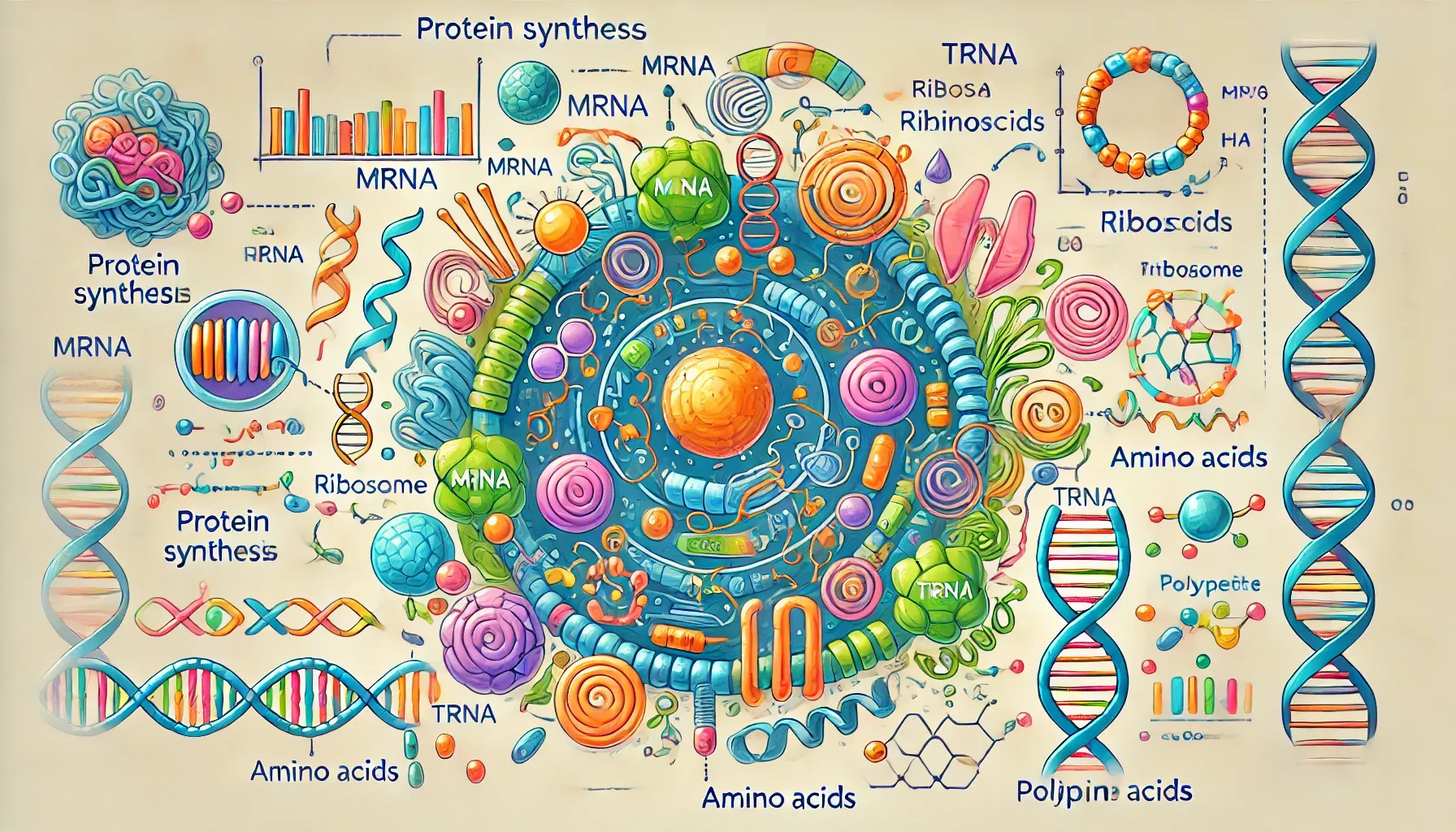
DNA replication
•
Occurs during S phase in interphase
•
Produces identical diploid daughter cells in mitosis
•
Semiconservative: each DNA molecule produced has one new strand and one parental strand
D1.1 DNA replication
Understanding points
D1.2.1 Transcription as the synthesis of RNA using a DNA template
D1.2.2 Role of hydrogen bonding and complementary base pairing in transcription
D1.2.3 Stability of DNA templates
D1.2.4 Transcription as a process required for the expression of genes
D1.2.5 Translation as the synthesis of polypeptides from mRNA
D1.2.6 Roles of mRNA, ribosomes and tRNA in translation
D1.2.7 Complementary base pairing between tRNA and mRNA
D1.2.8 Features of the genetic code
D1.2.9 Using the genetic code expressed as a table of mRNA codons
D1.2.10 Stepwise movement of the ribosome along mRNA and linkage of amino acids by peptide bonding to the growing polypeptide chain
D1.2.11 Mutations that change protein structure
D1.2.12 Directionality of transcription and translation (HL only)
D1.2.13 Initiation of transcription at the promoter (HL only)
D1.2.14 Non-coding sequences in DNA do not code for polypeptides (HL only)
D1.2.15 Post-transcriptional modification in eukaryotic cells (HL only)
D1.2.16 Alternative splicing of exons to produce variants of a protein from a single gene (HL only)
D1.2.17 Initiation of translation (HL only)
D1.2.18 Modification of polypeptides into their functional state (HL only)
D1.2.19 Recycling of amino acids by proteasomes (HL only) |
Transcription
•
Production of mRNA from DNA by RNA polymerase
RNA polymerase unwinds DNA and binds to the promoter with the help of transcription factors
↓
*(AHL) RNA is synthesized in 5’ → 3’ direction by complementary base pairing of A-U and G-C
↓
RNA and RNA polymerase detach from template + DNA rewinds into double helix |
D1.2 Protein synthesis
Understanding points
D1.3.1 Gene mutations as structural changes to genes at the molecular level
D1.3.2 Consequences of base substitutions
D1.3.3 Consequences of insertions and deletions
D1.3.4 Causes of gene mutation
D1.3.5 Randomness in mutation
D1.3.6 Consequences of mutation in germ cells and somatic cells
D1.3.7 Mutation as a source of genetic variation
D1.3.8 Gene knockout as a technique for investigating the function of a gene by changing it to make it inoperative (HL only)
D1.3.9 Use of the CRISPR sequences and the enzyme Cas9 in gene editing (HL only)
D1.3.10 Hypotheses to account for conserved or highly conserved sequences in genes (HL only) |
Mutation
•
A random, permanent change in the base sequence of DNA
•
Generates genetic variation upon which natural selection can act
•
Mutagens: agents that increase the frequency of mutations above the natural background level
D1.3 Mutations and gene editing