
 Understanding points
A1.2.1 DNA as the genetic material of all living organisms
A1.2.2 Components of a nucleotide
A1.2.3 Sugar–phosphate bonding and the sugar–phosphate ‘backbone’ of DNA and RNA
A1.2.4 Bases in each nucleic acid that form the basis of a code
A1.2.5 RNA as a polymer formed by condensation of nucleotide monomers
A1.2.6 DNA as a double helix made of two antiparallel strands of nucleotides with two strands linked by hydrogen bonding between complementary base pairs
A1.2.7 Differences between DNA and RNA
A1.2.8 Role of complementary base pairing in allowing genetic information to be replicated and expressed
A1.2.9 Diversity of possible DNA base sequences and the limitless capacity of DNA for storing information
A1.2.10 Conservation of the genetic code across all life forms as evidence of universal common ancestry
A1.2.11 Directionality of RNA and DNA (HL only)
A1.2.12 Purine-to-pyrimidine bonding as a component of DNA helix stability (HL only)
A1.2.13 Structure of a nucleosome (HL only)
A1.2.14 Evidence from the Hershey–Chase experiment for DNA as the genetic material (HL only)
A1.2.15 Chargaff’s data on the relative amounts of pyrimidine and purine bases across diverse life forms (HL only) |
Structure of DNA
•
DNA (deoxyribonucleic acid) and RNA (ribonucleic acid) are the genetic material of all species
•
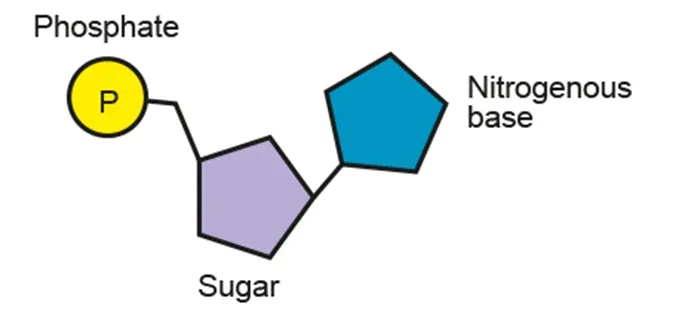
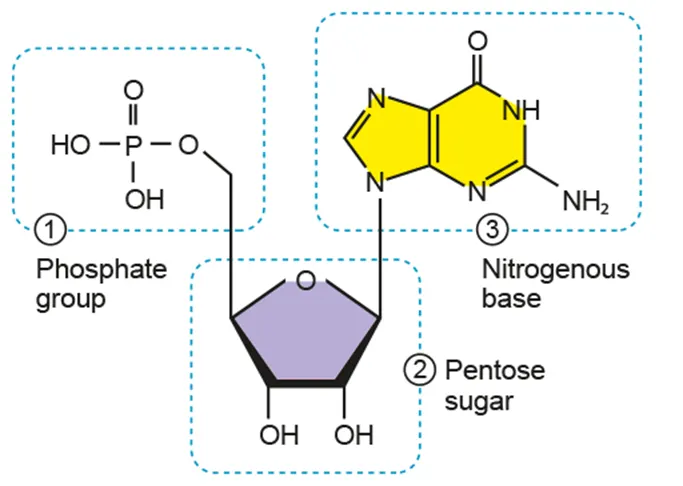
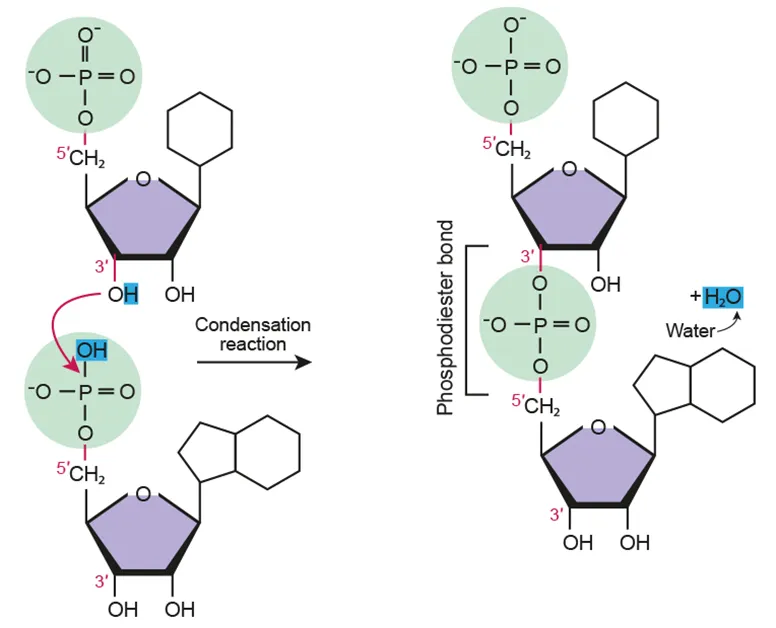
Nucleotide = phosphate group + pentose + nitrogenous base
•
Sugar-phosphate backbone: synthesized in 5’ → 3’ direction
◦
Nucleotide monomers are linked together into a polymer by a condensation reaction:


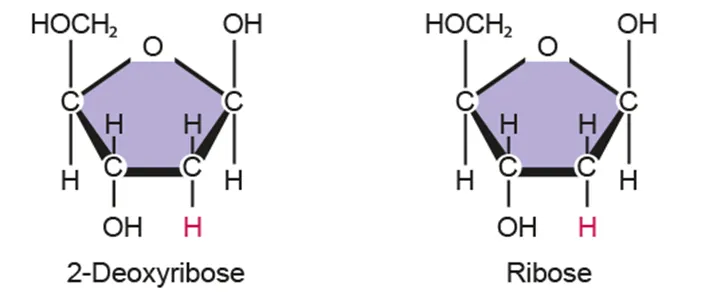
DNA vs RNA
DNA | RNA |
double helix of two antiparallel strands
4 bases: adenine-thymine, guanine-cytosine
Deoxyribose | single-stranded
4 bases: adenine-uracil, guanine-cytosine
Ribose |


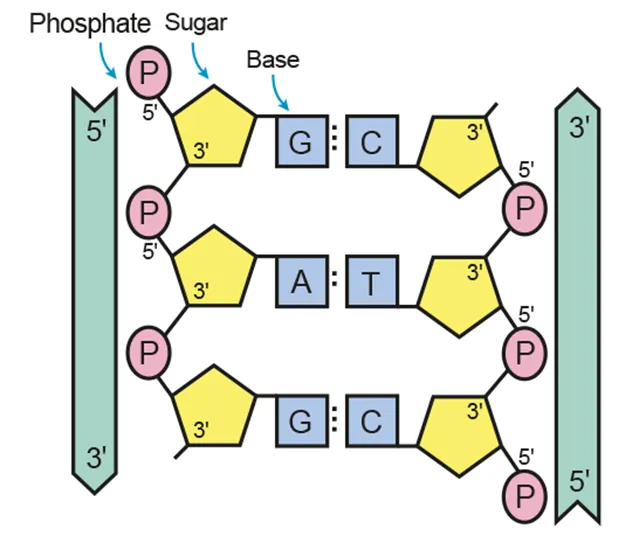
Complementary base pairing
•
Adenine pairs with thymine/uracil via 2 hydrogen bonds
•
Guanine pairs with cytosine via 3 hydrogen bonds
•
This ensures the generation of two identical daughter strands of DNA during replication → semi-conservative
*(AHL)
Directionality of DNA and RNA
•
The 3’ end has a pentose, while the 5’ end has a phosphate
•
Replication occurs in a 5’ → 3’ direction because new nucleotides are added to the 3’ end
•
The two strands of DNA are antiparallel because they run in opposite directions
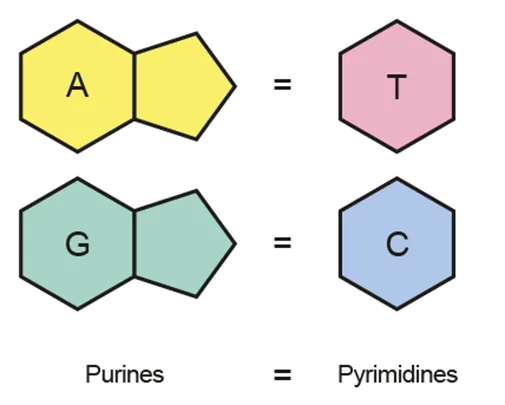
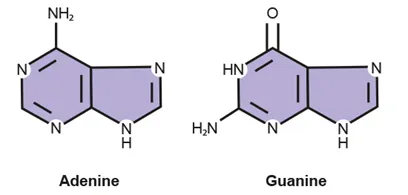
Purines and pyrimidines
•
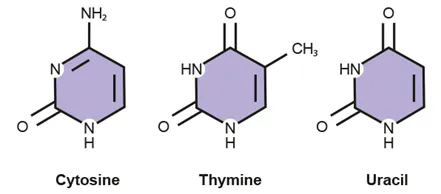
Since a purine always pairs with a pyrimidine, the width of the DNA molecule is constant
•
This contributes to DNA helix stability
Purine | Pyrimidine |
2 rings | 1 ring |
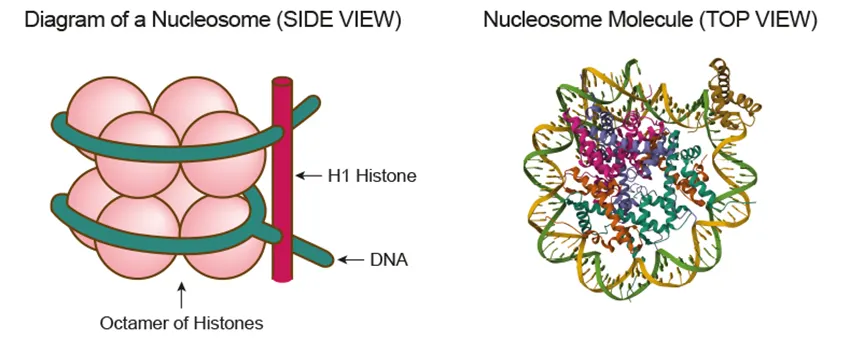
Nucleosome structure
•
Eukaryotic DNA is wrapped around histone proteins for organization and gene regulation
•
Prokaryotes do not have nucleosomes and instead have “naked” DNA
Hershey-Chase Experiment
•
Proved that DNA is the genetic material using radiolabeled T2 bacteriophage and bacteria
Experiment 1: Testing Proteins
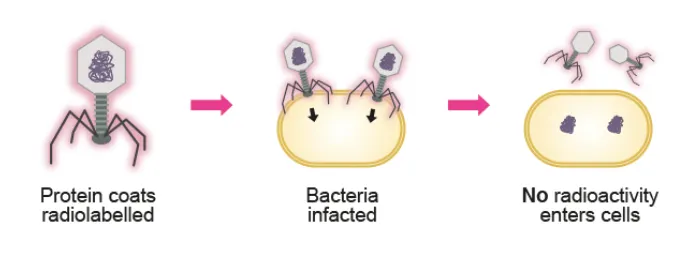
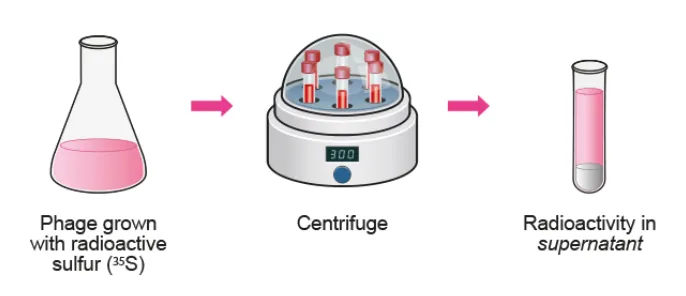
Conclusion: Proteins are not genetic material
Experiment 2: Testing DNA
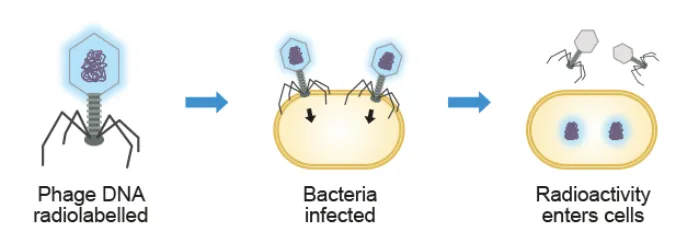
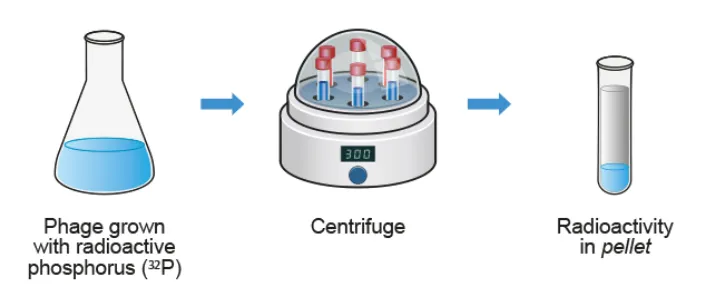
Conclusion: DNA is the genetic material
Chargaff’s data
•
Shows 1:1 ratio of purine to pyrimidine
•
The amount of adenine = the amount of thymine
•
The amount of guanine = the amount of cytosine
•
Indicated that DNA is symmetrical