

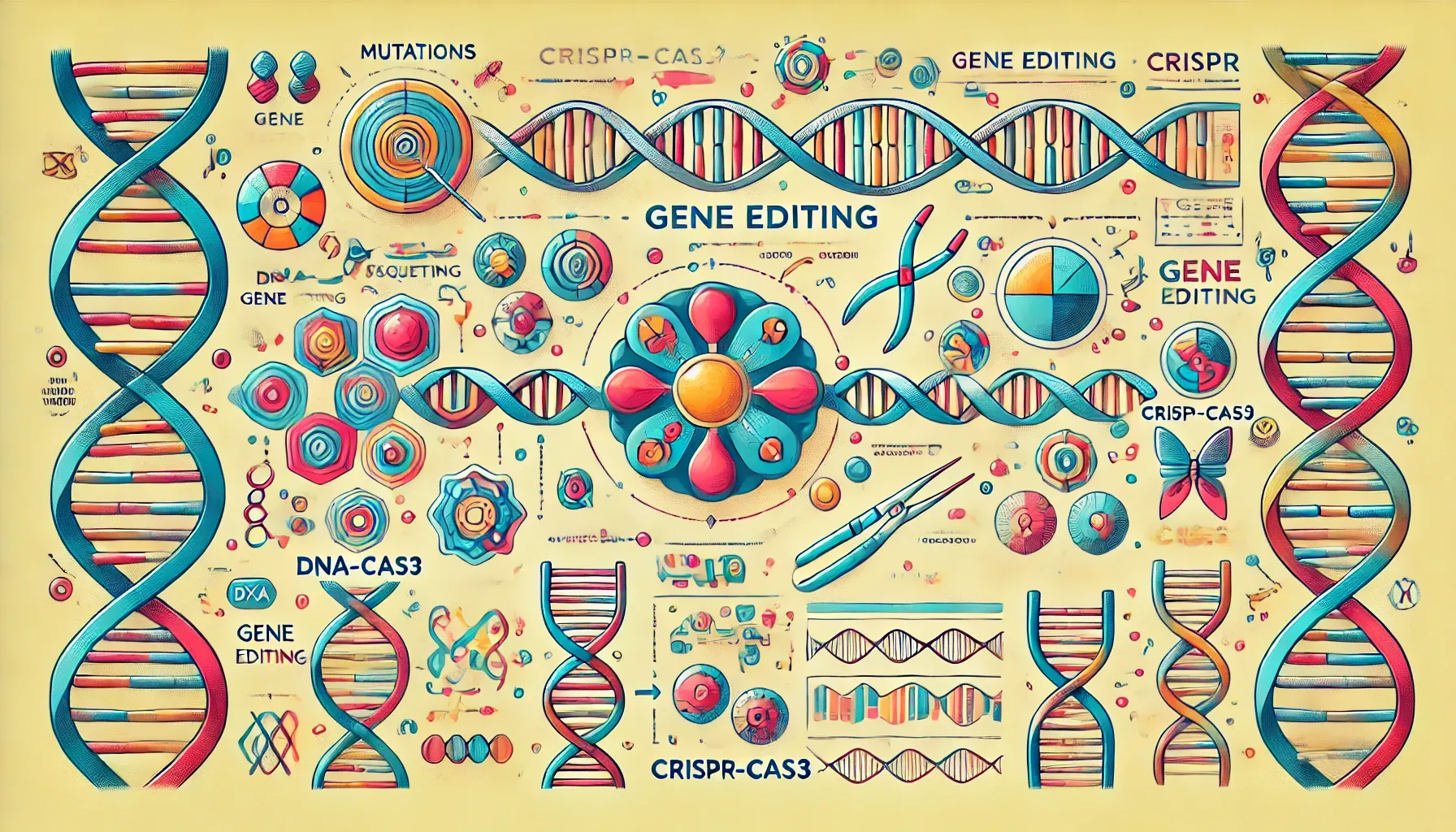
 Understanding points
D1.3.1 Gene mutations as structural changes to genes at the molecular level
D1.3.2 Consequences of base substitutions
D1.3.3 Consequences of insertions and deletions
D1.3.4 Causes of gene mutation
D1.3.5 Randomness in mutation
D1.3.6 Consequences of mutation in germ cells and somatic cells
D1.3.7 Mutation as a source of genetic variation
D1.3.8 Gene knockout as a technique for investigating the function of a gene by changing it to make it inoperative (HL only)
D1.3.9 Use of the CRISPR sequences and the enzyme Cas9 in gene editing (HL only)
D1.3.10 Hypotheses to account for conserved or highly conserved sequences in genes (HL only) |
Mutation
•
A random, permanent change in the base sequence of DNA
•
Generates genetic variation upon which natural selection can act
•
Mutagens: agents that increase the frequency of mutations above the natural background level
Chemical mutagens | Cause chemical changes in DNA that alter the base sequence
e.g. nitrosamines, mustard gas, benzene |
High energy radiation | Breaks bonds in DNA
e.g. X rays, UV rays, gamma rays |
Infection | Viral e.g. Human papillomavirus, hepatitis B virus, HIV
Bacterial e.g. Helicobacter pylori, Chlamydia pneumoniae |


Types of point mutation
Base substitution
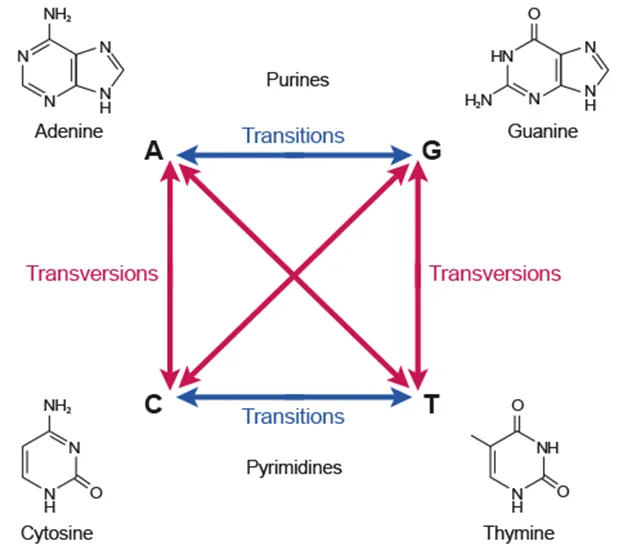
One base is replaced by another base
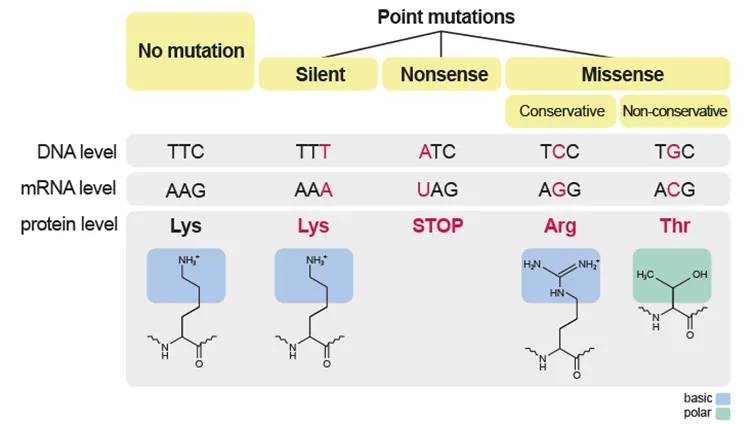
Insertion
Extra nucleotides are added to DNA, causes frameshift
e.g. HTT gene in Huntington’s disease
Deletion
Nucleotides are removed from DNA, causes frameshift
e.g. CCR5 gene and HIV resistance
Somatic vs germ cell mutation
Somatic cell | Germ cell |
Body cells that do not become gametes
Their genes are not inherited → the effect of a mutation is limited to one cell | Gametes or cells that develop into gametes
Their genes are inherited → every cell in the offspring will have the mutation → genetic disease |
*(AHL)
Gene knockout
•
A way of determining gene function
•
Render a gene nonfunctional → observe change in phenotype → deduce function
•
Used in model organisms: mice, Drosophila, C. elegans


CRISPR-Cas9
•
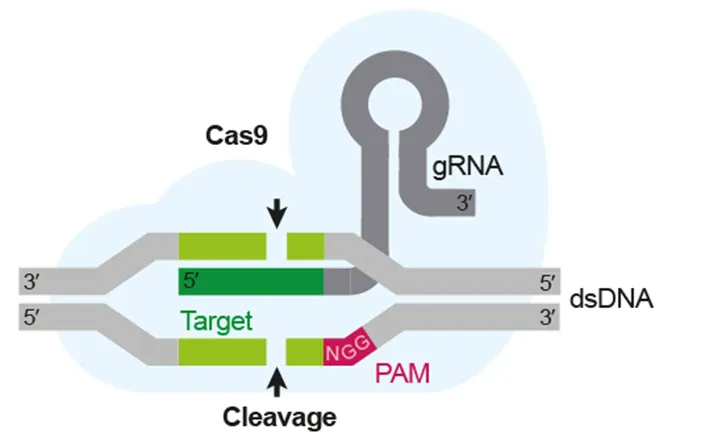
A tool used for DNA editing
CRISPR | Clustered regularly interspaced short palindromic repeats
Part of bacterial immune response against bacteriophages
Spacer includes viral DNA
Repeat enables gRNA to bind to Cas9 |
gRNA | Guide RNA that brings Cas9 to its target sequence |
Cas9 | Endonuclease that cuts DNA at a specific target sequence |


Conserved sequences
•
Identical or nearly identical across species
•
Important functions → mutations are eliminated by natural selection
•
e.g. ribosome genes