

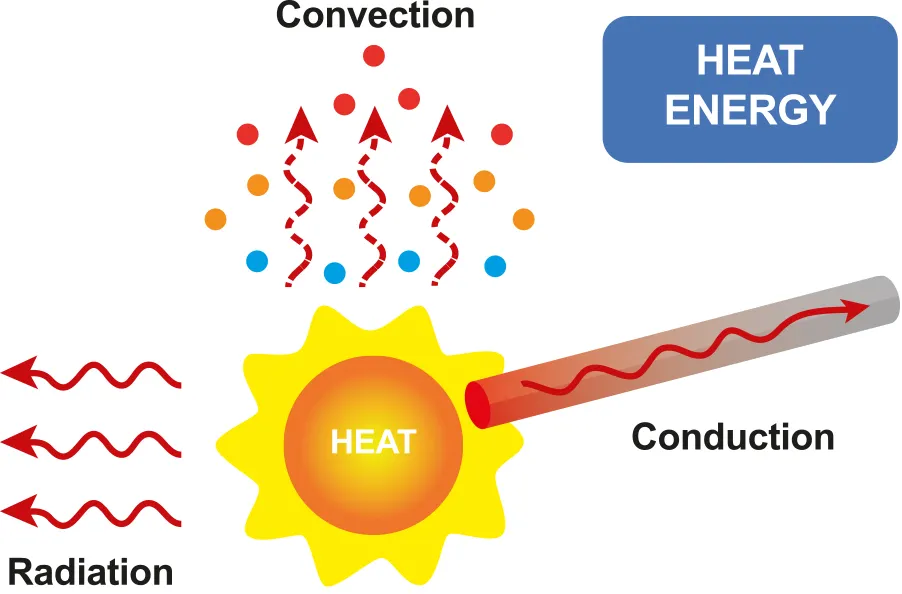
B.2.1 Conduction, convection, and thermal radiation
Conduction, Convection and Thermal Radiation
Conduction
•
Conduction is when energy is transferred by direct contact
•
Usually happens in solid
•
When two solids in different temperatures contact conduction happens
◦
Thermal energy is transferred from solid with higher temperature to lower temperature
•
Metal are good thermal conductors because :
◦
they contain high number of delocalized electrons
•
Non-metal are poor thermal conductors because :
◦
electrons in them are usually not delocalized
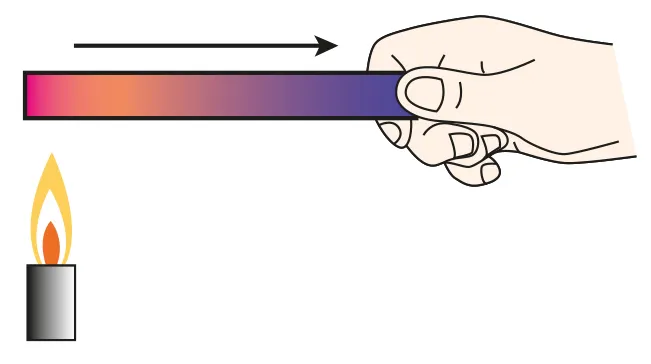
B.2.1-1 Diagram showing conduction in metal
Convection
•
Convection is when energy is transferred by the mass motion of molecules
•
Mainly happens in liquids and gases
•
When a liquid is heated convection happens
◦
causing the movement of groups of atoms or particles due to variations in density
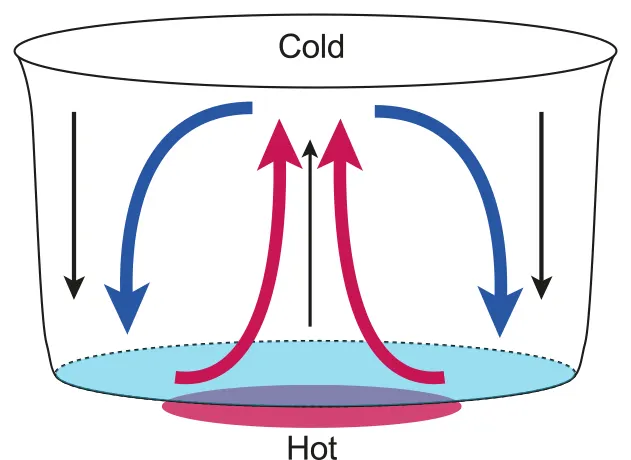
B.2.1-2 Diagram showing the convection
Radiation
•
Radiation is when energy is transferred by electromagnetic radiation
•
Heat transfer by means of electromagnetic radiation normally in the infrared region
•
The hotter the object, the more infrared radiation it radiates in a given time
◦
Because atoms and molecules above absolute zero are in constant motion
•
Electric charges within the atoms in a material vibrate causing electromagnetic radiation to be emitted
◦
The higher temperature, the greater the thermal motion of the atoms and the greater the rate of emission of radiation
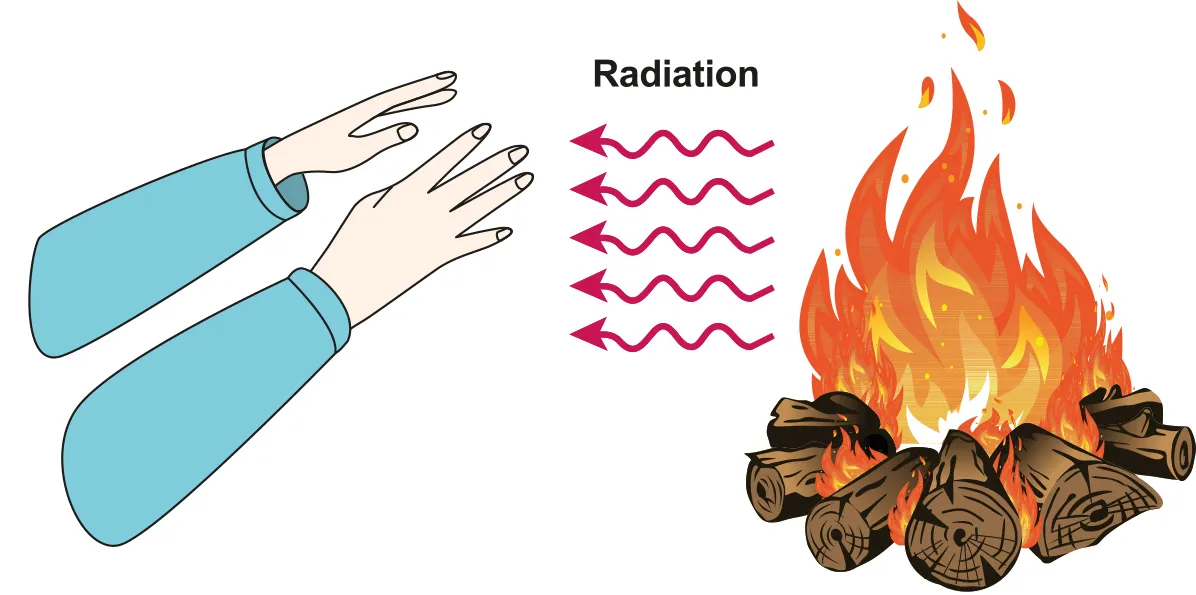
B.2.1-3 Simplified diagram showing the transfer of radiation
•
Conduction and convection require a transmission medium, while radiation does not
•
not require a transmission medium
◦
Radiation can occur through a vacuum
B.2.1-4 Diagram that explaining that radiation can occur in outer space
B.2.2 Albedo and emissivity
Albedo and emissivity
•
Albedo () : the ratio between the total reflected radiation and the total incident radiation of a planet
•
Factors that affect the albedo of a planet :
◦
Season (cloud formations)
◦
Latitude
◦
Terrain
▪
Oceans have low albedo (absorption) and snow has high albedo (reflection).
•
The Earth’s global annual average albedo is approximately 0.3 (30%).
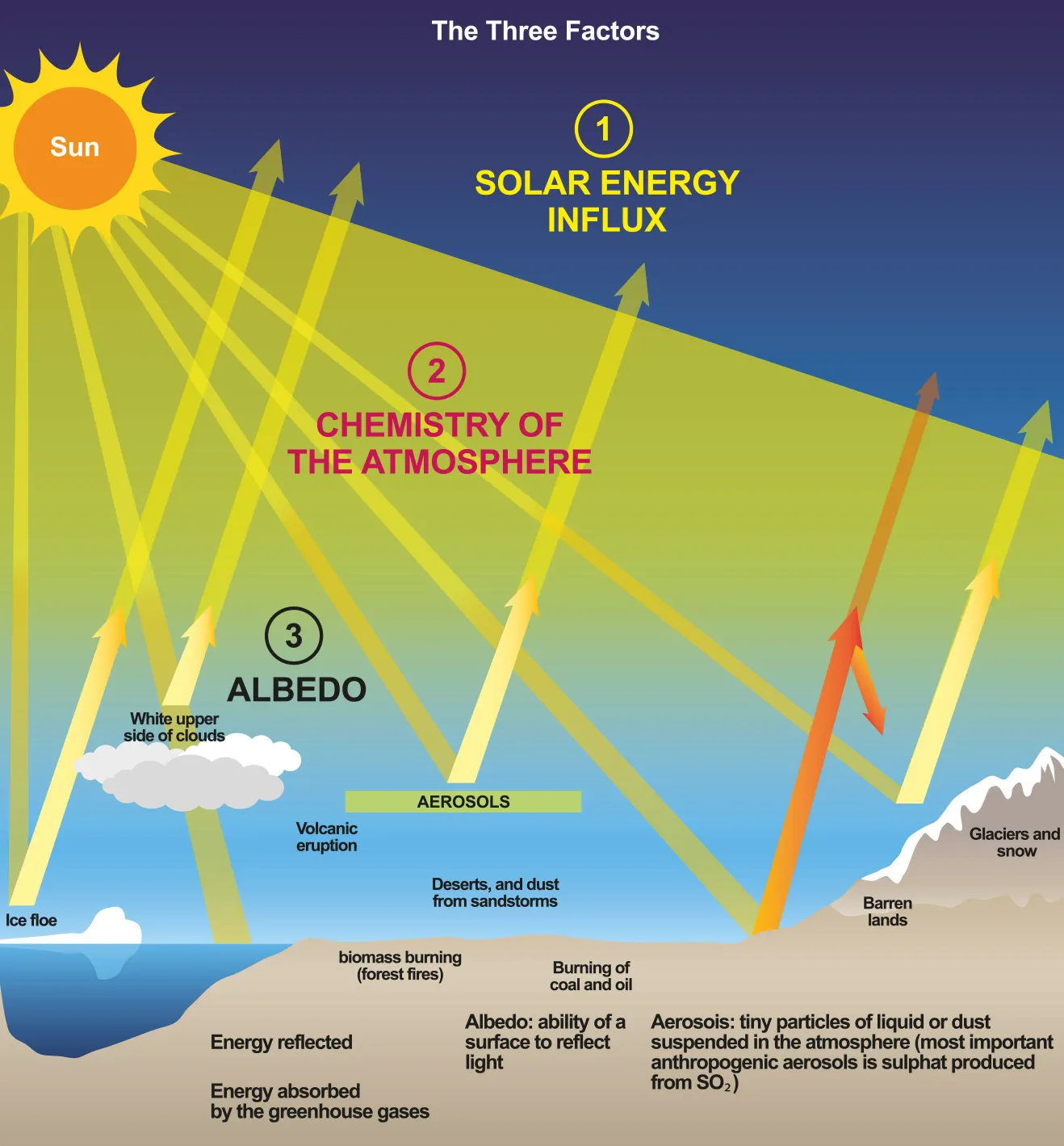
B.2.2-1 Diagram of explaining the reflected radiation on Earth surface
Emissivity
•
Most objects are not black bodies, as they radiate a fraction of the power per unit area compared to an ideal black body at the same temperature
•
Such fraction is called the object’s emissivity,, and its value depends on the object
B.2.3 The solar constant, The greenhouse effect, and Energy balance in the Earth surface–atmosphere system
The solar constant
•
The solar constant : the average amount of solar radiation energy per unit area per second at a distance equal to the mean distance of the Earth from the sun (before atmospheric effects are considered)
◦
In other words, the intensity of solar radiation at Earth’s upper atmosphere
•
The value is approximately .
•
The luminosity of the sun (sun’s power output) is
•
Mean distance between the Earth-Sun:
•
Solar constant
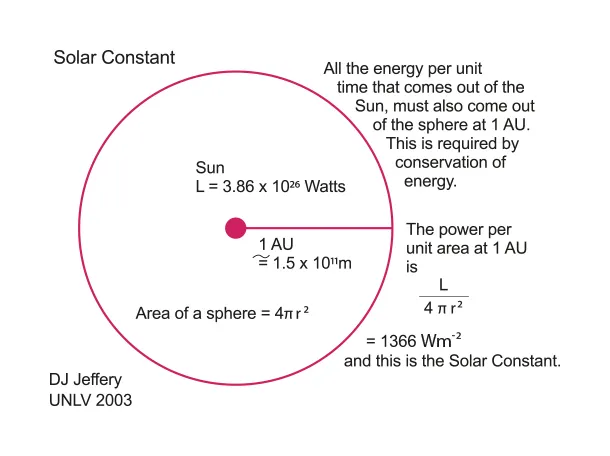
B.2.3-1 Simplified diagram with equation for solar constant
•
The solar constant, , is the intensity of radiation from the sun at Earth, but since Earth is a sphere the actual intensity varies with latitude and time. In fact, one half of the Earth does not receive any sunlight at all (the night side). So if one were to take the total power of solar radiation incident on the Earth and spread it out evenly across the whole surface of the Earth to get the average intensity, the average solar intensity would be
◦
Total solar power incident
▪
◦
Average solar intensity if the total power is divided by the total surface area of Earth:
▪
The greenhouse effect
•
Greenhouse gasses : gasses that absorb infrared radiation
◦
These gasses absorbs infrared radiation because
▪
their molecules resonate at natural frequencies similar to the frequencies of infrared radiation
▪
have energy levels that are able to absorb infrared radiation
◦
Main greenhouse gasses:
▪
Methane
▪
▪
Water vapor
▪
Carbon dioxide
▪
Nitrous oxide
◦
Greenhouse gasses do not absorb shorter wavelength radiation in the visible spectrum.
•
Mechanism of the greenhouse effect :
1.
Incoming radiation from the sun is mostly in the visible spectrum due to the high temperature of the Sun’s surface
a.
Peak intensity wavelength can be calculated using Wien’s Law
2.
Most of the radiation from the sun is able to pass through the atmosphere and be absorbed by the Earth (excluding the fraction that is reflected/scattered)
a.
Atmosphere is transparent in the visible spectrum
b.
Absorbed thermal radiation contributes to heating of the Earth
3.
Earth also cools down by emitting thermal radiation
a.
Thermal radiation emitted by Earth is mostly in the infrared spectrum due to its low temperature
4.
Greenhouse gasses that exist in the atmosphere absorb the infrared radiation and re-emit it in all directions.
a.
Most of the infrared thermal radiation does not escape the Earth
b.
It is instead mostly re-emitted downward toward the earth and absorbed by the Earth (infrared radiation re-emitted upwards is absorbed again by the greenhouse gasses in the atmosphere above it)
5.
If the power of thermal radiation absorbed by the Earth is greater than the power of thermal radiation escaping the Earth, the net increase of thermal energy of Earth will cause its average temperature of the Earth to increase. This process is referred to as the greenhouse effect.
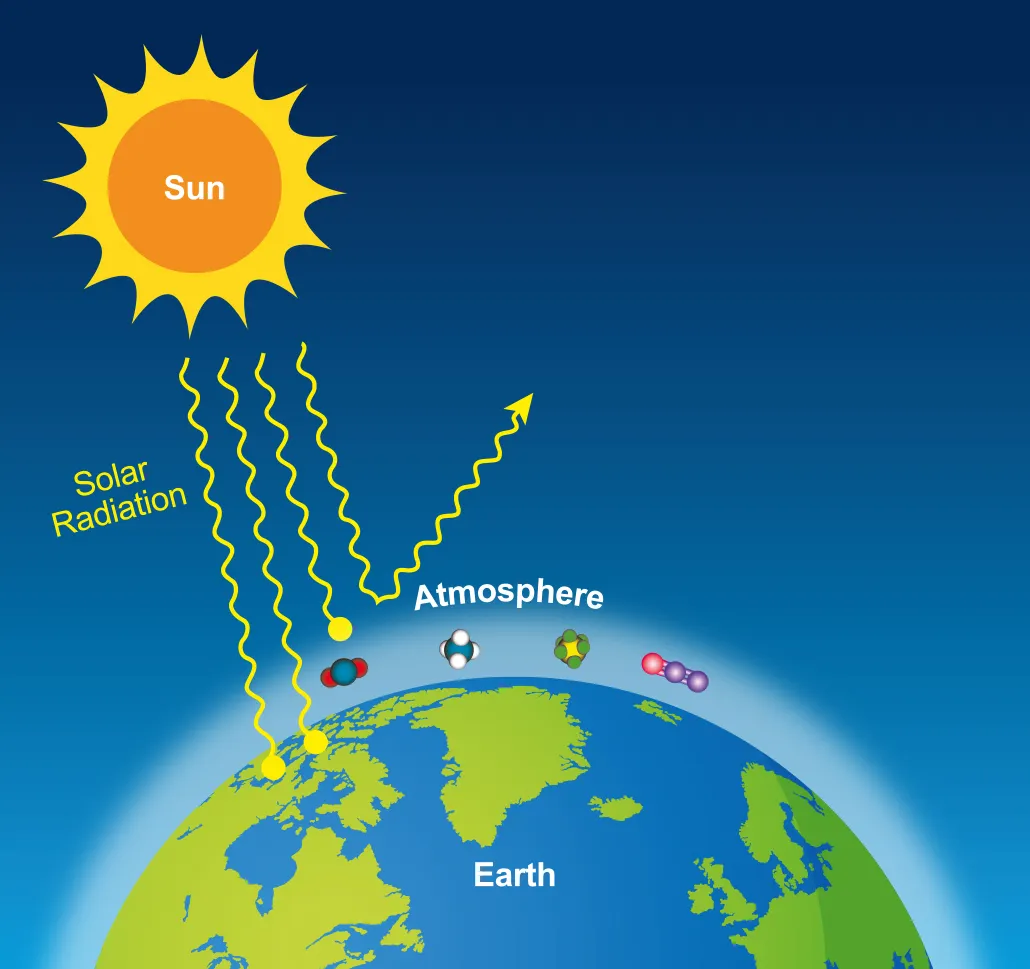
B.2.3-2 Diagram that is reflected by the Earth’s atmosphere
•
Results of the greenhouse effect :
◦
Increase in average sea level as the ice on land melts.
◦
Extreme weather (e.g. heat waves and heavy floods) and climate change
•
Chain reaction:
◦
Increase in average temperature (global warming) reduces ice and snow covers
◦
Such phenomenon causes a decrease in albedo and thus increases the rate of heat absorption
◦
Solubility of carbon dioxide in the sea decreases with increasing temperature, resulting in an increase in the concentration of atmospheric carbon dioxide
•
Enhanced greenhouse effect:
◦
Human activity has increased the amount of greenhouse gasses in the atmosphere.
◦
This is increasing the average temperature of the Earth above what it would naturally be without human interference.
Energy balance in the Earth surface–atmosphere system
•
Earth’s energy balance adds the effect of all the mechanisms that increase the thermal energy of the Earth and all the mechanism through which the Earth loses thermal radiation
•
The Earth’s temperature remains constant if the power of solar radiation absorbed by the Earth is equal to the power of thermal radiation emitted by the Earth
◦
Power of sunlight absorbed by Earth
◦
Power of thermal radiation emitted by Earth
◦
Net power so
▪
▪
▪
◦
Factors like Increased cloud cover, increased snow increase the albedo, which lowers the amount of sunlight being absorbed and thus lowers the average equilibrium temperature of the Earth
◦
On the other hand, greenhouse gasses such as the ones released by the combustion of fossil fuels decrease the emissivity of the atmosphere and increase the average equilibrium temperature of the Earth