Mission
People
Join Us
Pricing
FAQ
Mentoring Program Curriculum (1)
/
Subjects
/
Physics
/
Topics
/
B. The particulate nature of matter
/
Untitled
Mentoring Program Curriculum (1)
/
Subjects
/
Physics
/
Topics
/
B. The particulate nature of matter
/
Untitled
Share
Mission
People
Join Us
Pricing
FAQ
갤러리 보기
Search
B.1.1 Molecular theory of solids, liquids and gases
Understanding: Properties of the three states of matter considered in physics
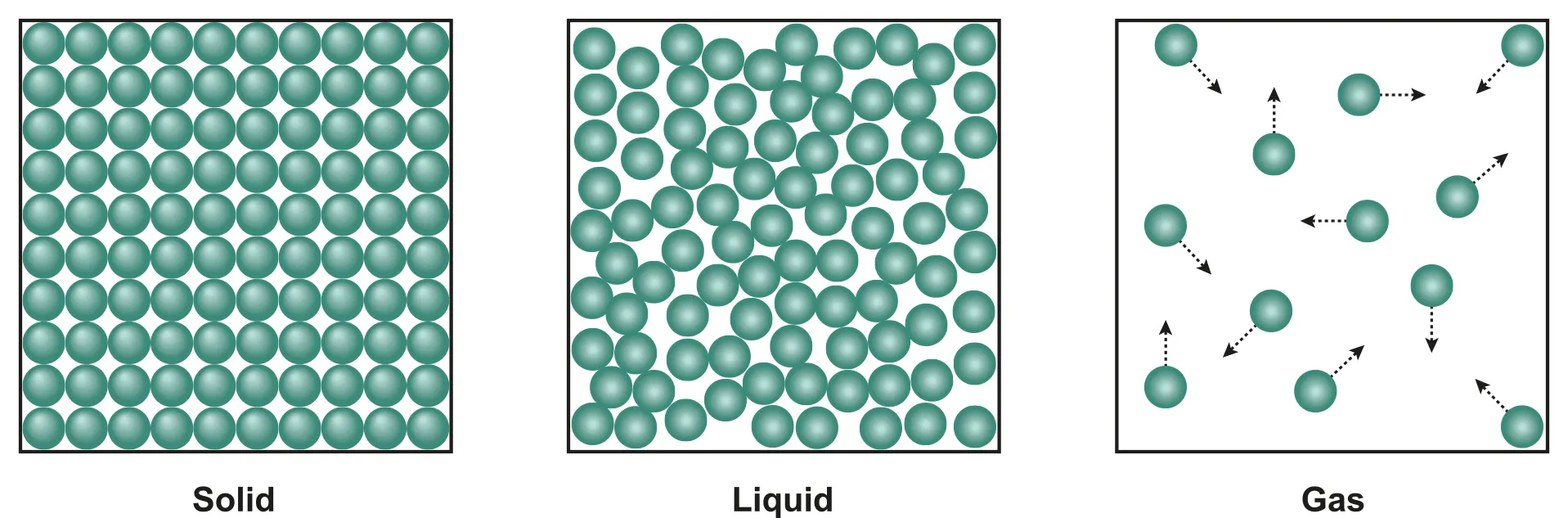
Particle Model of Matter:
B.1.1-1 Diagram of 3 main states
B.1 Thermal Energy Transfer
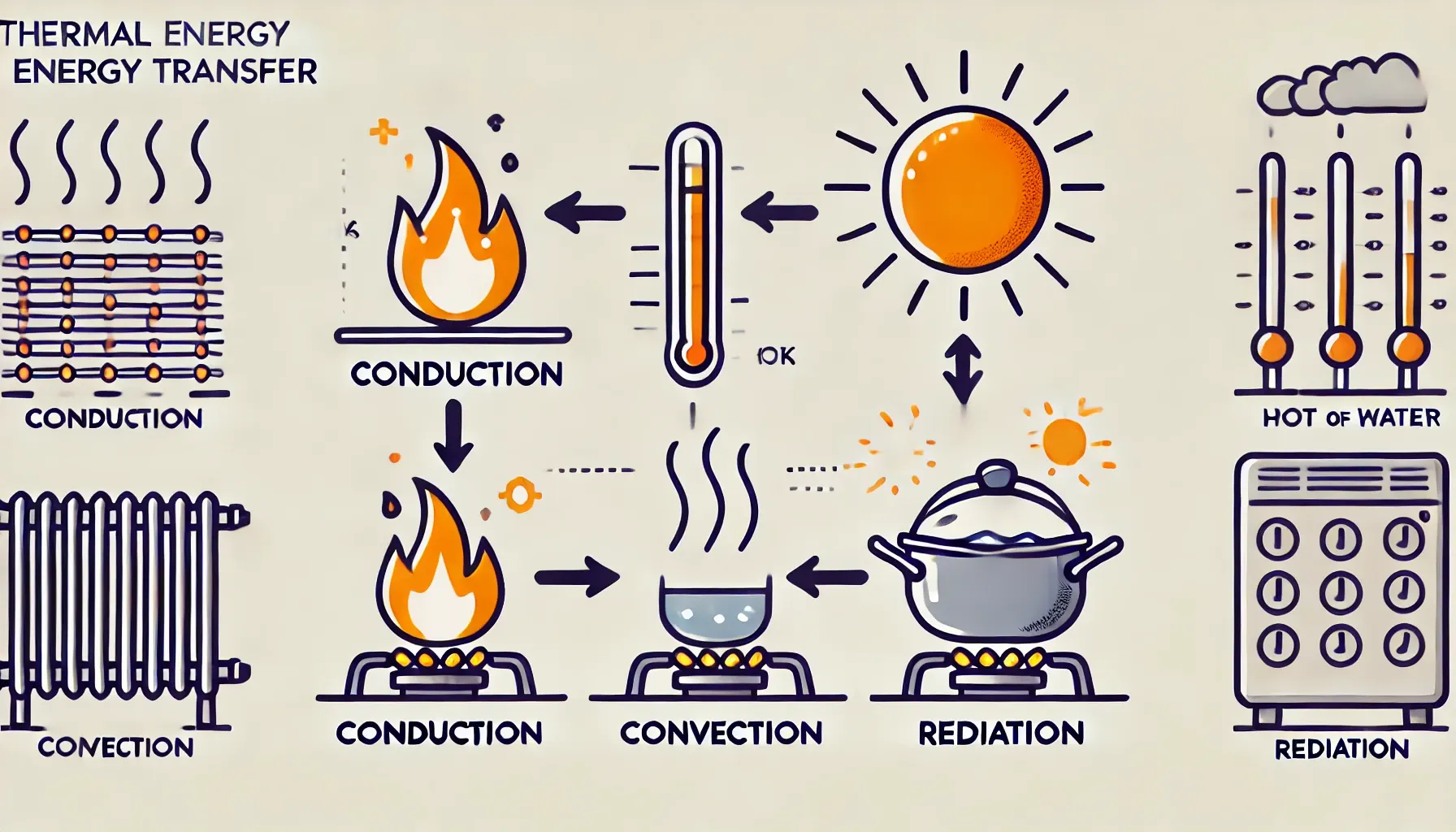
B.2.1 Conduction, convection, and thermal radiation
Conduction, Convection and Thermal Radiation
Conduction
•
Conduction
is when
energy is transferred by direct contact
•
Usually happens in solid
•
When two solids in different temperatures contact conduction happens
◦
Thermal energy is transferred from solid with higher temperature to lower temperature
•
Metal
are good thermal conductors because :
◦
they contain high number of delocalized electrons
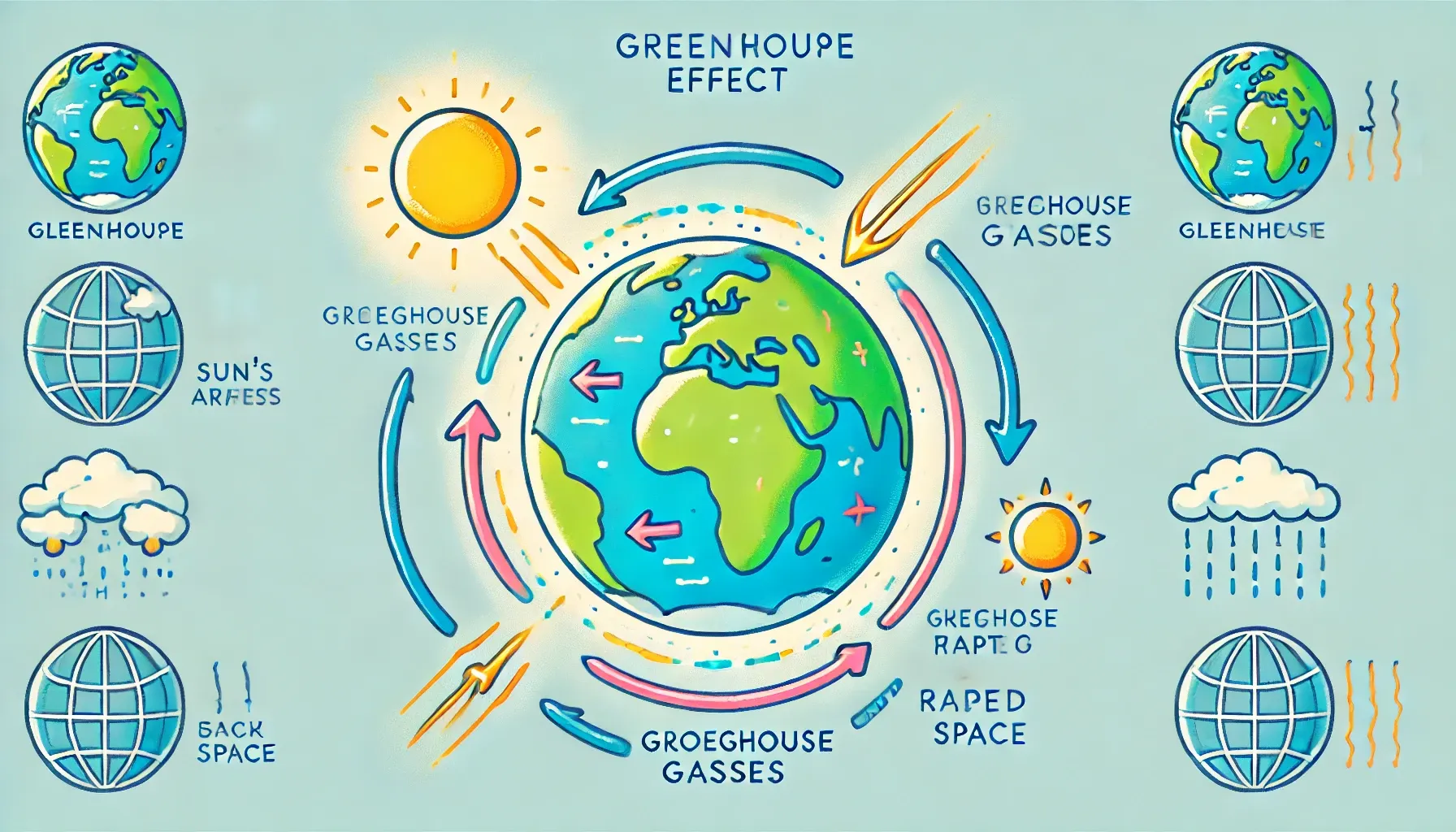
B.2 Greenhouse Effect
B.3.1 Avogadro constant, Pressure, and Gas Laws
Molar Concept Rules
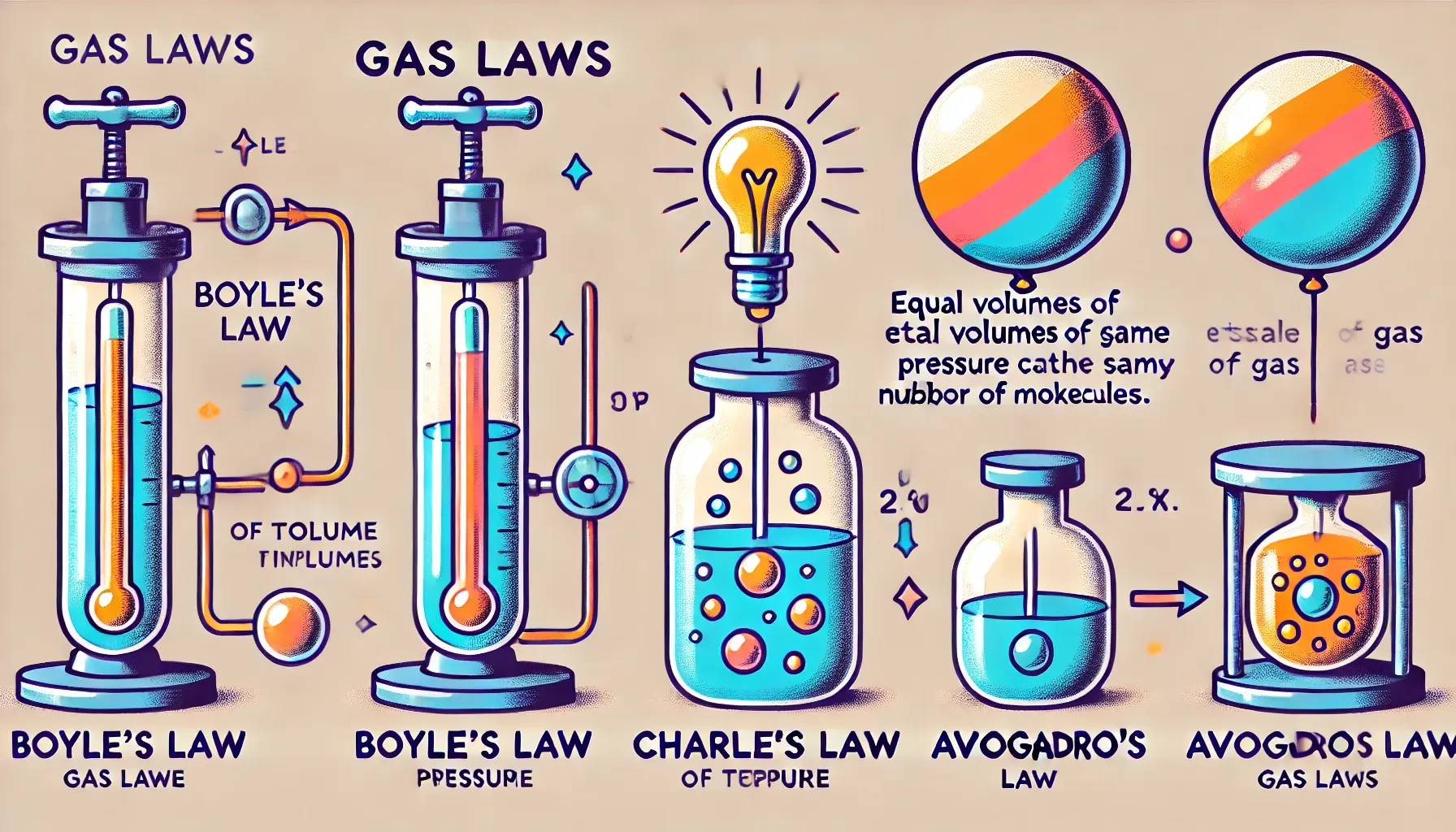
Gas Laws
•
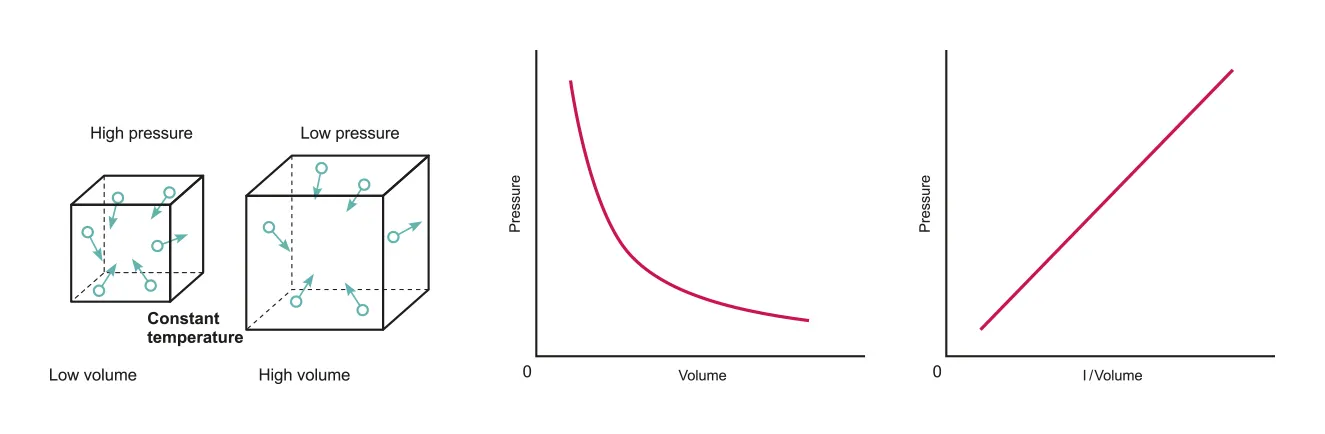
Boyle’s Law : Pressure of a gas of fixed mass and at a constant temperature is inversely proportional to its volume
◦
Isothermal process: temperature is constant
◦
Sealed or closed system: mass is constant
B.3.1-1 Diagram of particles in high and low pressure and graph that represents the relationship between volume and pressure
p
∝
1
v
p \propto \frac{1}{v}
p
∝
v
1
•
This means that the product of
p
and
V
is always constant
p
1
V
1
=
p
2
V
2
=
constant
p_1 V_1 = p_2 V_2 = \textit{constant}
p
1
V
1
=
p
2
V
2
=
constant
B.3 Gas Laws
B.4.1 Basic Definitions
Internal Energy
Types of Systems
•
Closed system
•
Isolated system
Sign Convention
•
Clausius’ sign convention
B.4 Thermodynamics
B.5.1 Ohm's Law
Mathematical Approach of Ohm’s Law
•
As mentioned previously, whenever there is a potential difference there must be an electric field
•
When a potential difference is established at the ends of a conductor, an electric field is established within the conductor that forces electrons to move and create the current
•
The size of the current is different in the different conductors, as each conductor will operate with different efficiency
•
The properties of the conductors to resist the current flow is called electric resistance
•
The equation of resistance is :
B.5 Current and Circuits