
 Understanding points
B3.1.1 Gas exchange as a vital function in all organisms
B3.1.2 Properties of gas-exchange surfaces
B3.1.3 Maintenance of concentration gradients at exchange surfaces in animals
B3.1.4 Adaptations of mammalian lungs for gas exchange
B3.1.5 Ventilation of the lungs
B3.1.6 Measurement of lung volumes
B3.1.7 Adaptations for gas exchange in leaves
B3.1.8 Distribution of tissues in a leaf
B3.1.9 Transpiration as a consequence of gas exchange in a leaf
B3.1.10 Stomatal density
B3.1.11 Adaptations of foetal and adult haemoglobin for the transport of oxygen (HL only)
B3.1.12 Bohr shift (HL only)
B3.1.13 Oxygen dissociation curves as a means of representing the affinity of haemoglobin for oxygen at different oxygen concentrations (HL only) |
Ventilation, cell respiration, gas exchange
Ventilation
Exchange of air between the atmosphere and the lungs
Achieved by the physical act of breathing
Cell respiration
Generation of ATP from organic molecules
Enhanced by the presence of oxygen
Gas exchange
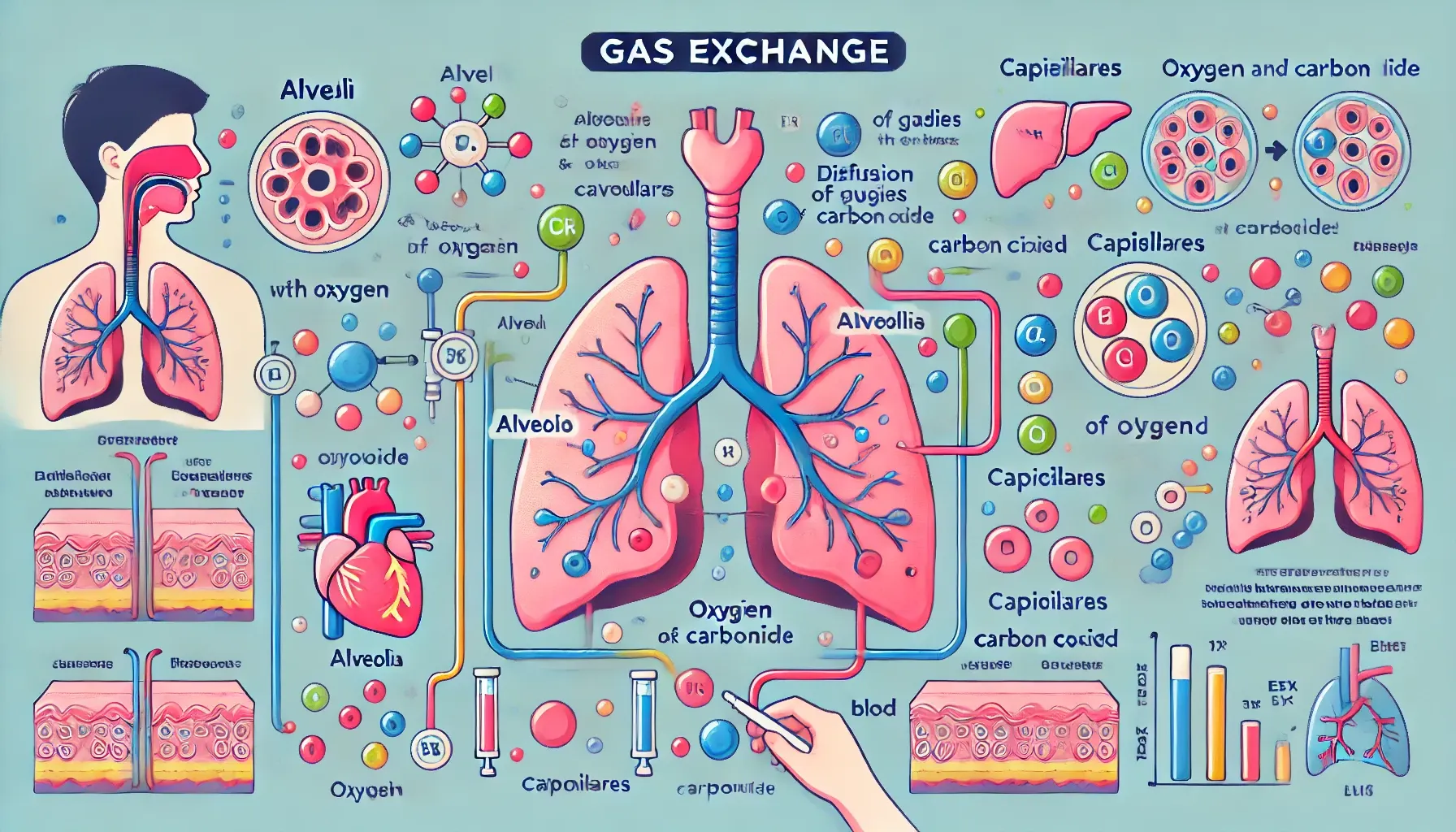
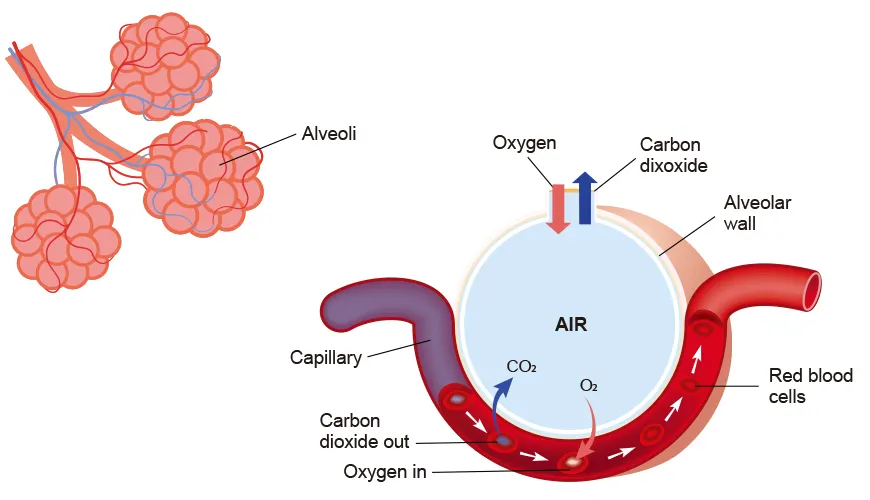
Exchange of O₂ and CO₂ between the alveoli and bloodstream by passive diffusion
Gas exchange surfaces must be thin, moist, permeable, and have a large SA
Ventilation and dense capillary networks maintain conc gradients for diffusion


Adaptations of the lung
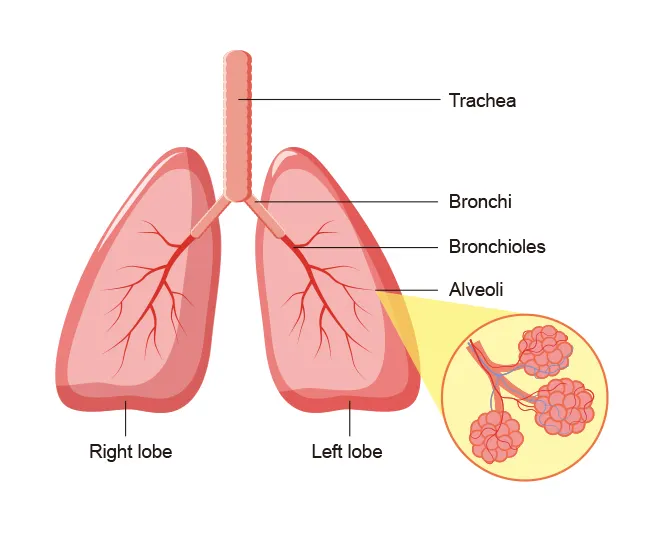
Airways | Bronchi - bronchioles - alveoli |
Large SA | 300 million alveoli in a pair of adult lungs |
Extensive capillary beds | Surround the alveoli like a basket |
Short diffusion distances | Capillary and alveoli walls are a single cell thick |
Pulmonary surfactant | Reduces surface tension and prevents alveolar collapse |
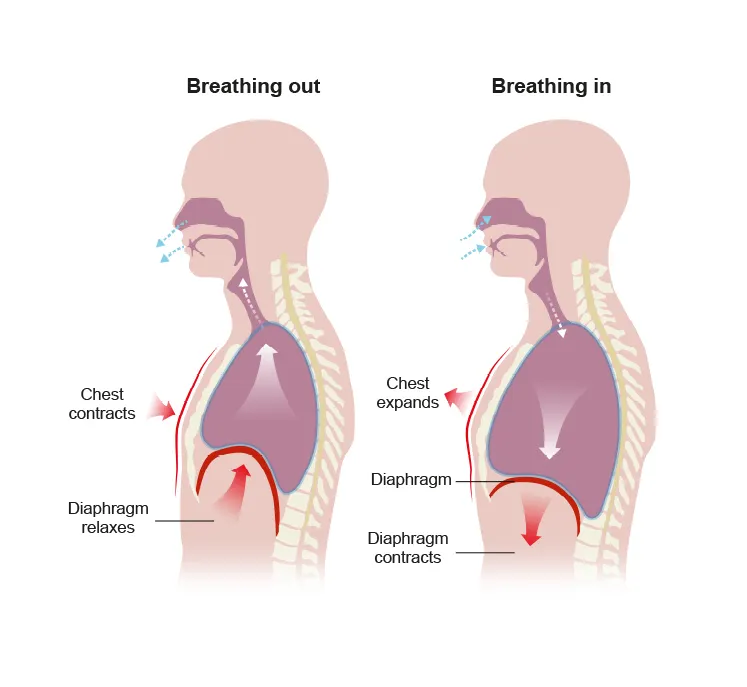
Lung ventilation
•
Exchanges gases between inhaled air and lungs
•
Maintains high con. gradient of gases in alveoli of the lungs
•
Aided by diaphragm and intercostal muscles
Inspiration | Expiration |
External intercostal muscles contract & internal intercostal muscles relax
↓
Rib cage is pulled upwards & diaphragm contracts and flattens
↓
Thoracic cavity volume increases
↓
Decrease in pressure causes air to enter the lungs | Internal intercostal muscles contract & external intercostal muscles relax
↓
Rib cage moves downwards
& diaphragm relaxes and moves upwards
↓
Thoracic cavity volume decreases
↓
Increase in the pressure causes air to exit the lungs |


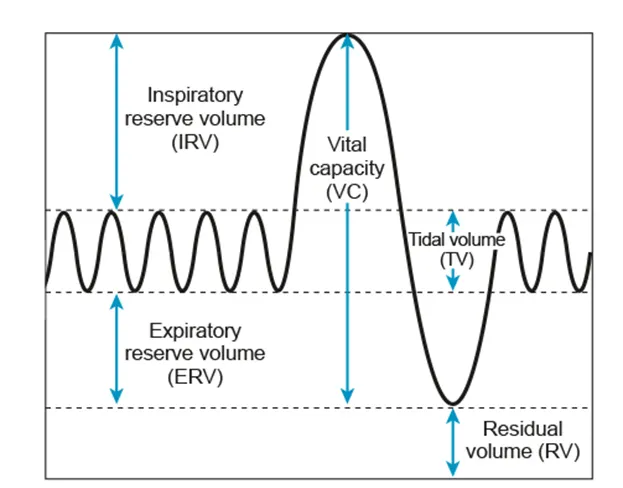
Spirometer
Used to measure lung volumes
•
Lung volumes are used to diagnose asthma, COPD, cystic fibrosis
•
A simpler method uses a balloon to measure the volume of air in a single breath: submerging the balloon in water and measuring the volume displaced (1mL = 1cm³)
•
Alveolar ventilation rate = # of breath x (tidal volume – dead space)
◦
Actual v. of gas involved in ventilation
•
To increase alveolar ventilation
1.
Increase ventilation rate by increasing greater frequency of breaths
2.
Increase tidal volume increasing the volume of air taken in and out per breath
Emphysema
•
Cause: chemical irritants in cigarette smoke damage the alveolar walls and reduce their elasticity
•
Rich blood supply increases the likelihood of the cancer metastasis
•
Uncontrolled proliferation of lung cells leads to the abnormal growth of lung tissue
Adaptations for gas exchange in leaves
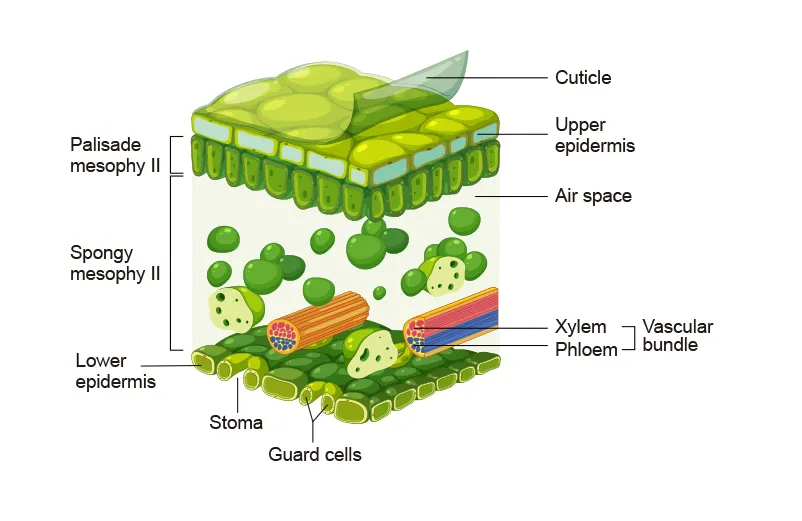
Waxy cuticle | Covers the upper and lower layers of leaves
Reduces water loss and prevents movement of O₂ and CO₂ |
Guard cells | Close the stomata at night when photosynthesis is not occurring and gas exchange is not required |
Spongy mesophyll | Contains extensive air spaces and provides a large SA |


Transpiration
Loss of water vapor from the leaves and stems of plants
•
Increases at higher temperature because evaporation rate is higher
•
Increases in the presence of wind because it dissipates saturated air near stomata
•
Decreases when humidity is high because the conc gradient is smaller
•
Light intensity is an essential factor for transpiration
Stomatal density
Number of stomata per unit area
•
Higher stomatal density can increase both carbon dioxide uptake and water loss.
•
Stomatal density differs between different species of plants because they are adapted to the environment they live in.
*(AHL)
Adaptations of fetal and adult hemoglobin for oxygen transport
•
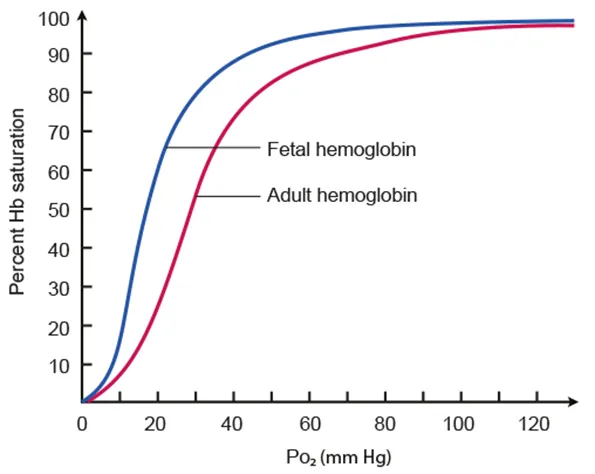
Fetal hemoglobin has a higher affinity for oxygen than adult hemoglobin
•
At any pO₂, fetal hemoglobin is more saturated than adult hemoglobin
•
This allows the fetus to obtain oxygen from the placenta
Bohr shift
•
High CO₂ concentrations reduce the affinity of hemoglobin for oxygen
1.
CO₂ decreases pH: hemoglobin has lower affinity at lower pH
2.
CO₂ binds to hemoglobin: carbaminohemoglobin has a lower affinity than hemoglobin
•
The result is a shift in the oxygen dissociation curve to the left
◦
Promotes release of oxygen in actively respiring tissues with high CO₂ conc
◦
Promotes oxygenation of blood in the lungs with low CO₂ conc
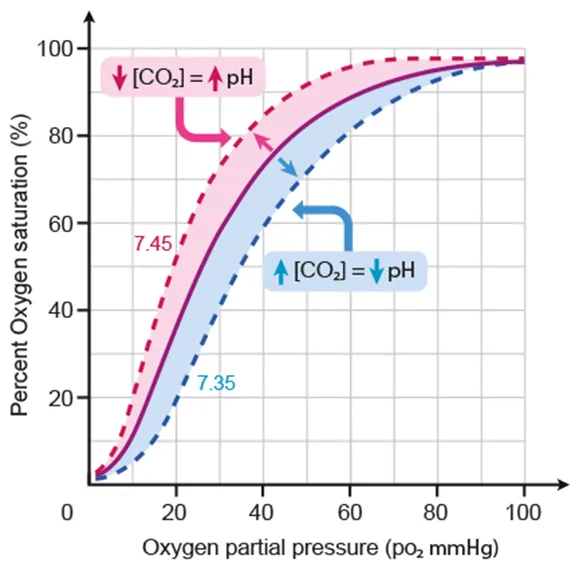
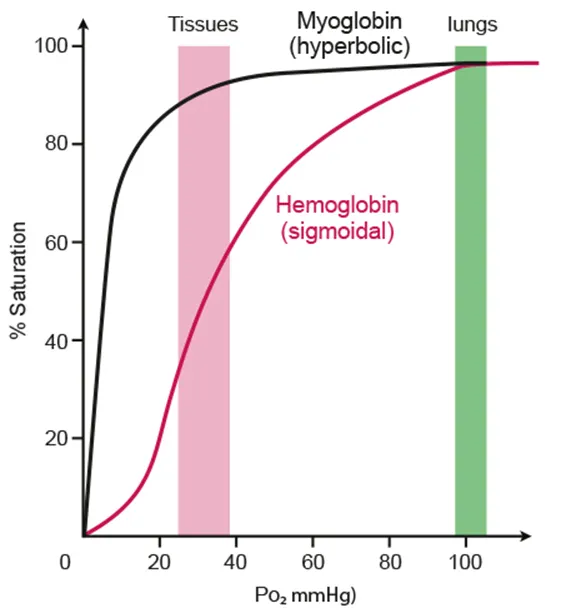
Oxygen dissociation curves
•
Cooperative binding of oxygen to a heme group induces a conformational change that increases the affinity for oxygen in other heme groups
•
Thus, the oxygen saturation of hemoglobin is not directly proportional to pO₂
•
Instead, it changes from fully unsaturated to fully saturated over a narrow range of pO₂
•
This enables rapid dissociation of O₂ in respiring tissues