

Topics
Gallery view
Search
 Understanding points


A4.1.1 Evolution as change in the heritable characteristics of a population
A4.1.2 Evidence for evolution from base sequences in DNA or RNA and amino acid sequences in proteins
A4.1.3 Evidence for evolution from selective breeding of domesticated animals and crop plants
A4.1.4 Evidence for evolution from homologous structures
A4.1.5 Convergent evolution as the origin of analogous structures
A4.1.6 Speciation by splitting of pre-existing species
A4.1.7 Roles of reproductive isolation and differential selection in speciation
A4.1.8 Differences and similarities between sympatric and allopatric speciation (HL only)
A4.1.9 Adaptive radiation as a source of biodiversity (HL only)
A4.1.10 Barriers to hybridization and sterility of interspecific hybrids as mechanisms for preventing the mixing of alleles between species (HL only)
A4.1.11 Abrupt speciation in plants by hybridization and polyploidy (HL only) |
Evolution
Change in the heritable characteristics of a population
A4.1 Evolution and speciation
Understanding points
A4.2.1 Biodiversity as the variety of life in all its forms, levels and combinations
A4.2.2 Comparisons between current number of species on Earth and past levels of biodiversity
A4.2.3 Causes of anthropogenic species extinction
A4.2.4 Causes of ecosystem loss
A4.2.5 Evidence for a biodiversity crisis
A4.2.6 Causes of the current biodiversity crisis
A4.2.7 Need for several approaches to conservation of biodiversity
A4.2.8 Selection of evolutionarily distinct and globally endangered species for conservation prioritization in the EDGE of Existence programme |
Biodiversity
The total number of different species living in a defined area
1.
Genetic: the variety in the gene pool of a species
2.
Species: the number of species present and their relative abundance in an area
•
Richness: the number of species in an area
•
Evenness: the relative abundance of each species
A4.2 Conservation of biodiversity
Understanding points
B4.1.1 Habitat as the place in which a community, species, population or organism lives
B4.1.2 Adaptations of organisms to the abiotic environment of their habitat
B4.1.3 Abiotic variables affecting species distribution
B4.1.4 Range of tolerance of a limiting factor
B4.1.5 Conditions required for coral reef formation
B4.1.6 Abiotic factors as the determinants of terrestrial biome distribution
B4.1.7 Biomes as groups of ecosystems with similar communities due to similar abiotic conditions and convergent evolution
B4.1.8 Adaptations to life in hot deserts and tropical rainforest |
Habitat
The place where an organism lives
•
Includes the geographical location, type of ecosystem, and physical and chemical conditions
•
Biotic factors: living components of an ecosystem, e.g. plants, animals, bacteria
B4.1 Adaptation to environment
Understanding points
B4.2.1 Ecological niche as the role of a species in an ecosystem
B4.2.2 Differences between organisms that are obligate anaerobes, facultative anaerobes and obligate aerobes
B4.2.3 Photosynthesis as the mode of nutrition in plants, algae and several groups of photosynthetic prokaryotes
B4.2.4 Holozoic nutrition in animals
B4.2.5 Mixotrophic nutrition in some protists
B4.2.6 Saprotrophic nutrition in some fungi and bacteria
B4.2.7 Diversity of nutrition in archaea
B4.2.8 Relationship between dentition and the diet of omnivorous and herbivorous representative members of the family Hominidae
B4.2.9 Adaptations of herbivores for feeding on plants and of plants for resisting herbivory
B4.2.10 Adaptations of predators for finding, catching and killing prey, and of prey animals for resisting predation
B4.2.11 Adaptations of plant form for harvesting light
B4.2.12 Fundamental and realized niches
B4.2.13 Competitive exclusion and the uniqueness of ecological niches |
Ecological niche
The unique role of an organism in an ecosystem
•
Fundamental: the potential niche in the absence of competition
•
Realized: the actual niche due to competition
B4.2 Ecological niches
Understanding points
C4.1.1 Populations as interacting groups of organisms of the same species living in an area
C4.1.2 Estimation of population size by random sampling
C4.1.3 Random quadrat sampling to estimate population size for sessile organisms
C4.1.4 Capture–mark–release–recapture and the Lincoln index to estimate population size for motile organisms
C4.1.5 Carrying capacity and competition for limited resources
C4.1.6 Negative feedback control of population size by density-dependent factors
C4.1.7 Population growth curves
C4.1.8 Modelling of the sigmoid population growth curve
C4.1.9 A community as all of the interacting organisms in an ecosystem
C4.1.10 Competition versus cooperation in intraspecific relationships
C4.1.11 Herbivory, predation, interspecific competition, mutualism, parasitism and pathogenicity as categories of interspecific relationship within communities
C4.1.12 Mutualism as an interspecific relationship that benefits both species
C4.1.13 Resource competition between endemic and invasive species
C4.1.14 Tests for interspecific competition
C4.1.15 Use of the chi-squared test for association between two species
C4.1.16 Predator–prey relationships as an example of density-dependent control of animal populations
C4.1.17 Top-down and bottom-up control of populations in communities
C4.1.18 Allelopathy and secretion of antibiotics |
Population
A group of individuals of the same species living in an area
•
Carrying capacity: maximum population size that an environment can support
◦
Determined by abundance of resources: water, space, food
Estimation of population size
C4.1 Populations and communities
Understanding points
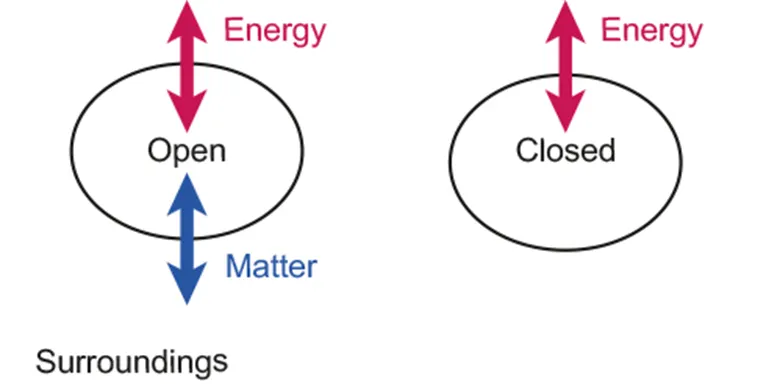
C4.2.1 Ecosystems as open systems in which both energy and matter can enter and exit
C4.2.2 Sunlight as the principal source of energy that sustains most ecosystems
C4.2.3 Flow of chemical energy through food chains
C4.2.4 Construction of food chains and food webs to represent feeding relationships in a community
C4.2.5 Supply of energy to decomposers as carbon compounds in organic matter coming from dead organisms
C4.2.6 Autotrophs as organisms that use external energy sources to synthesize carbon compounds from simple inorganic substances
C4.2.7 Use of light as the external energy source in photoautotrophs and oxidation reactions as the energy source in chemoautotrophs
C4.2.8 Heterotrophs as organisms that use carbon compounds obtained from other organisms to synthesize the carbon compounds that they require
C4.2.9 Release of energy in both autotrophs and heterotrophs by oxidation of carbon compounds in cell respiration
C4.2.10 Classification of organisms into trophic levels
C4.2.11 Construction of energy pyramids
C4.2.12 Reductions in energy availability at each successive stage in food chains due to large energy losses between trophic levels
C4.2.13 Heat loss to the environment in both autotrophs and heterotrophs due to conversion of chemical energy to heat in cell respiration
C4.2.14 Restrictions on the number of trophic levels in ecosystems due to energy losses
C4.2.15 Primary production as accumulation of carbon compounds in biomass by autotrophs
C4.2.16 Secondary production as accumulation of carbon compounds in biomass by heterotrophs
C4.2.17 Constructing carbon cycle diagrams
C4.2.18 Ecosystems as carbon sinks and carbon sources
C4.2.19 Release of carbon dioxide into the atmosphere during combustion of biomass, peat, coal, oil and natural gas
C4.2.20 Analysis of the Keeling curve in terms of photosynthesis, respiration and combustion
C4.2.21 Dependence of aerobic respiration on atmospheric oxygen produced by photosynthesis, and of photosynthesis on atmospheric carbon dioxide produced by respiration
C4.2.22 Recycling of all chemical elements required by living organisms in ecosystems |
Open and closed systems
C4.2 Transfer of energy and matter
Understanding points
D4.1.1 Natural selection as the mechanism driving evolutionary change
D4.1.2 Roles of mutation and sexual reproduction in generating the variation on which natural selection acts
D4.1.3 Overproduction of offspring and competition for resources as factors that promote natural selection
D4.1.4 Abiotic factors as selection pressures
D4.1.5 Differences between individuals in adaptation, survival and reproduction as the basis for natural selection
D4.1.6 Requirement that traits are heritable for evolutionary change to occur
D4.1.7 Sexual selection as a selection pressure in animal species
D4.1.8 Modelling of sexual and natural selection based on experimental control of selection pressures
D4.1.9 Concept of the gene pool (HL only)
D4.1.10 Allele frequencies of geographically isolated populations (HL only)
D4.1.11 Changes in allele frequency in the gene pool as a consequence of natural selection between individuals according to differences in their heritable traits (HL only)
D4.1.12 Differences between directional, disruptive and stabilizing selection (HL only)
D4.1.13 Hardy–Weinberg equation and calculations of allele or genotype frequencies (HL only)
D4.1.14 Hardy–Weinberg conditions that must be maintained for a population to be in genetic equilibrium (HL only)
D4.1.15 Artificial selection by deliberate choice of traits (HL only) |
Natural selection
Conditions | 1. Genetic variation: mutation, meiosis, sexual reproduction
2. Overproduction of offspring → competition
3. Selection pressure: food, temperature |
Process | Individuals that are better adapted to the environment survive and reproduce (survival of the fittest)
↓
The offspring inherit the favorable genes and reproduce
↓
Over time, the allele frequency of the trait increases
↓
Changes in the population as a whole : evolution |


D4.1 Natural selection
Understanding points
D4.2.1 Stability as a property of natural ecosystems
D4.2.2 Requirements for stability in ecosystems
D4.2.3 Deforestation of Amazon rainforest as an example of a possible tipping point in ecosystem stability
D4.2.4 Role of keystone species in the stability of ecosystems
D4.2.5 Assessing sustainability of resource harvesting from natural ecosystems
D4.2.6 Factors affecting the sustainability of agriculture
D4.2.7 Eutrophication of aquatic and marine ecosystems due to leaching
D4.2.8 Biomagnification of pollutants in natural ecosystems
D4.2.9 Effects of microplastic and macroplastic pollution of the oceans
D4.2.10 Restoration of natural processes in ecosystems by rewilding
D4.2.11 Ecological succession and its causes (HL only)
D4.2.12 Changes occurring during primary succession (HL only)
D4.2.13 Cyclical succession in ecosystems (HL only)
D4.2.14 Climax communities and arrested succession (HL only) |
Sustainability
•
Systems are stable if they can continue for an unlimited amount of time
•
Sustainability of ecosystems requires a steady supply of energy, nutrient cycling, tolerable climate, and high genetic diversity
•
Tipping point: a level of disturbance beyond which irreversible changes occur to the ecosystem
D4.2 Sustainability and change
Understanding points
D4.3.1 Anthropogenic causes of climate change
D4.3.2 Positive feedback cycles in global warming
D4.3.3 Change from net carbon accumulation to net loss in boreal forests as an example of a tipping point
D4.3.4 Melting of landfast ice and sea ice as examples of polar habitat change
D4.3.5 Changes in ocean currents altering the timing and extent of nutrient upwelling
D4.3.6 Poleward and upslope range shifts of temperate species
D4.3.7 Threats to coral reefs as an example of potential ecosystem collapse
D4.3.8 Afforestation, forest regeneration and restoration of peat-forming wetlands as approaches to carbon sequestration
D4.3.9 Phenology as research into the timing of biological events (HL only)
D4.3.10 Disruption to the synchrony of phenological events by climate change (HL only)
D4.3.11 Increases to the number of insect life cycles within a year due to climate change (HL only)
D4.3.12 Evolution as a consequence of climate change (HL only) |
Climate change
Greenhouse effect | Greenhouse gas: water vapour, CO₂, CH₄, oxides of nitrogen
• Incoming shorter wave radiation from the Sun is absorbed by the Earth and re-radiated as longer wave radiation as heat
• This heat is captured by the greenhouse gases, increasing the atmospheric temperature
• Recent human activity has increased the normal level of greenhouse gases in the atmosphere → occurring at a higher rate than normal
• Ecosystem is threatened due to change in climatic patterns |
Global warming | An increase in temp. of the atmosphere, leading to climate change
• Greater ranges in temp. → melting ice caps leads to rising of sea level → loss of habitat
• Balance within the ecosystem breaks → changes in predator-prey relationships and increased success of pest species
• Increased rate of decomposition of detritus |
Anthropogenic causes | 1. Combustion of fossil fuels
2. Deforestation
3. Anaerobic decomposition in landfill sites
4. Melting of permafrost |
D4.3 Climate change