

 Understanding points
B3.2.1 Adaptations of capillaries for exchange of materials between blood and the internal or external environment
B3.2.2 Structure of arteries and veins
B3.2.3 Adaptations of arteries for the transport of blood away from the heart
B3.2.4 Measurement of pulse rates
B3.2.5 Adaptations of veins for the return of blood to the heart
B3.2.6 Causes and consequences of occlusion of the coronary arteries
B3.2.7 Transport of water from roots to leaves during transpiration
B3.2.8 Adaptations of xylem vessels for transport of water
B3.2.9 Distribution of tissues in a transverse section of the stem of a dicotyledonous plant
B3.2.10 Distribution of tissues in a transverse section of the root of a dicotyledonous plant
B3.2.11 Release and reuptake of tissue fluid in capillaries (HL only)
B3.2.12 Exchange of substances between tissue fluid and cells in tissues (HL only)
B3.2.13 Drainage of excess tissue fluid into lymph ducts (HL only)
B3.2.14 Differences between the single circulation of bony fish and the double circulation of mammals (HL only)
B3.2.15 Adaptations of the mammalian heart for delivering pressurized blood to the arteries (HL only)
B3.2.16 Stages in the cardiac cycle (HL only)
B3.2.17 Generation of root pressure in xylem vessels by active transport of mineral ions (HL only)
B3.2.18 Adaptations of phloem sieve tubes and companion cells for translocation of sap (HL only) |
Blood components
•
Glucose, Dissolved gas, Urea, Hormones, Antibodies, Proteins
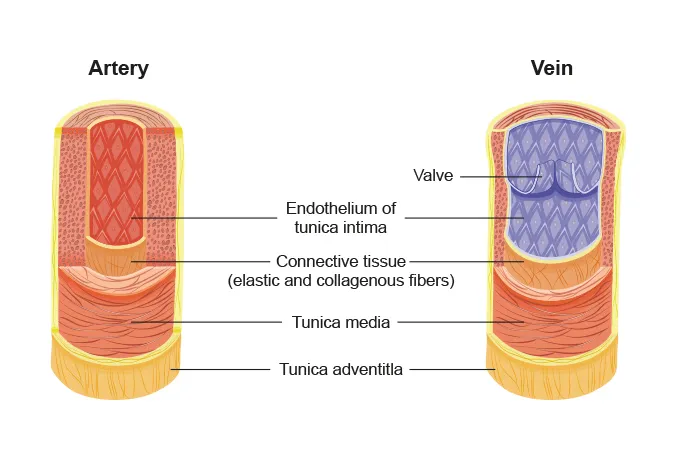
Blood vessels
Arteries | Veins | Capillaries |
Send blood from heart | Send blood into heart | Material exchange with tissues |
High pressure | Low pressure | Low pressure |
Thick wall
Thick muscle fibre: pump blood
Thick elastic fibres: stretch & pump
Thick collagen: strength | Thin wall | Single cell thick
Some capillaries have pores |
Narrow lumen maintains high P | Wide lumen | Single cell wide |
No valves | Valves prevent backflow | No valves |
*(AHL)
Blood circulation
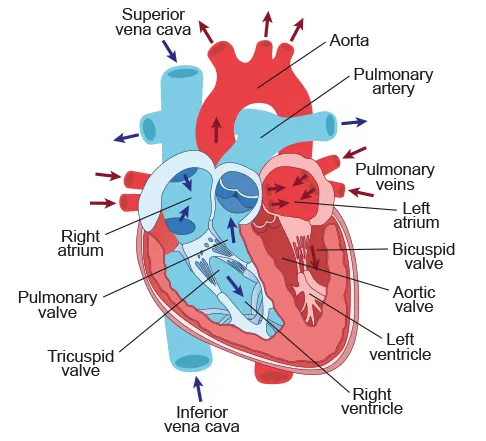
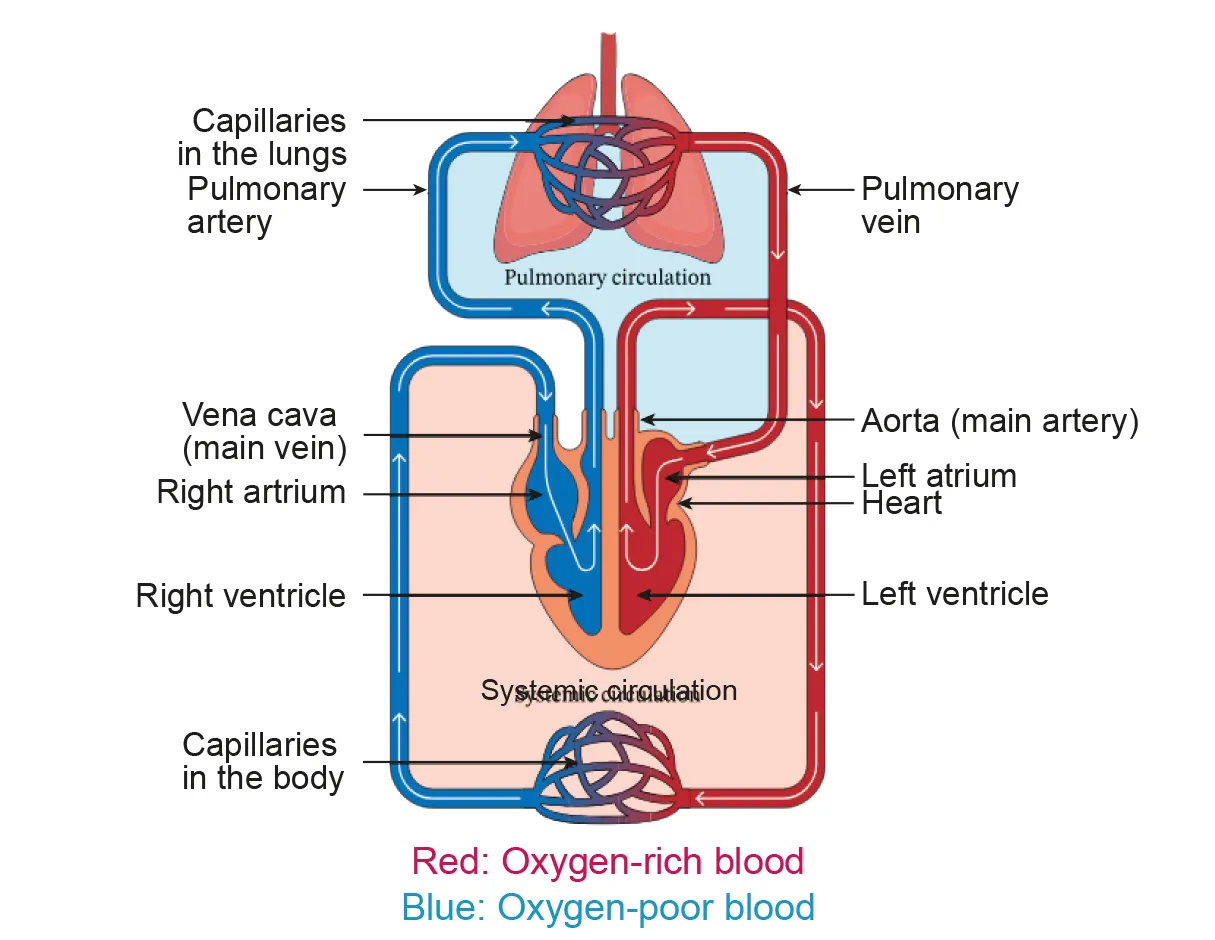
The heart | Double circulation |
Myogenic: heart itself controls the rhythm SA node acts as a pacemaker – stimulates atria to contract, subsequently making ventricles contract The left side pumps oxygenated blood The right side pumps deoxygenated blood Heart rate can be increased by epinephrine and neuronal signaling | Blood goes through heart twice via systemic and pulmonary circulation Systemic is to body, Pulmonary is to lung Faster supply of oxygenated blood High pressure in systemic circulation and relative low pressure in pulmonary circulation prevents damage to lung tissue |
*(AHL)
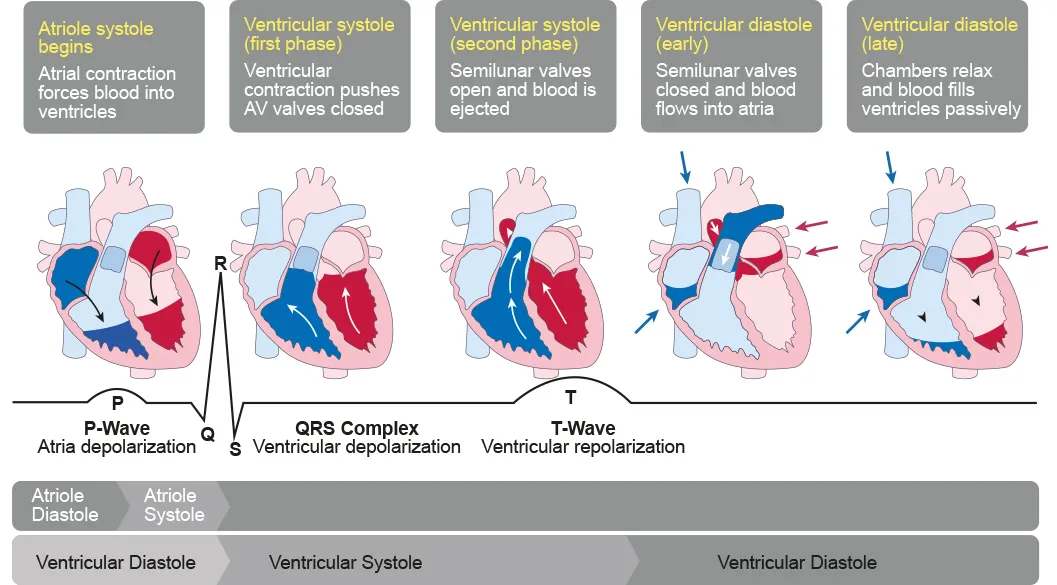
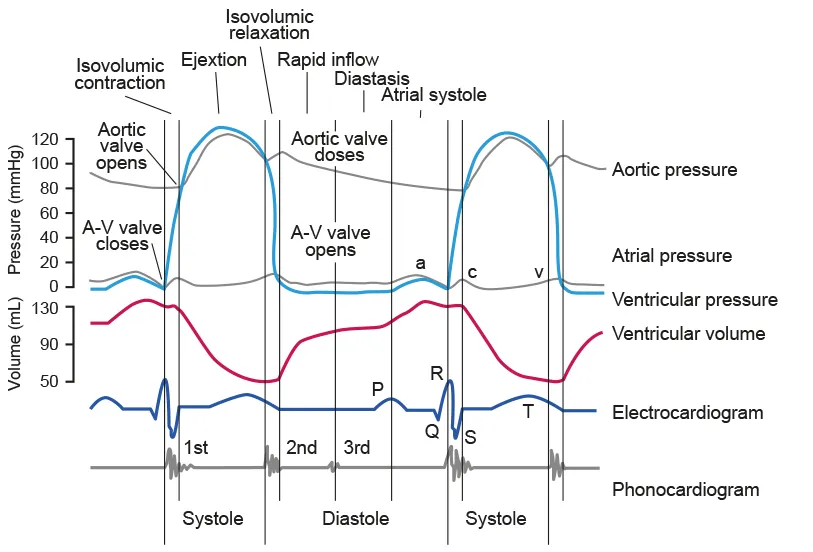
Cardiac cycle
Coronary thrombosis
•
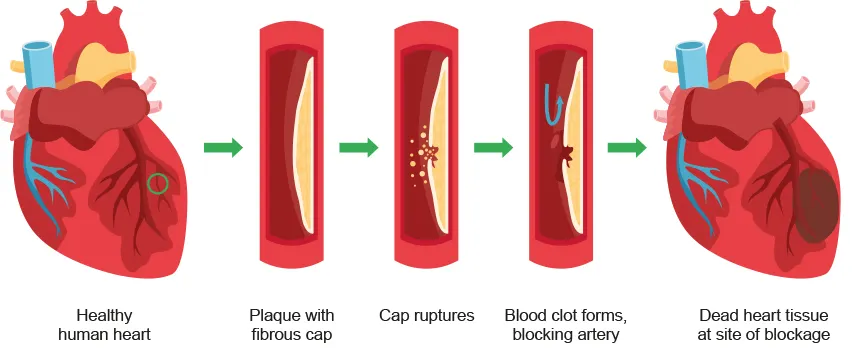
Formation of a clot within coronary arteries that supply blood to heart muscles
•
Atherosclerosis: vessels are damaged as a result of deposition of cholesterol
•
Fatty deposits (atheroma) form a plaque → plaque ruptures and forms clot → occlusion of coronary artery may lead to acute myocardial infarction
*(AHL)
Exchange of tissue fluids
•
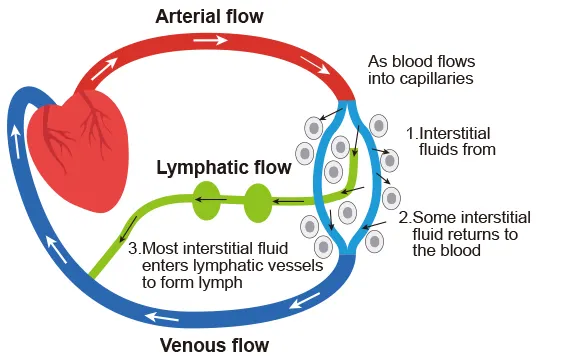
Tissue fluid: blood plasma that has leaked out of capillaries by pressure filtration
◦
Contains all substances in blood plasma except large proteins
◦
As tissue fluid drains through intercellular spaces, cells absorb oxygen and nutrients while releasing CO2 and waste products
•
Excess tissue fluid drains into the lymphatic system
◦
Tissue fluid becomes lymph which returns to the vena cava via the subclavian veins
Xylem structure
Wall thickening and lignification | Lignin polymers prevent the vessels from collapsing from the negative pressure |
Lack of end walls and cell contents | The lack of plasma membranes and cell walls between adjacent cells creates long continuous tubes for unimpeded flow |
Pits for entry and exit of water | Water can pass through gaps in the thickened walls |
Xylem transport
1.
Root pressure
•
Endodermis cells load mineral ions into xylem vessels, making the sap hypertonic
•
Water moves from the endodermis cell into the xylem, increasing the pressure and pushing the sap up against gravity
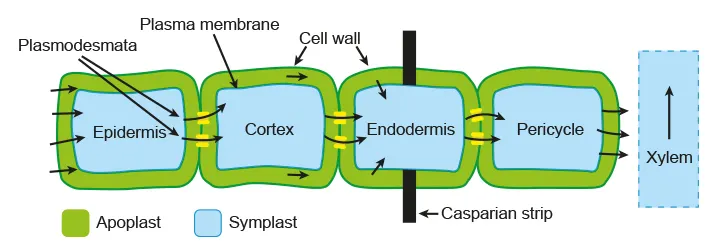
2.
Transpiration
•
Because of cohesion between water molecules, tension generated in the leaf from transpiration is transmitted down the continuous column of water in the xylem to the roots
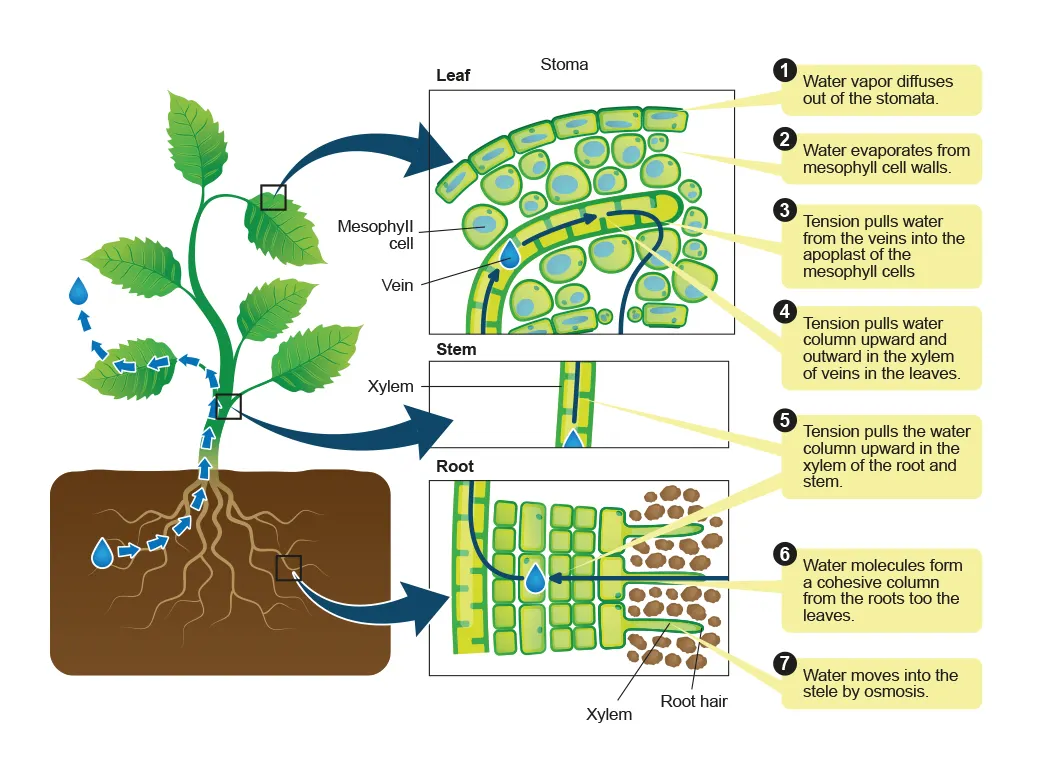
*(AHL) Phloem structure
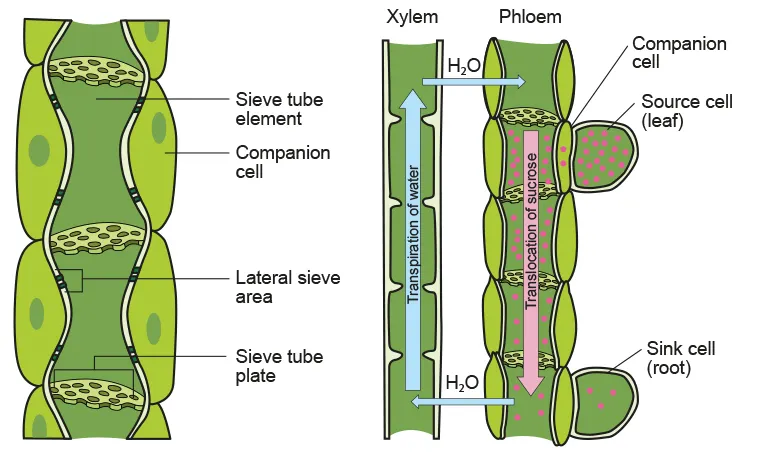
Phloem is used to translocate sucrose from sources to sinks
Sieve tube elements have few or no organelles
Companion cells have a nucleus, mitochondria for loading sugar by active transport
Sieve plates have pores through which sap can flow


Dicotyledonous plants
Stem
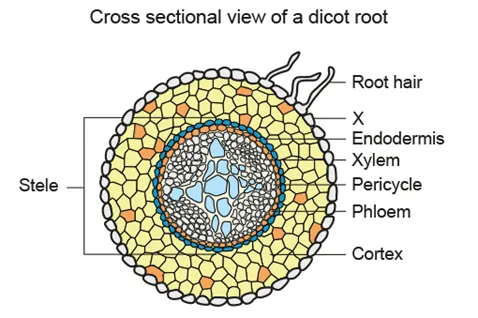
Root
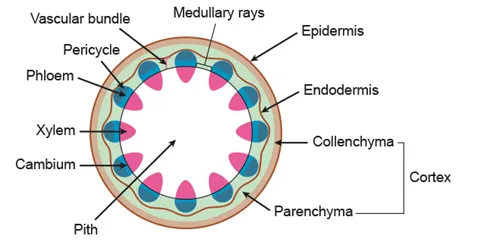
•
Cortex: cells that strengthen the stem/root
•
Cambium: small cells that divide by mitosis
•
Epidermis: single layer of cells
◦
Waxy cuticle that prevents water loss (stem)
◦
Absorb water and ions through root hairs (root)