

Gallery
Search
 Understanding points
A2.1.1 Conditions on early Earth and the pre-biotic formation of carbon compounds (HL only)
A2.1.2 Cells as the smallest units of self-sustaining life (HL only)
A2.1.3 Challenge of explaining the spontaneous origin of cells (HL only)
A2.1.4 Evidence for the origin of carbon compounds (HL only)
A2.1.5 Spontaneous formation of vesicles by coalescence of fatty acids into spherical bilayers (HL only)
A2.1.6 RNA as a presumed first genetic material (HL only)
A2.1.7 Evidence for a last universal common ancestor (HL only)
A2.1.8 Approaches used to estimate dates of the first living cells and the last universal common ancestor (HL only)
A2.1.9 Evidence for the evolution of the last universal common ancestor in the vicinity of hydrothermal vents (HL only) |
Early Earth conditions
•
High CH₄ and CO₂ concentrations due to volcanic activities and meteorite bombardment → more greenhouse gasses → higher temperatures
•
UV penetration to Earth’s surface due to lack of ozone layer and frequent lightning → triggered various chemical reactions
•
Miller-Urey Experiment: mimicked early Earth conditions to show the synthesis of organic carbon compounds from inorganic gasses that represent the pre-biotic atmosphere
A2.1 Origins of cells
Understanding points
A2.2.1 Cells as the basic structural unit of all living organisms
A2.2.2 Microscopy skills
A2.2.3 Developments in microscopy
A2.2.4 Structures common to cells in all living organisms
A2.2.5 Prokaryote cell structure
A2.2.6 Eukaryote cell structure
A2.2.7 Processes of life in unicellular organisms
A2.2.8 Differences in eukaryotic cell structure between animals, fungi and plants
A2.2.9 Atypical cell structure in eukaryotes
A2.2.10 Cell types and cell structures viewed in light and electron micrographs
A2.2.11 Drawing and annotation based on electron micrographs
A2.2.12 Origin of eukaryotic cells by endosymbiosis (HL only)
A2.2.13 Cell differentiation as the process for developing specialized tissues in multicellular organisms (HL only)
A2.2.14 Evolution of multicellularity (HL only) |
Cell theory
1.
All living things are composed of cells
2.
Cells can only be formed by division of pre-existing cells
3.
Cell is the basic unit of all “Living things”
A2.2 Cell structure
Understanding points
A2.3.1 Structural features common to viruses (HL only)
A2.3.2 Diversity of structure in viruses (HL only)
A2.3.3 Lytic cycle of a virus (HL only)
A2.3.4 Lysogenic cycle of a virus (HL only)
A2.3.5 Evidence for several origins of viruses from other organisms (HL only)
A2.3.6 Rapid evolution in viruses (HL only) |
Virus
•
Virus: non-living agents that infect host cells to reproduce inside them
•
Small and fixed size
•
Contains nucleic acid as genetic material
◦
DNA virus: transcribes their DNA directly
◦
RNA virus:
▪
Positive-sense RNA virus: uses their RNA genes directly as mRNA
▪
Negative-sense RNA virus: transcribe their RNA genes to make mRNA
▪
Retrovirus: synthesizes dsDNA from their RNA genes and transcribe the DNA to produce mRNA
A2.3 Viruses
Understanding points
B2.1.1 Lipid bilayers as the basis of cell membranes
B2.1.2 Lipid bilayers as barriers
B2.1.3 Simple diffusion across membranes
B2.1.4 Integral and peripheral proteins in membranes
B2.1.5 Movement of water molecules across membranes by osmosis and the role of aquaporins
B2.1.6 Channel proteins for facilitated diffusion
B2.1.7 Pump proteins for active transport
B2.1.8 Selectivity in membrane permeability
B2.1.9 Structure and function of glycoproteins and glycolipids
B2.1.10 Fluid mosaic model of membrane structure
B2.1.11 Relationships between fatty acid composition of lipid bilayers and their fluidity (HL only)
B2.1.12 Cholesterol and membrane fluidity in animal cells (HL only)
B2.1.13 Membrane fluidity and the fusion and formation of vesicles (HL only)
B2.1.14 Gated ion channels in neurons (HL only)
B2.1.15 Sodium–potassium pumps as an example of exchange transporters (HL only)
B2.1.16 Sodium-dependent glucose cotransporters as an example of indirect active transport (HL only)
B2.1.17 Adhesion of cells to form tissues (HL only) |
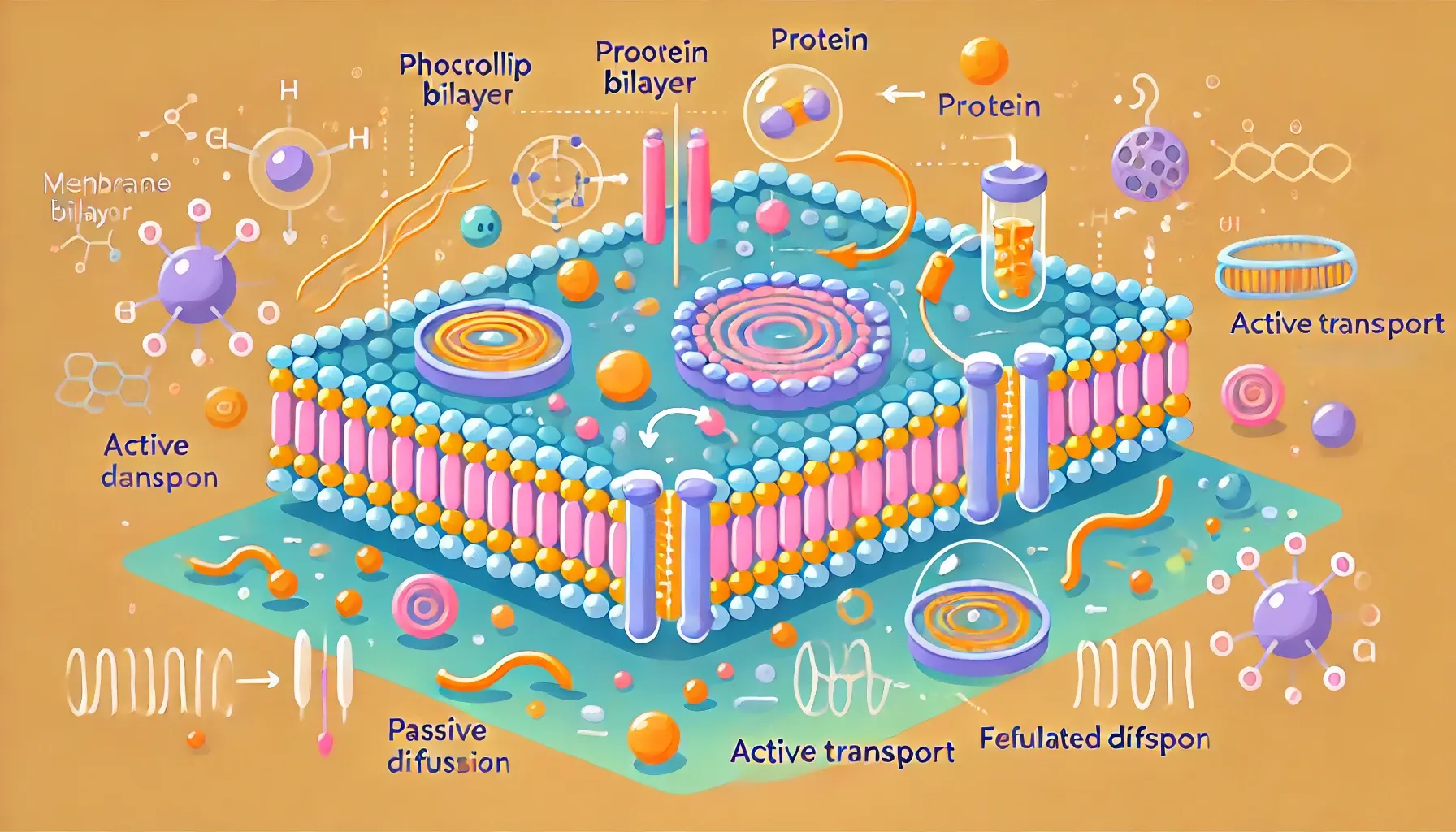
Phospholipid bilayer
•
Phospholipids have hydrophilic and hydrophobic regions
•
Hydrophilic heads are attracted to water → face watery environment
•
Hydrophobic tails are repelled by water → arrange themselves inwards
B2.1 Membranes and membrane transport
Understanding points
B2.2.1 Organelles as discrete subunits of cells that are adapted to perform specific functions
B2.2.2 Advantage of the separation of the nucleus and cytoplasm into separate compartments
B2.2.3 Advantages of compartmentalization in the cytoplasm of cells
B2.2.4 Adaptations of the mitochondrion for production of ATP by aerobic cell respiration (HL only)
B2.2.5 Adaptations of the chloroplast for photosynthesis (HL only)
B2.2.6 Functional benefits of the double membrane of the nucleus (HL only)
B2.2.7 Structure and function of free ribosomes and of the rough endoplasmic reticulum (HL only)
B2.2.8 Structure and function of the Golgi apparatus (HL only)
B2.2.9 Structure and function of vesicles in cells (HL only) |
Advantage of nucleus
•
Separation and control of transcription and translation
•
*(AHL) double membrane
◦
Contains pores for RNA transport
◦
Easily dismantled and reconstructed during cell division
B2.2 Organelles and compartmentalization
Understanding points
B2.3.1 Production of unspecialized cells following fertilization and their development into specialized cells by differentiation
B2.3.2 Properties of stem cells
B2.3.3 Location and function of stem cell niches in adult humans
B2.3.4 Differences between totipotent, pluripotent and multipotent stem cells
B2.3.5 Cell size as an aspect of specialization
B2.3.6 Surface area-to-volume ratios and constraints on cell size
B2.3.7 Adaptations to increase surface area-to-volume ratios of cells (HL only)
B2.3.8 Adaptations of type I and type II pneumocytes in alveoli (HL only)
B2.3.9 Adaptations of cardiac muscle cells and striated muscle fibres (HL only)
B2.3.10 Adaptations of sperm and egg cells (HL only) |
Differentiation
•
Involves the expression of some genes and not others in a cell’s genome
◦
All tissues have the same genes, but specialization involves the ‘turning on’, or expression, of particular genes, which define a specific function
•
Specialised tissues can develop by cell differentiation in multicellular organisms
◦
Tissue: a group of specialised cells that perform the same function more efficiently
Stem cells
B2.3 Cell specialization
Understanding points
C2.1.1 Receptors as proteins with binding sites for specific signalling chemicals (HL only)
C2.1.2 Cell signalling by bacteria in quorum sensing (HL only)
C2.1.3 Hormones, neurotransmitters, cytokines and calcium ions as examples of functional categories of signalling chemicals in animals (HL only)
C2.1.4 Chemical diversity of hormones and neurotransmitters (HL only)
C2.1.5 Localized and distant effects of signalling molecules (HL only)
C2.1.6 Differences between transmembrane receptors in a plasma membrane and intracellular receptors in the cytoplasm or nucleus (HL only)
C2.1.7 Initiation of signal transduction pathways by receptors (HL only)
C2.1.8 Transmembrane receptors for neurotransmitters and changes to membrane potential (HL only)
C2.1.9 Transmembrane proteins that activate G protein (HL only)
C2.1.10 Mechanism of action of epinephrine (adrenaline) receptors (HL only)
C2.1.11 Transmembrane receptors with tyrosine kinase activity (HL only)
C2.1.12 Intracellular receptors that affect gene expression (HL only)
C2.1.13 Effects of the hormones oestradiol and progesterone on target cells (HL only)
C2.1.14 Regulation of cell signalling pathways by positive and negative feedback (HL only) |
Receptors
•
Signals can be chemical or electrical
•
Ligand: a molecule that binds specifically to a site on a receptor
•
Receptor: a molecule that binds with ligands to convey signals that affect cellular activity
C2.1 Chemical signaling
Understanding points
C2.2.1 Neurons as cells within the nervous system that carry electrical impulses
C2.2.2 Generation of the resting potential by pumping to establish and maintain concentration gradients of sodium and potassium ions
C2.2.3 Nerve impulses as action potentials that are propagated along nerve fibres
C2.2.4 Variation in the speed of nerve impulses
C2.2.5 Synapses as junctions between neurons and between neurons and effector cells
C2.2.6 Release of neurotransmitters from a presynaptic membrane
C2.2.7 Generation of an excitatory postsynaptic potential
C2.2.8 Depolarization and repolarization during action potentials (HL only)
C2.2.9 Propagation of an action potential along a nerve fibre/axon as a result of local currents (HL only)
C2.2.10 Oscilloscope traces showing resting potentials and action potentials (HL only)
C2.2.11 Saltatory conduction in myelinated fibres to achieve faster impulses (HL only)
C2.2.12 Effects of exogenous chemicals on synaptic transmission (HL only)
C2.2.13 Inhibitory neurotransmitters and generation of inhibitory postsynaptic potentials (HL only)
C2.2.14 Summation of the effects of excitatory and inhibitory neurotransmitters in a postsynaptic neuron (HL only)
C2.2.15 Perception of pain by neurons with free nerve endings in the skin (HL only)
C2.2.16 Consciousness as a property that emerges from the interaction of individual neurons in the brain (HL only) |
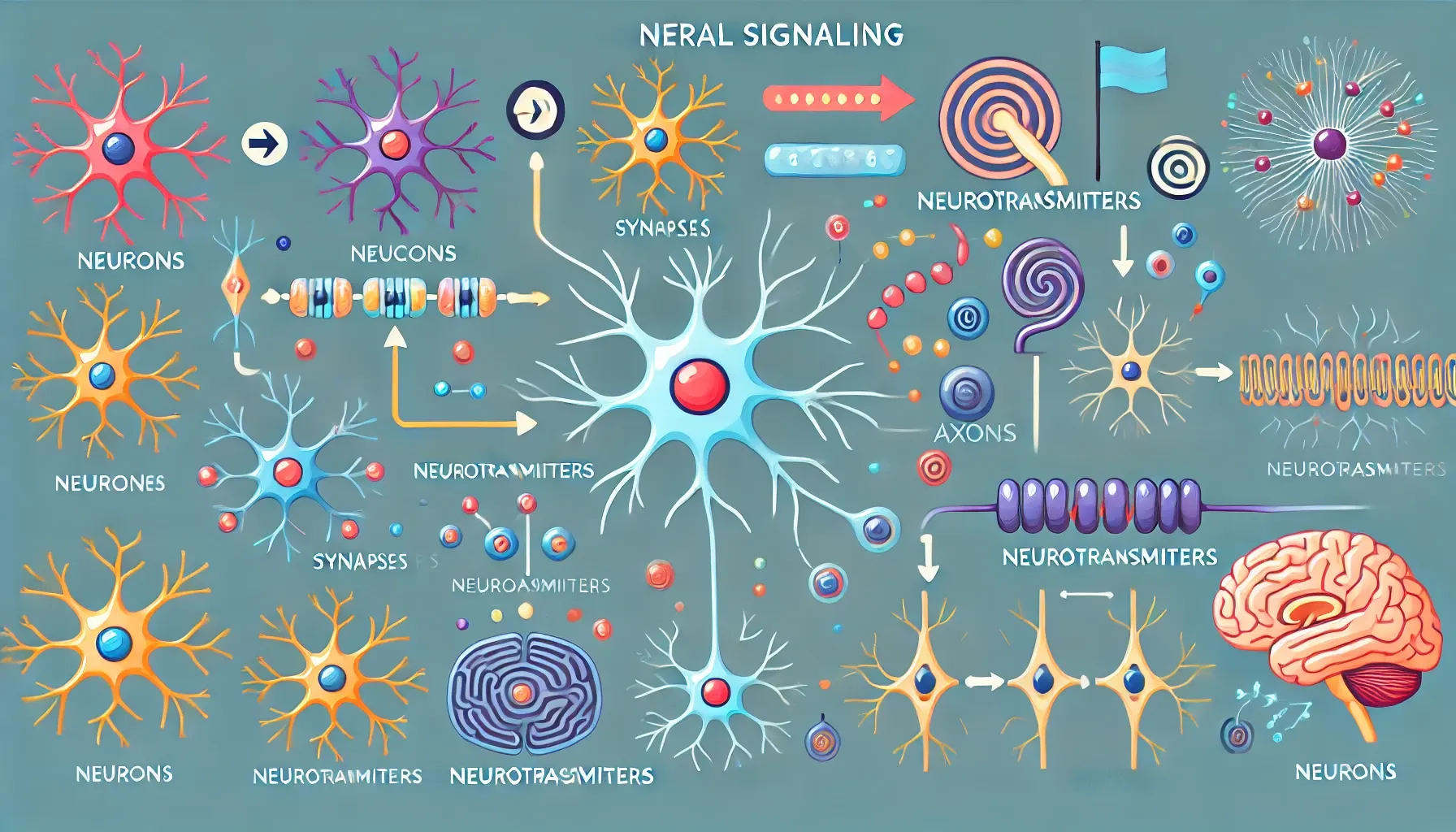
Neuron
•
Cells of the nervous system
•
The speed of nerve impulse transmission is increased by:
1.
Wider axon diameter: reduces resistance
2.
Myelination: *(AHL) enables saltatory conduction where action potentials only occur at Nodes of Ranvier
C2.2 Neural signaling
Understanding points
D2.1.1 Generation of new cells in living organisms by cell division
D2.1.2 Cytokinesis as splitting of cytoplasm in a parent cell between daughter cells
D2.1.3 Equal and unequal cytokinesis
D2.1.4 Roles of mitosis and meiosis in eukaryotes
D2.1.5 DNA replication as a prerequisite for both mitosis and meiosis
D2.1.6 Condensation and movement of chromosomes as shared features of mitosis and meiosis
D2.1.7 Phases of mitosis
D2.1.8 Identification of phases of mitosis
D2.1.9 Meiosis as a reduction division
D2.1.10 Down syndrome and non-disjunction
D2.1.11 Meiosis as a source of variation
D2.1.12 Cell proliferation for growth, cell replacement and tissue repair (HL only)
D2.1.13 Phases of the cell cycle (HL only)
D2.1.14 Cell growth during interphase (HL only)
D2.1.15 Control of the cell cycle using cyclins (HL only)
D2.1.16 Consequences of mutations in genes that control the cell cycle (HL only)
D2.1.17 Differences between tumours in rates of cell division and growth, and in the capacity for metastasis and invasion of neighbouring tissue (HL only) |
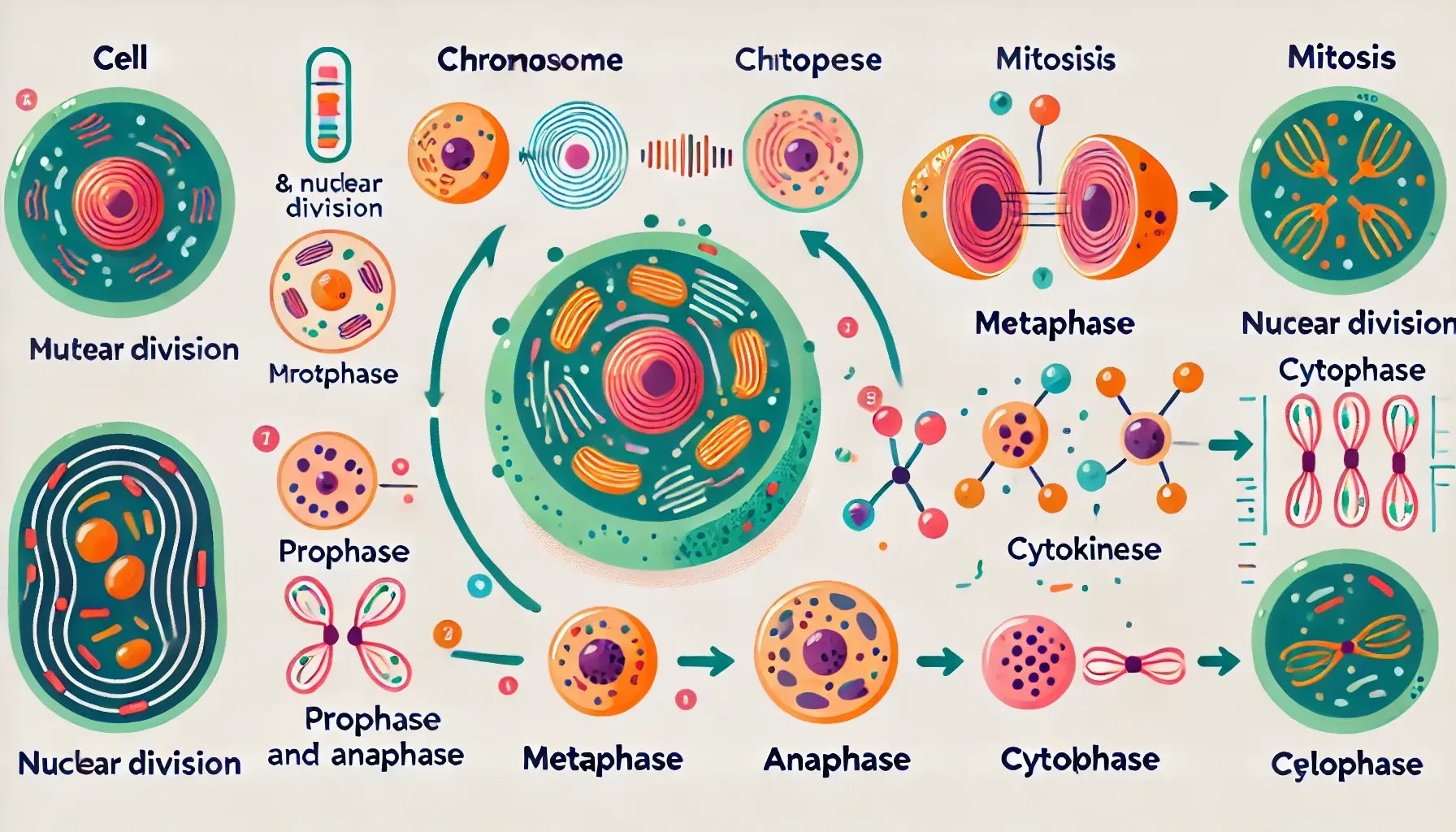
*(AHL) Cell Cycle
•
Interphase → Mitosis [prophase → metaphase → anaphase → telophase] → Cytokinesis

D2.1 Cell and nuclear division
Understanding points
D2.2.1 Gene expression as the mechanism by which information in genes has effects on the phenotype (HL only)
D2.2.2 Regulation of transcription by proteins that bind to specific base sequences in DNA (HL only)
D2.2.3 Control of the degradation of mRNA as a means of regulating translation (HL only)
D2.2.4 Epigenesis as the development of patterns of differentiation in the cells of a multicellular organism (HL only)
D2.2.5 Differences between the genome, transcriptome and proteome of individual cells (HL only)
D2.2.6 Methylation of the promoter and histones in nucleosomes as examples of epigenetic tags (HL only)
D2.2.7 Epigenetic inheritance through heritable changes to gene expression (HL only)
D2.2.8 Examples of environmental effects on gene expression in cells and organisms (HL only)
D2.2.9 Consequences of removal of most but not all epigenetic tags from the human ovum and sperm (HL only)
D2.2.10 Monozygotic twin studies (HL only)
D2.2.11 External factors impacting the pattern of gene expression (HL only) |
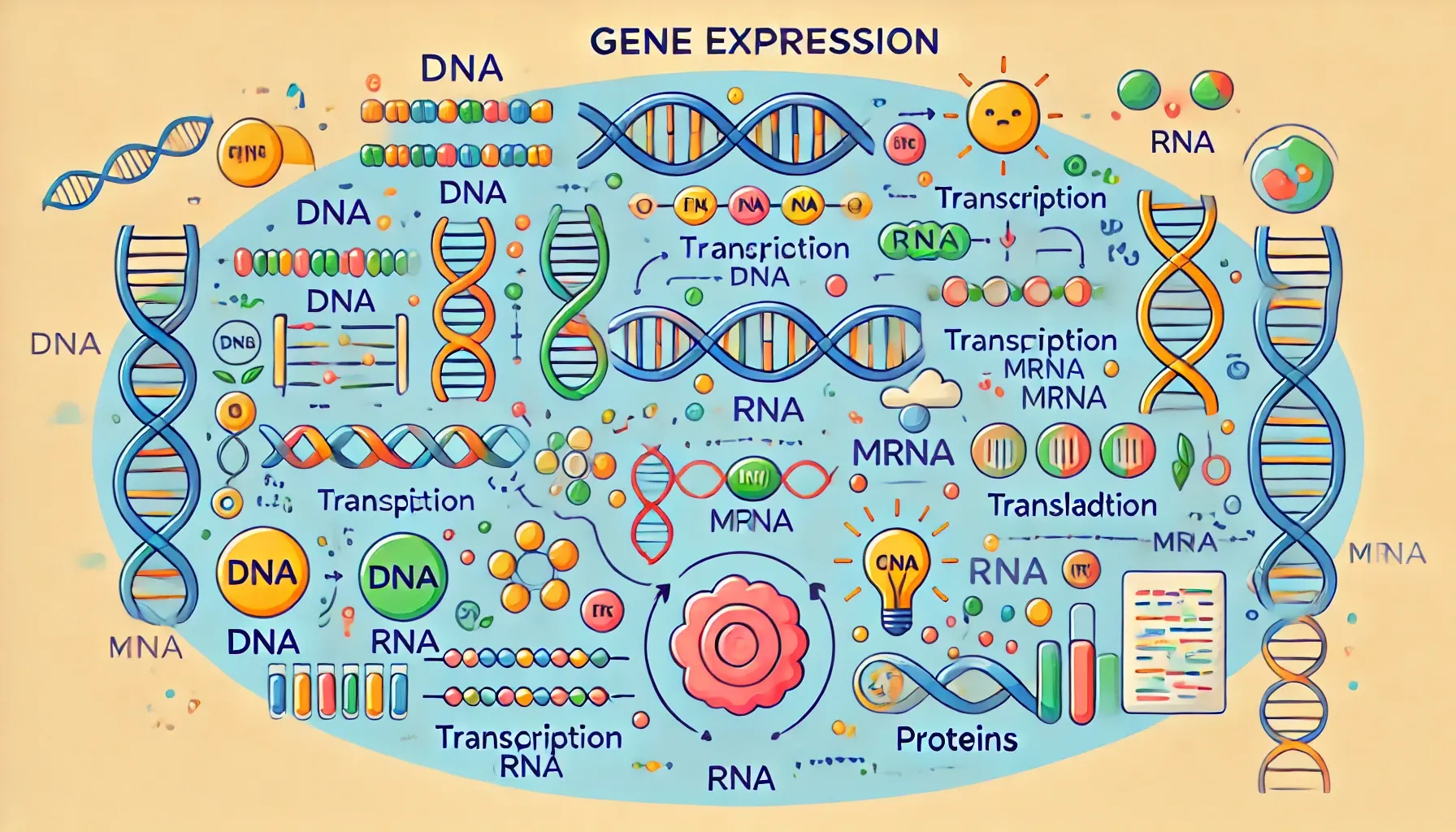
Gene expression
•
Process of turning genotype into phenotype
•
The pattern of gene expression determines that cell’s route of differentiation
Genome | The entire genetic information of a cell
Includes both coding and noncoding sequences |
Transcriptome | The entire set of mRNAs transcribed in a cell |
Proteome | The entire set of proteins produced by a cell |
D2.2 Gene expression
Understanding points
D2.3.1 Solvation with water as the solvent
D2.3.2 Water movement from less concentrated to more concentrated solutions
D2.3.3 Water movement by osmosis into or out of cells
D2.3.4 Changes due to water movement in plant tissue bathed in hypotonic and hypertonic solutions
D2.3.5 Effects of water movement on cells that lack a cell wall
D2.3.6 Effects of water movement on cells with a cell wall
D2.3.7 Medical applications of isotonic solutions
D2.3.8 Water potential as the potential energy of water per unit volume (HL only)
D2.3.9 Movement of water from higher to lower water potential (HL only)
D2.3.10 Contributions of solute potential and pressure potential to the water potential of cells with walls (HL only)
D2.3.11 Water potential and water movements in plant tissue (HL only) |
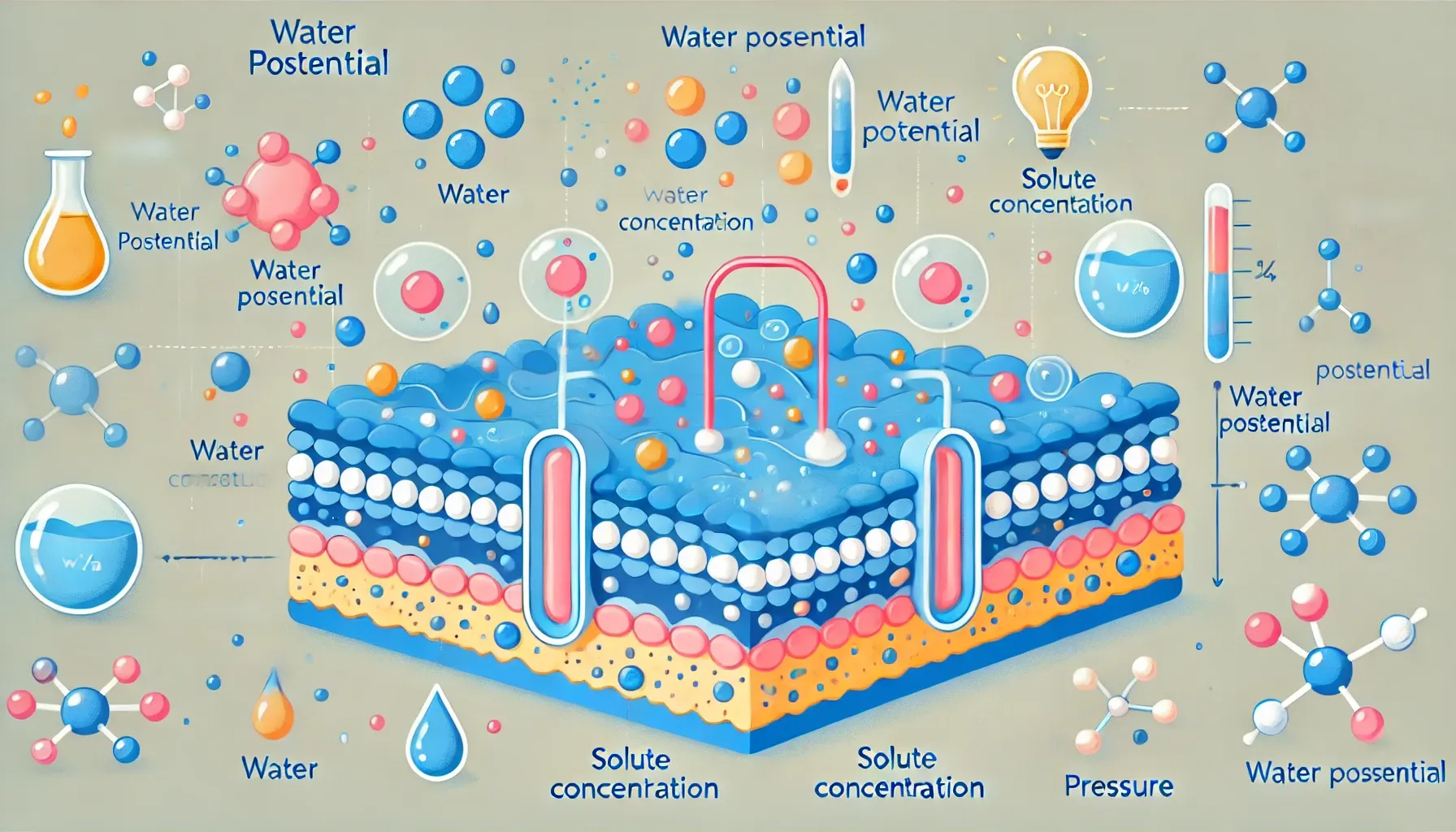
Solvation
•
The process of dissolving
•
Solvent: liquids that dissolve other substances
•
Solute: dissolved substances in solutions
D2.3 Water potential