

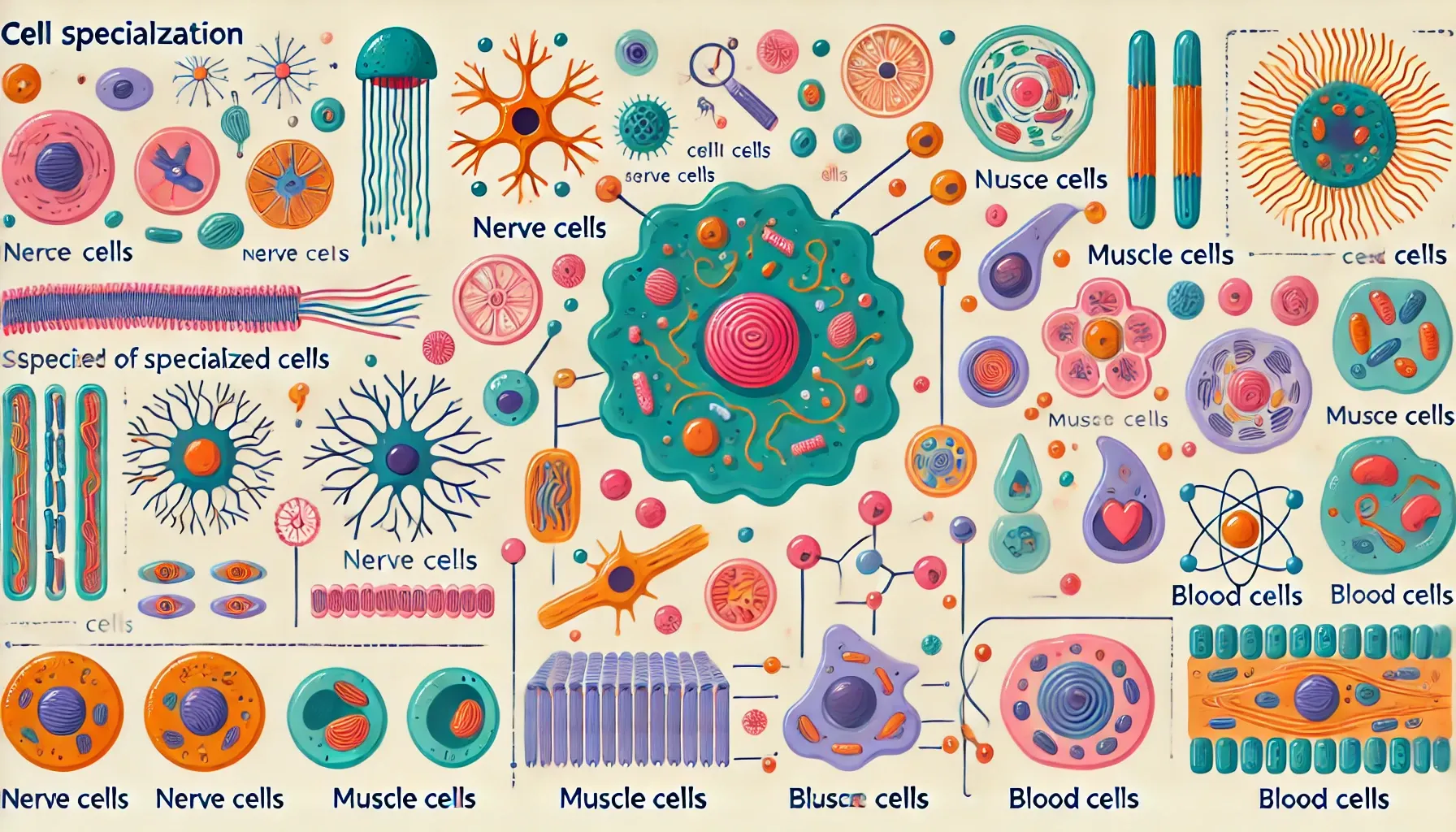
 Understanding points
B2.3.1 Production of unspecialized cells following fertilization and their development into specialized cells by differentiation
B2.3.2 Properties of stem cells
B2.3.3 Location and function of stem cell niches in adult humans
B2.3.4 Differences between totipotent, pluripotent and multipotent stem cells
B2.3.5 Cell size as an aspect of specialization
B2.3.6 Surface area-to-volume ratios and constraints on cell size
B2.3.7 Adaptations to increase surface area-to-volume ratios of cells (HL only)
B2.3.8 Adaptations of type I and type II pneumocytes in alveoli (HL only)
B2.3.9 Adaptations of cardiac muscle cells and striated muscle fibres (HL only)
B2.3.10 Adaptations of sperm and egg cells (HL only) |
Differentiation
•
Involves the expression of some genes and not others in a cell’s genome
◦
All tissues have the same genes, but specialization involves the ‘turning on’, or expression, of particular genes, which define a specific function
•
Specialised tissues can develop by cell differentiation in multicellular organisms
◦
Tissue: a group of specialised cells that perform the same function more efficiently
Stem cells
•
Totipotency: able to divide and differentiate into any cell type
•
Only some genes are expressed in each cell type → differentiate differently
•
Stem cell therapy relies on replacing diseased tissue:
◦
Need to identify desired type of stem cell and grow it in controlled conditions
◦
Develop biochemical solution – implantation - function with the body’s natural cells
◦
Danger of rejection of cells → need to suppress immune system
Embryonic | Adult |
Pluripotent: differentiate into many, but not all
Found in embryo
Therapeutic use: Parkinson’s disease
Ethical issues | Multipotent: limited range of differentiation
Found in bone marrow and hair follicles
Therapeutic use: Leukemia
Very expensive |


Specialization and cell size
Male gametes: 3 μm wide → facilitates swimming | RBC: 1-2 μm thick→ can fit through capillaries | WBC: usually 10-12 μm in diameter but grow upon activation to produce antibodies |
Female gametes: 110 μm in diameter → contains materials for early embryo growth | Neurons: axons can be up to 1m long → signals travel a long distance | Striated muscle: over 100 mm long → large and powerful muscle contraction |
Surface area to volume ratio
•
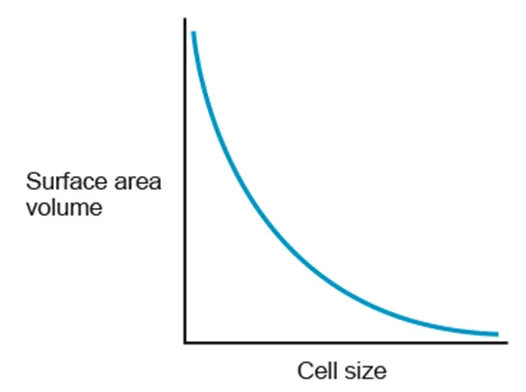
The rate of metabolism of a cell is a function of its mass (volume)
◦
Larger cells need more energy to sustain essential functions
•
The rate of material exchange is a function of its SA
◦
Large membrane surface equates to more material movement


*(AHL)
Adaptations that increase SA/V ratio
•
Flattening, microvilli, invagination
•
RBC: biconcave disc shape and small size increase SA for efficient oxygen transport
•
Proximal convoluted tubule: narrow, coiled tubes in the kidney that receives a large volume of filtrate and facilitates the reabsorption of useful molecules such as glucose
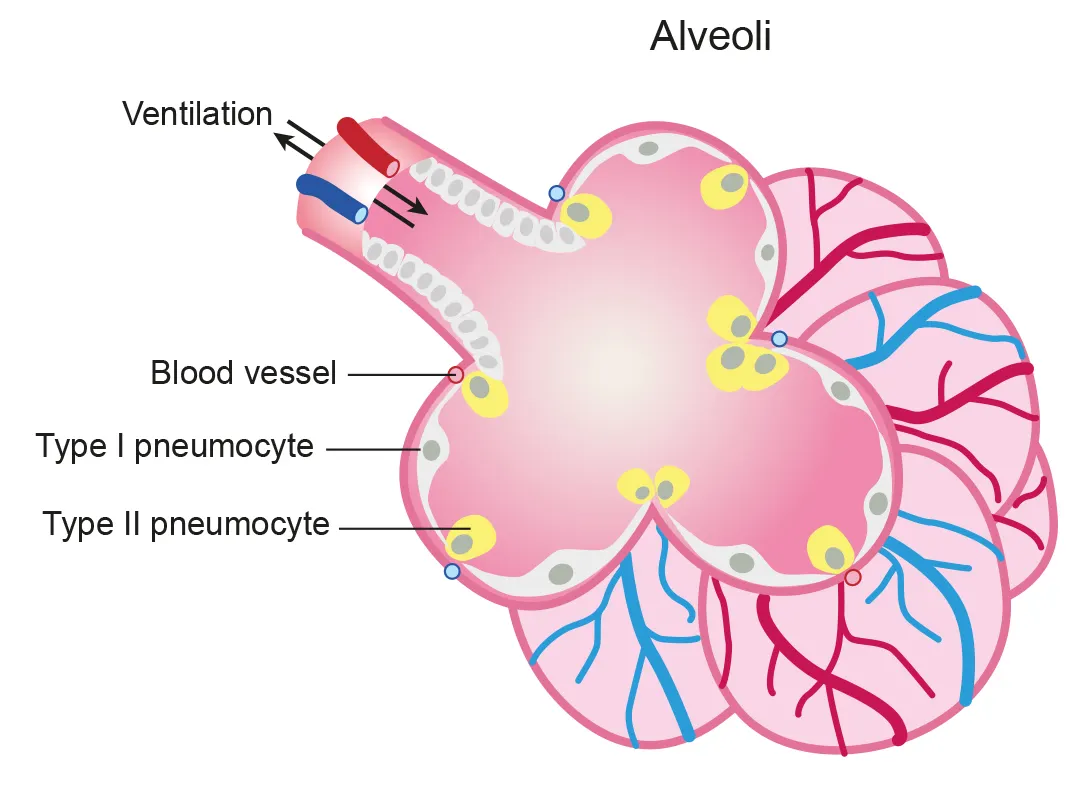
Adaptations of pneumocytes in alveoli
Type 1 (95%) | Type 2 (5%) |
Involved in gas exchange between the alveoli and the capillaries
Squamous (flattened) in shape and extremely thin, minimizing diffusion distance for respiratory gases | Small percentage of cells in alveoli responsible for the secretion of pulmonary surfactant which reduces surface tension in the alveoli
Cuboidal in shape and possess many granules for storing surfactants |


Adaptations of muscle cells
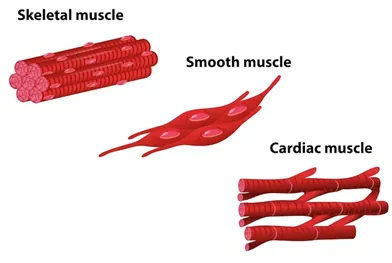
Cardiac | Striated | |
Branching | Branched - allows rapid propagation of electric signals | Unbranched and cylindrical |
Junctions | Cell-cell junctions with intercalated discs that allow rapid propagation of electric signals | None |
Length | 50-100 μm | 30,000 μm |
Number of nuclei | 1 per cell | Many per fibre (multinucleate) |


Adaptations of sperm and egg
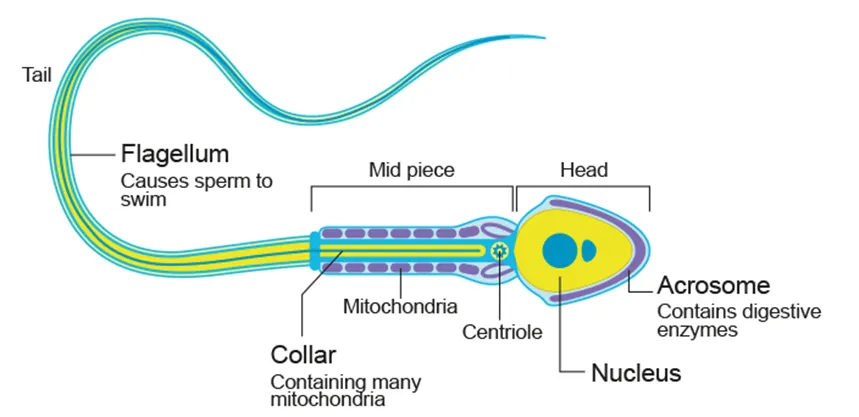
Structure of sperm
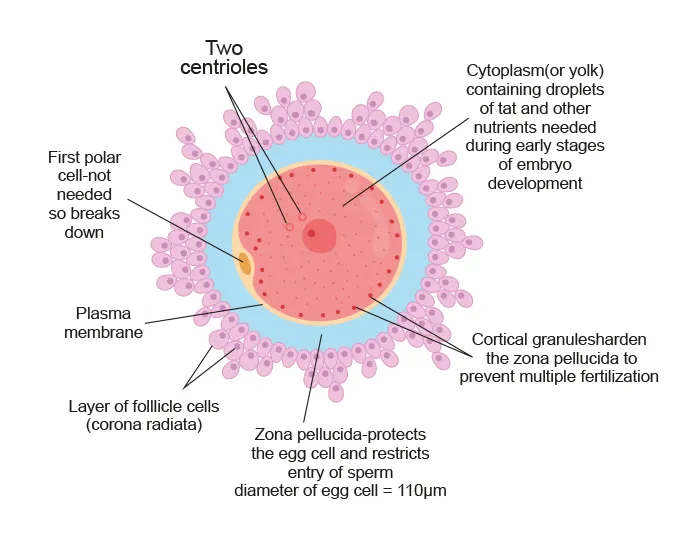
Structure of egg