
 Understanding points
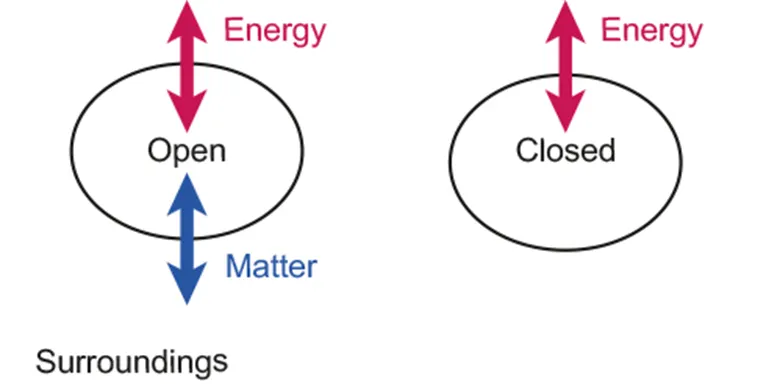
C4.2.1 Ecosystems as open systems in which both energy and matter can enter and exit
C4.2.2 Sunlight as the principal source of energy that sustains most ecosystems
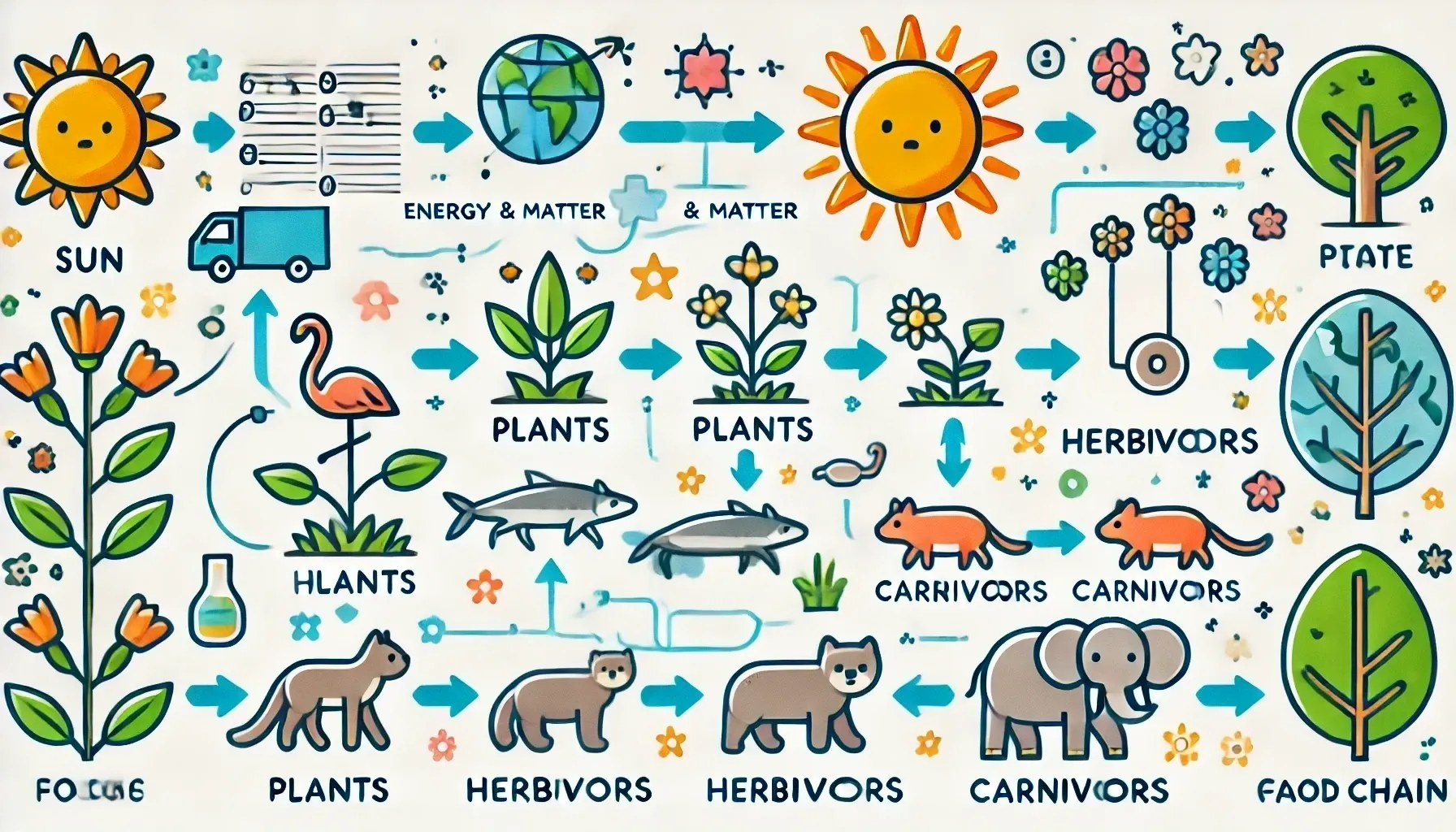
C4.2.3 Flow of chemical energy through food chains
C4.2.4 Construction of food chains and food webs to represent feeding relationships in a community
C4.2.5 Supply of energy to decomposers as carbon compounds in organic matter coming from dead organisms
C4.2.6 Autotrophs as organisms that use external energy sources to synthesize carbon compounds from simple inorganic substances
C4.2.7 Use of light as the external energy source in photoautotrophs and oxidation reactions as the energy source in chemoautotrophs
C4.2.8 Heterotrophs as organisms that use carbon compounds obtained from other organisms to synthesize the carbon compounds that they require
C4.2.9 Release of energy in both autotrophs and heterotrophs by oxidation of carbon compounds in cell respiration
C4.2.10 Classification of organisms into trophic levels
C4.2.11 Construction of energy pyramids
C4.2.12 Reductions in energy availability at each successive stage in food chains due to large energy losses between trophic levels
C4.2.13 Heat loss to the environment in both autotrophs and heterotrophs due to conversion of chemical energy to heat in cell respiration
C4.2.14 Restrictions on the number of trophic levels in ecosystems due to energy losses
C4.2.15 Primary production as accumulation of carbon compounds in biomass by autotrophs
C4.2.16 Secondary production as accumulation of carbon compounds in biomass by heterotrophs
C4.2.17 Constructing carbon cycle diagrams
C4.2.18 Ecosystems as carbon sinks and carbon sources
C4.2.19 Release of carbon dioxide into the atmosphere during combustion of biomass, peat, coal, oil and natural gas
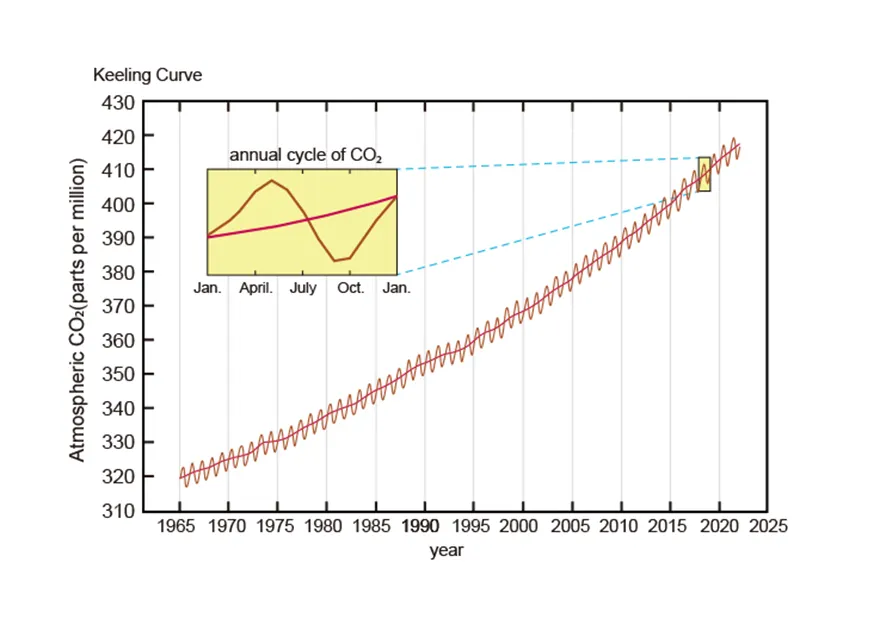
C4.2.20 Analysis of the Keeling curve in terms of photosynthesis, respiration and combustion
C4.2.21 Dependence of aerobic respiration on atmospheric oxygen produced by photosynthesis, and of photosynthesis on atmospheric carbon dioxide produced by respiration
C4.2.22 Recycling of all chemical elements required by living organisms in ecosystems |
Open and closed systems
•
Sunlight is the source of energy for most ecosystems
•
Producers use this energy to make carbon compounds for consumers


Representation of feeding relationships
•
Arrows indicate the direction of energy flow
•
Trophic level: the position an organism occupies in a food chain
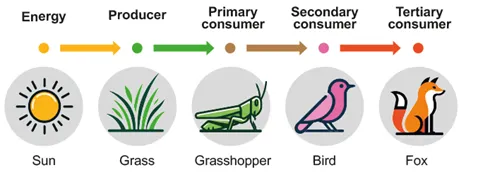
Food chain
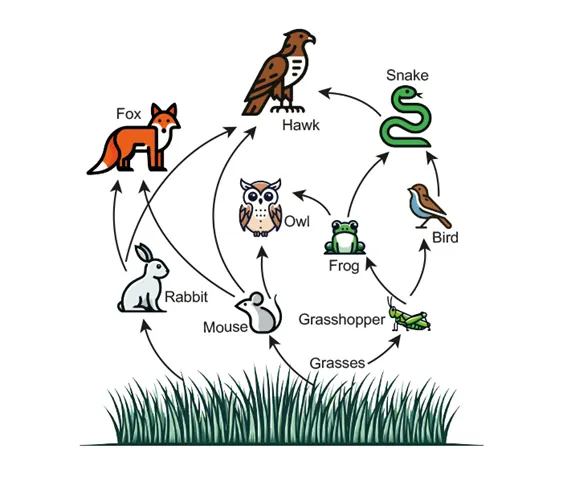
Food web
Modes of nutrition
•
Both autotrophs and heterotrophs use ATP gained from cell respiration to synthesize macromolecules, maintain constant body temperature, and active transport
Autotroph | Heterotroph |
Photoautotrophs use energy from light to fix CO₂ into carbon compounds
• Depend on CO₂ produced by respiration
Chemoautotrophs use energy from oxidation reactions to make carbon compounds
• e.g. iron-oxidizing bacteria | Consumers obtain carbon compounds by consuming other organisms
• Depend on O₂ produced by photosynthesis
Saprotrophs carry out extracellular digestion to break down dead organic matter into small, soluble molecules (nutrient recycling) |


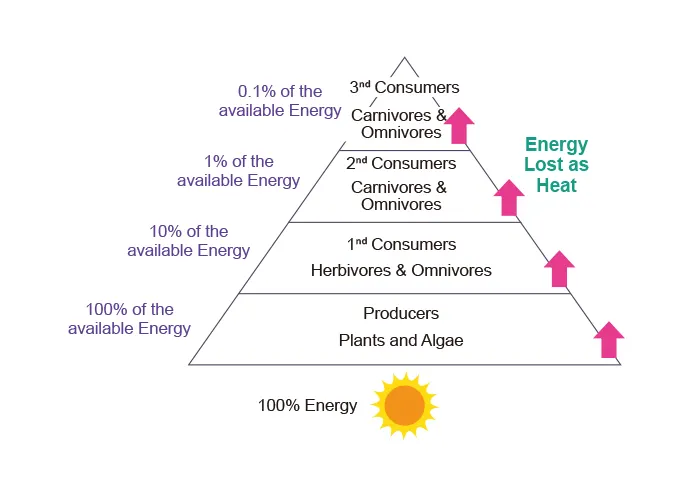
Energy pyramids
•
Only 10% of the energy in one trophic level is passed on to the next
•
Most energy is lost as heat as well as from incomplete consumption or digestion and cell respiration
•
Food chains have limited length because of the inefficiency of energy transfers
Production
Accumulation of carbon compounds in biomass
Primary | Secondary |
Mass of carbon compounds produced by plants
Gross primary production (GPP): total biomass of carbon compounds made by plants
Net primary production (NPP): GPP - biomass lost from respiration | Accumulation of carbon compounds in biomass by consumers
Lower than primary production |


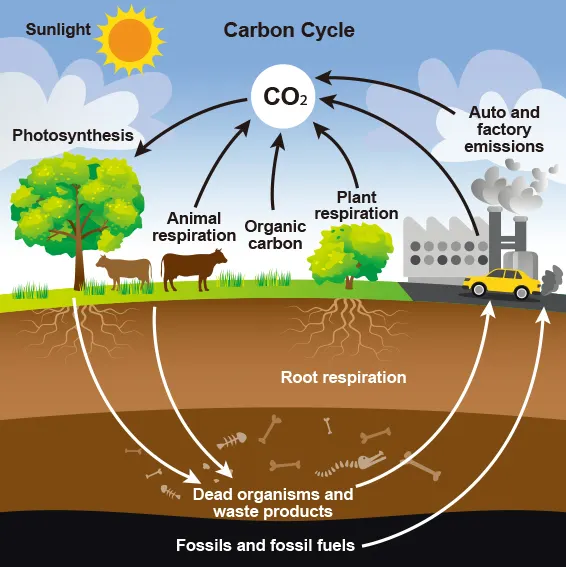
Carbon cycle
•
3 fluxes: photosynthesis, respiration, e.g. feeding
•
Sinks: photosynthesis > respiration, e.g. peat
•
Sources: photosynthesis < respiration, e.g. forest fires


The Keeling curve
1.
Annual fluctuations: CO₂ conc increases in winter and falls during summer
2.
Long-term increase