

 Understanding points
A2.2.1 Cells as the basic structural unit of all living organisms
A2.2.2 Microscopy skills
A2.2.3 Developments in microscopy
A2.2.4 Structures common to cells in all living organisms
A2.2.5 Prokaryote cell structure
A2.2.6 Eukaryote cell structure
A2.2.7 Processes of life in unicellular organisms
A2.2.8 Differences in eukaryotic cell structure between animals, fungi and plants
A2.2.9 Atypical cell structure in eukaryotes
A2.2.10 Cell types and cell structures viewed in light and electron micrographs
A2.2.11 Drawing and annotation based on electron micrographs
A2.2.12 Origin of eukaryotic cells by endosymbiosis (HL only)
A2.2.13 Cell differentiation as the process for developing specialized tissues in multicellular organisms (HL only)
A2.2.14 Evolution of multicellularity (HL only) |
Cell theory
1.
All living things are composed of cells
2.
Cells can only be formed by division of pre-existing cells
3.
Cell is the basic unit of all “Living things”
Metabolism | Chemical reactions inside the cell |
Response | Ability to react to stimuli |
Growth | Irreversible increase in size |
Reproduction | Sexual or asexual reproduction of offspring |
Excretion | Removal of the waste products of metabolism |
Nutrition | Obtaining food to provide energy and materials needed for growth |
Homeostasis | Keep internal conditions within tolerable limits |


Microscopy
•
Magnification =
Type | Light Microscope | Electron Microscope |
Characteristics | Uses light as illuminating source | Uses a beam of electrons as illuminating source |
Advantages | Cheap
Small and portable
Quick and simple setup and sample preparation
Allows observation of live specimen | High magnification (x1,000,000)
High resolution (0.001 µm)
Large field depth
|
Disadvantages | Limited magnification (max x2000)
Lower resolution (0.2 µm)
Restricted field depth
| Expensive
Very large: requires special operating room
Sample preparation requires special treatment and time
Cannot observed live specimen |
Immunofluorescence
Uses antibodies labeled with fluorescent dyes to locate target structures inside cells
(A)

(B)

Freeze-fracture electron microscopy
Scanning the fractured surface of a frozen cell

Cryogenic electron microscopy (Cryo-EM)
A method of researching live structures of proteins
Allows observation of various forms of a single protein
Comparing light and electron microscopes
Light Microscopy | Electron Microscope | |
Magnification | X 1500 | X 500,000 |
Resolution | 250 nm | 0.25 nm |
Type of radiation used | Light | Electrons |
Focussed by | Glass lenses | Electromagnets |
Type of material that can be viewed | Living / moving / dead / abiotic | Dead / abiotic |
Size | Small and portable | Large and static |
Preparation and cost of material | Cheap and easy | Difficult and expensive |


Structures common to all cells
1.
Plasma membrane: the outer boundary that encloses the cell
•
Site of material exchange
•
Helps to maintain different internal conditions compared to outside
2.
Cytoplasm: contains various substances dissolved in water
•
Contains enzymes that catalyze numerous chemical reactions
3.
DNA: genetic material
Prokaryotic vs Eukaryotic cell structure
Prokaryotic | Eukaryotic |
- Nucleoid: controls binary fission
- Naked DNA (in cytoplasm) located in nucleoid
- 70S ribosomes
- No membrane bound organelles
- Plasmid: disease resistance
- Pilli: pull bacteria closer together
- Slime capsule and cell wall: protection | - Nucleus : contains genetic materials
- DNA associated with histone proteins
- 80S ribosomes: site of protein synthesis
- Membrane bound structures like mitochondria
- Cytoplasm: fixation of organelles
- Lysosome: hydrolysing enzymes
- Golgi apparatus: modifies proteins from rER into vesicles
- Mitochondrion: site of aerobic respiration |


Cell ultrastructure
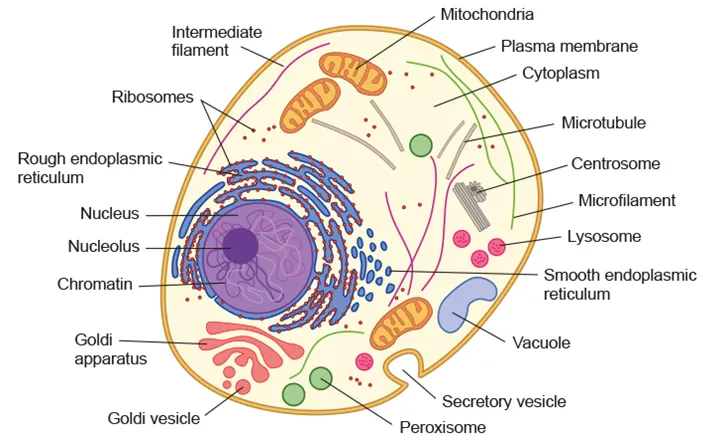
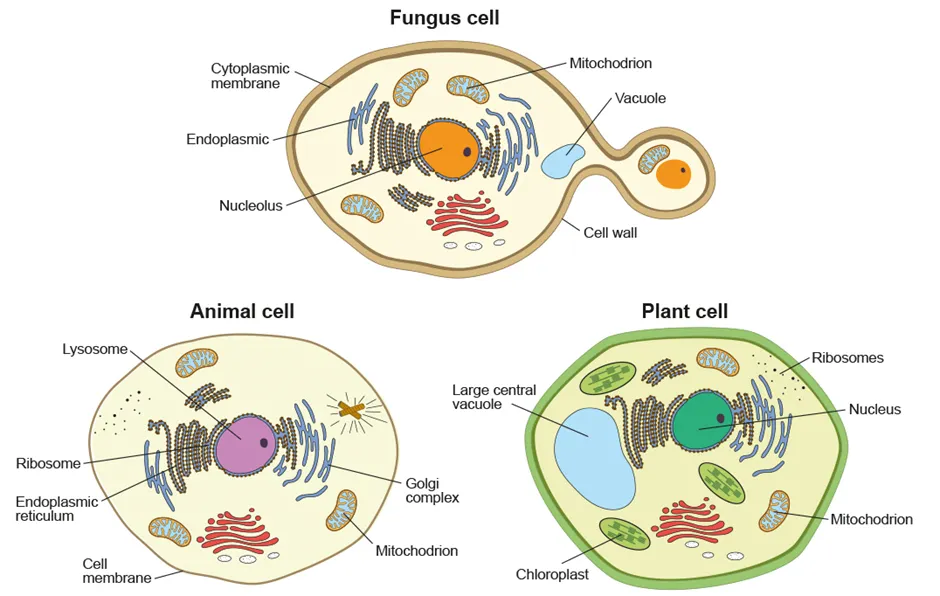
Differences in eukaryotic cell structures
Atypical cell structures
Red blood cells
Lack nucleus
Phloem sieve tube elements
Phloem: tubular vessels that transport sugary sap in plants
Sieve tube element cells lose most internal components including nucleus during development → rely on surrounding companion cells
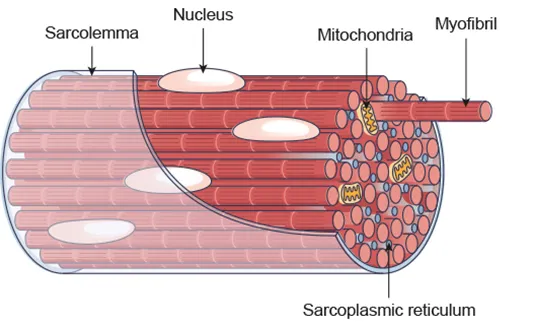
Skeletal muscle
Large and multinucleated structure
Formed by groups of cells fused together
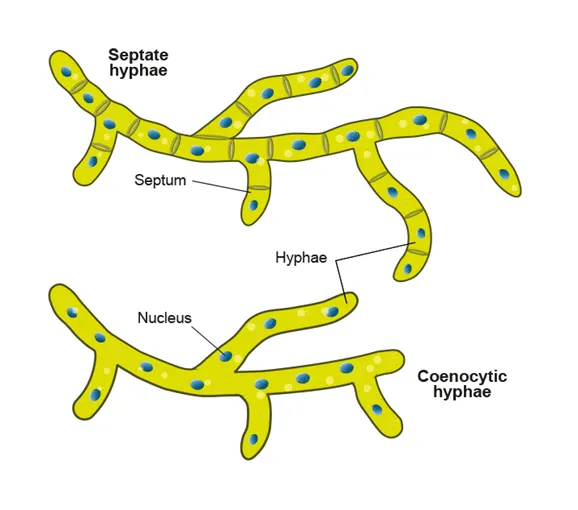
Aseptate fungal hyphae
Nucleus divides without subsequent cell division
*(AHL)
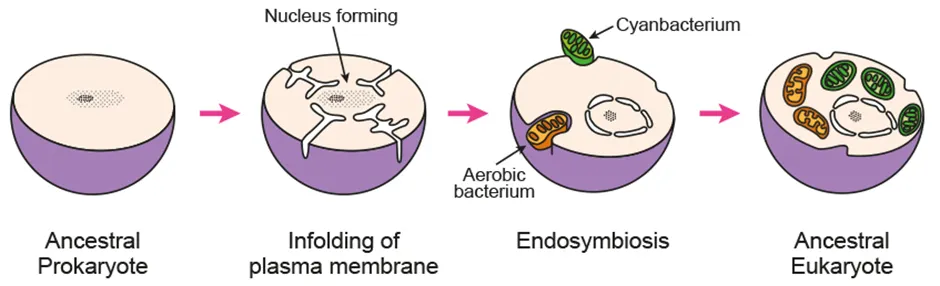
Endosymbiosis
•
Endosymbiosis: an organism lives within the cells of another organism
•
Host cell took in another cell by endocytosis → engulfed cell is kept alive → live together


Cell differentiation in multicellular organisms
•
Differentiation: produces specialized cells with different functions and greater efficiency
•
Involves the expression of some genes and not others in a cell’s genome
•
All tissues have the same genes, but only some of them are “turned on”, or expressed
Multicellularity
•
Evolved multiple times in different groups of organisms
•
Benefits:
◦
Longer lifespans
◦
Generally larger than unicellular
◦
Development of complex structures and functions by differentiation