

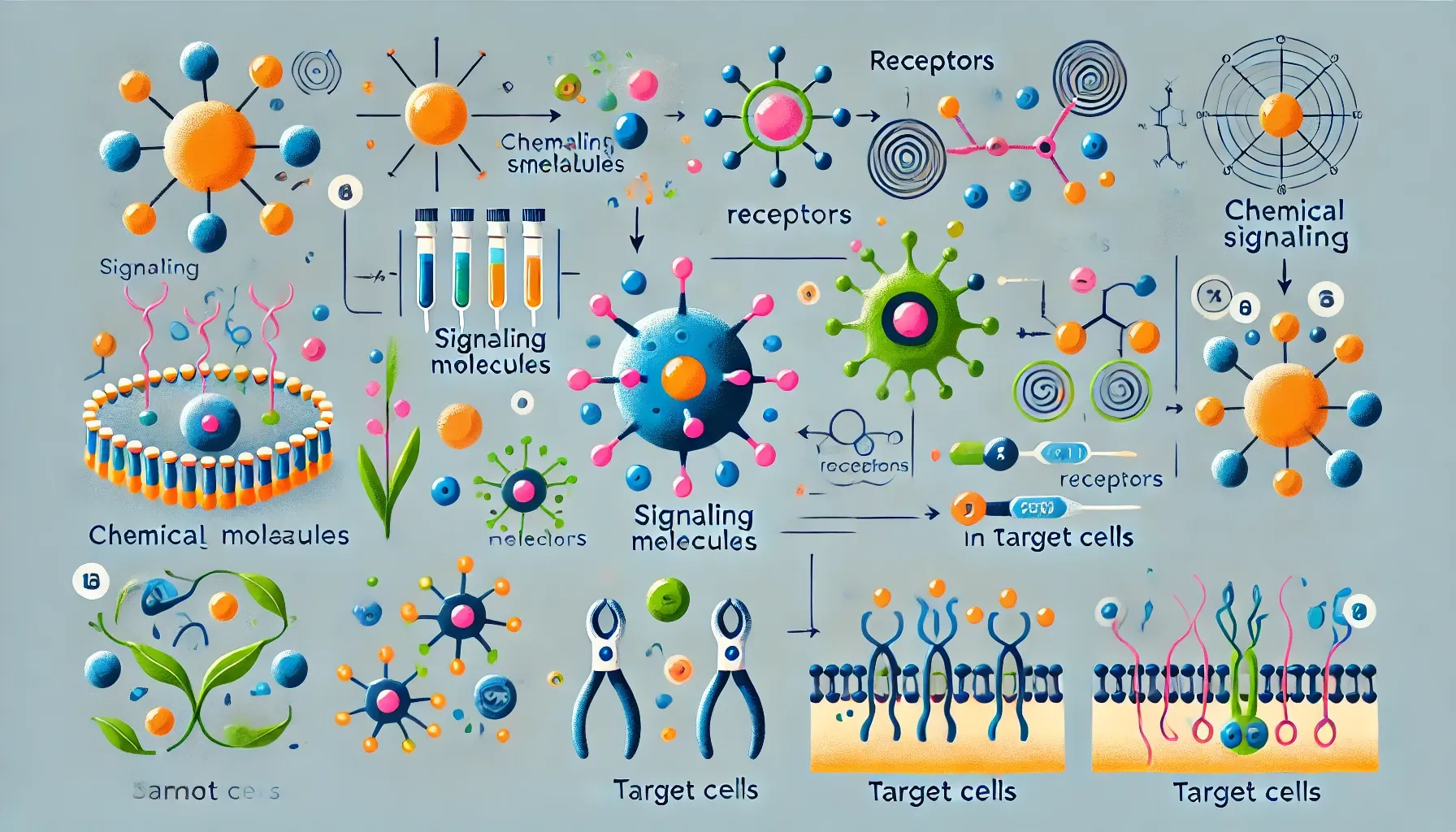
 Understanding points
C2.1.1 Receptors as proteins with binding sites for specific signalling chemicals (HL only)
C2.1.2 Cell signalling by bacteria in quorum sensing (HL only)
C2.1.3 Hormones, neurotransmitters, cytokines and calcium ions as examples of functional categories of signalling chemicals in animals (HL only)
C2.1.4 Chemical diversity of hormones and neurotransmitters (HL only)
C2.1.5 Localized and distant effects of signalling molecules (HL only)
C2.1.6 Differences between transmembrane receptors in a plasma membrane and intracellular receptors in the cytoplasm or nucleus (HL only)
C2.1.7 Initiation of signal transduction pathways by receptors (HL only)
C2.1.8 Transmembrane receptors for neurotransmitters and changes to membrane potential (HL only)
C2.1.9 Transmembrane proteins that activate G protein (HL only)
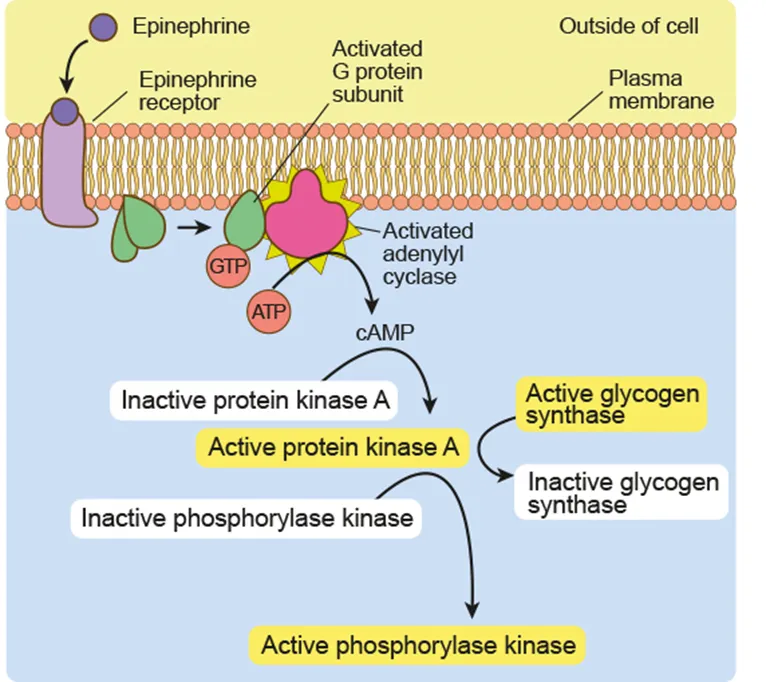
C2.1.10 Mechanism of action of epinephrine (adrenaline) receptors (HL only)
C2.1.11 Transmembrane receptors with tyrosine kinase activity (HL only)
C2.1.12 Intracellular receptors that affect gene expression (HL only)
C2.1.13 Effects of the hormones oestradiol and progesterone on target cells (HL only)
C2.1.14 Regulation of cell signalling pathways by positive and negative feedback (HL only) |
Receptors
•
Signals can be chemical or electrical
•
Ligand: a molecule that binds specifically to a site on a receptor
•
Receptor: a molecule that binds with ligands to convey signals that affect cellular activity

•
The specificity of receptor-ligand binding is similar to enzyme-substrate interactions
Signalling chemicals
Hormones | Produced by endocrine glands
Secreted and transported by blood vessels | Long-lasting effects
Act at a distant site | Amine: melatonin
Peptide: insulin
Steroid: testosterone
|
Neurotransmitters | Secreted by presynaptic neurons into the synaptic cleft | Short-lived effects
Act at a local site | Amine: dopamine
Amino acid: glutamate
Ester: acetylcholine
Gas: nitrous oxide |
Cytokines | Secreted by a wide range of cells | Multiple effects
Act locally
| e.g. erythropoietin |
Ca²⁺ ions | Increases in intracellular concentration lead to effects | Short-lived effects | e.g. Ca²⁺ |


Oestradiol and progesterone
•
Female sex hormones secreted by the ovaries
Oestradiol | Progesterone |
Promotes development and maintenance of female sex characteristics | Promotes development of the endometrium for implantation |
Oestradiol (ovaries)
↓
GnRH (hypothalamus)
↓
LH, FSH (anterior pituitary)
↓
Ovulation | Progesterone (ovaries)
↓
Thickening of the endometrium
↓
Preparation for implantation
|


Acetylcholine
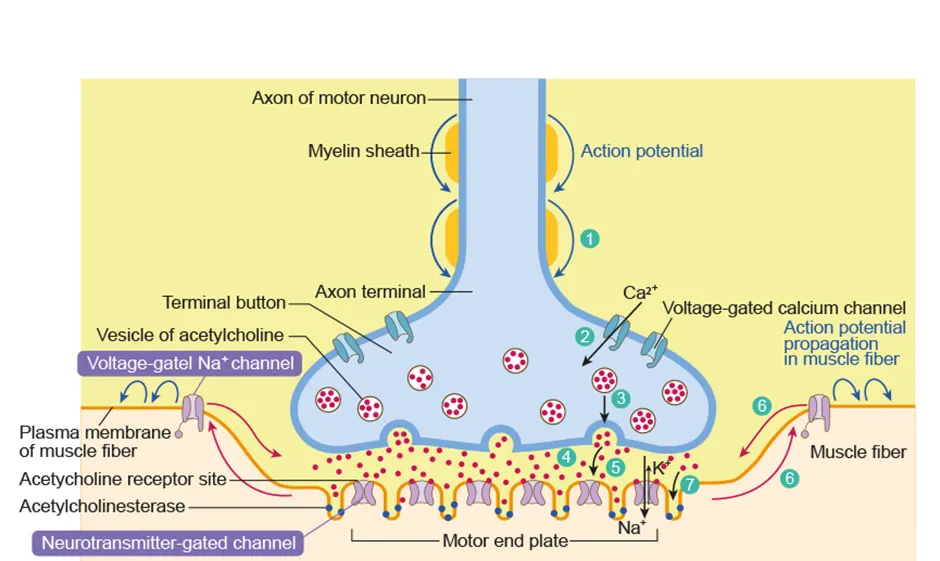
Signal transduction pathway
•
A cascade of reactions in the cell caused by receptor-ligand binding
•
Second messenger: small, non-protein molecules or ions that amplify the signal
◦
e.g. cAMP, Ca²⁺
Transmembrane receptor | Intracellular receptor | |
Location | Plasma membrane | Cytosol or nucleus |
Type of ligand | Polar, hydrophilic ligands that cannot cross the cell membrane | Nonpolar, lipophilic ligands that easily cross the cell membrane |
Signal transduction | Ligand binds to extracellular
domain of receptor
↓
Structural change in receptor
↓
Intracellular domain generates
second messenger
↓
Activation of effectors
↓
Cellular response
| Ligand diffuses through
plasma membrane
↓
Ligand binds to receptor
↓
Formation of active
ligand- receptor complex
↓
Binding of DNA and regulation
of transcription
↓
Cellular response |
e.g. GPCR, RTK | e.g. steroid hormone receptors |
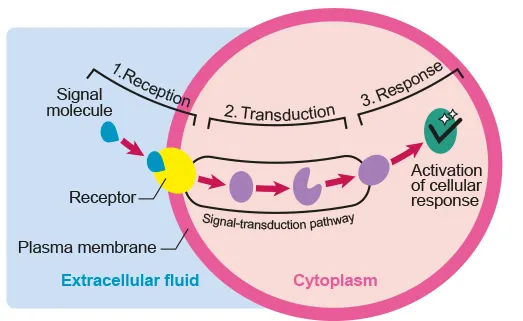
Transmembrane receptor signal transduction
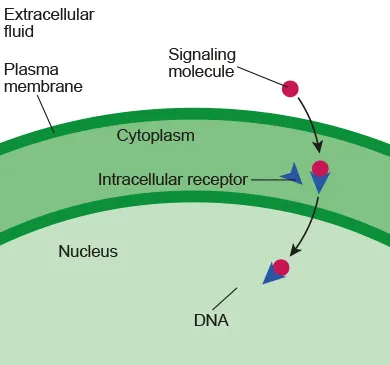
Intracellular receptor signal transduction


G protein-coupled receptor (GPCR)
•
Common structure of 7 hydrophobic α-helices
•
Convey signals via G proteins composed of αβγ subunits
•
GDP-bound G protein is inactive, GTP bound G protein is active
•
When the ligand is no longer present, GTPase hydrolyzes GTP to GDP and inactivates the G protein, terminating the signal pathway
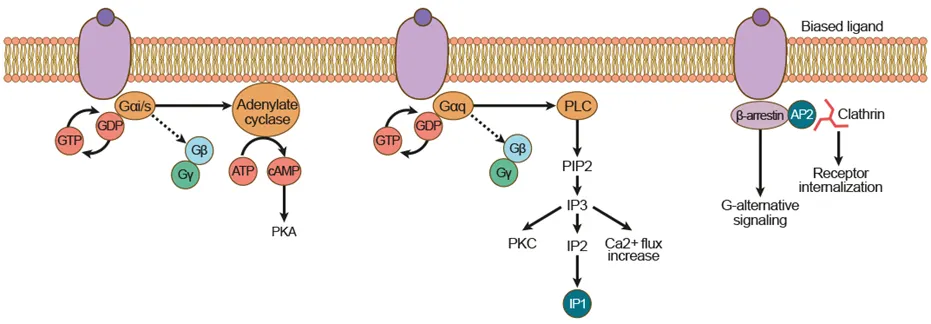
•
e.g. Epinephrine signaling:


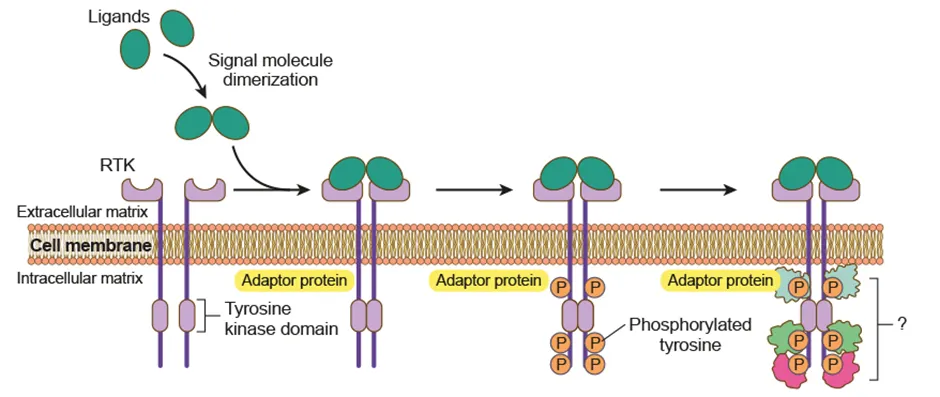
Receptor tyrosine kinase (RTK)
•
Phosphorylation: transfer of phosphate group from ATP to a substrate molecule
•
RTKs phosphorylates tyrosine on its intracellular tails
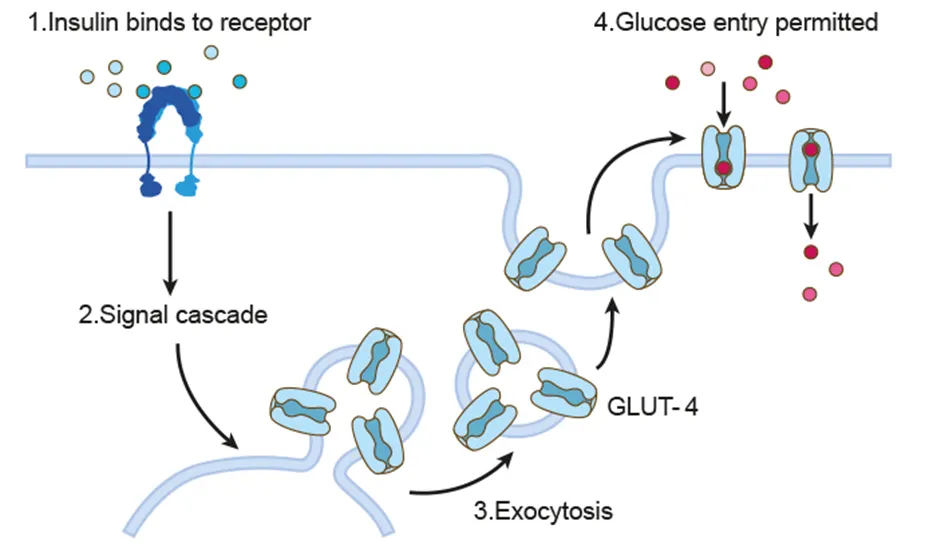
•
e.g. Insulin signaling:


Feedback regulation
•
The end product of a pathway interacts with an earlier stage to promote or inhibit the pathway
Positive | Negative |
End product promotes its own production | End product inhibits its own production |
e.g. LH surge during ovulatory phase of menstrual cycle | e.g. thyroxine secretion |
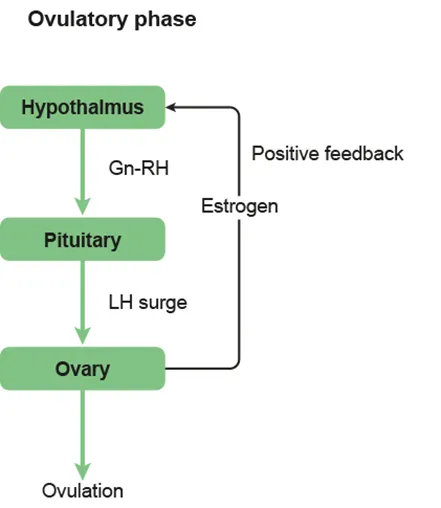
Positive feedback
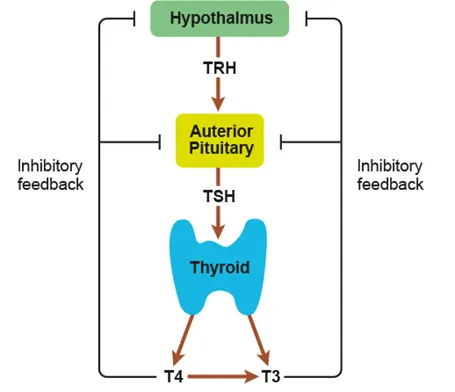
Negative feedback


Quorum sensing
•
Intercellular communication used for collective activation of genes in response to increased bacterial population density
•
e.g. bioluminescence in Vibrio fischeri: at high population density, autoinducer molecules secreted by the bacteria bind to a cytoplasmic receptor called LuxR and induce the transcription of genes encoding luciferase, which catalyzes an oxidation reaction that produces light