
 Understanding points


A4.1.1 Evolution as change in the heritable characteristics of a population
A4.1.2 Evidence for evolution from base sequences in DNA or RNA and amino acid sequences in proteins
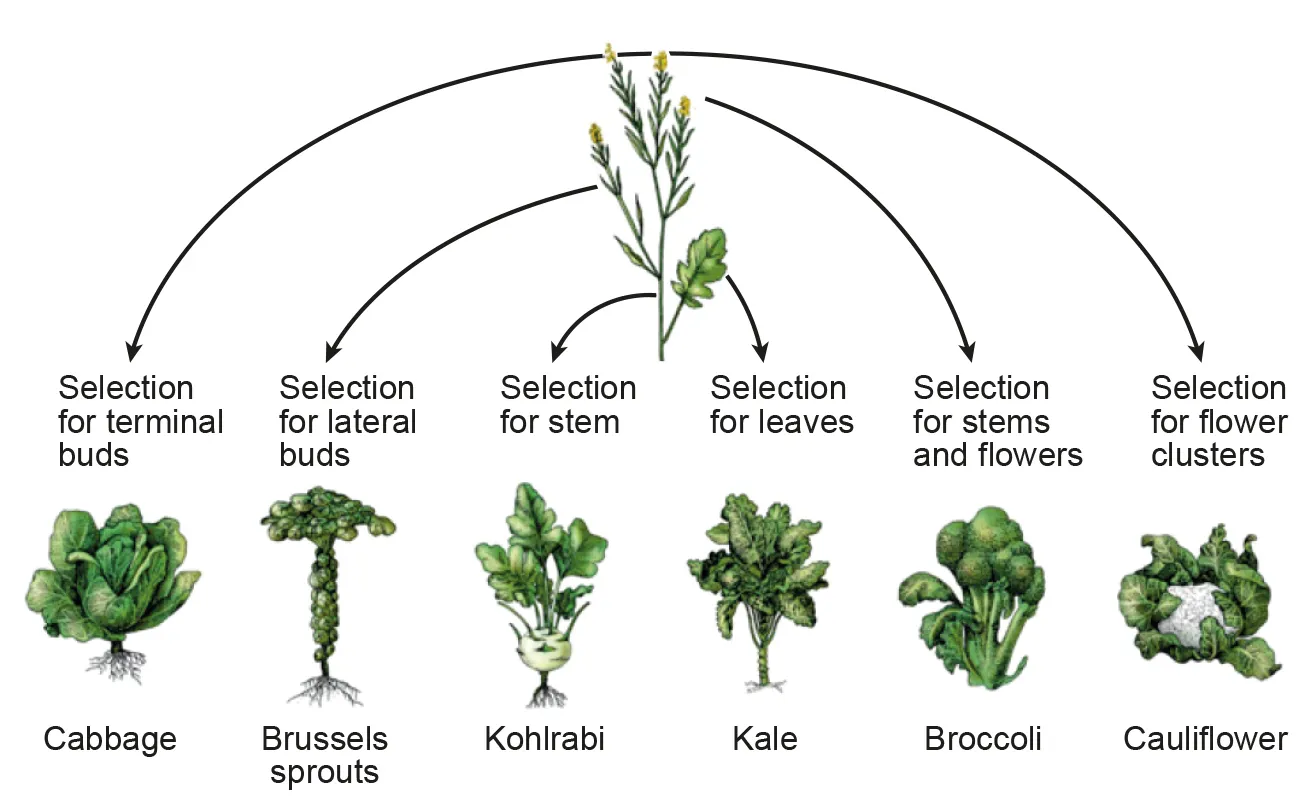
A4.1.3 Evidence for evolution from selective breeding of domesticated animals and crop plants
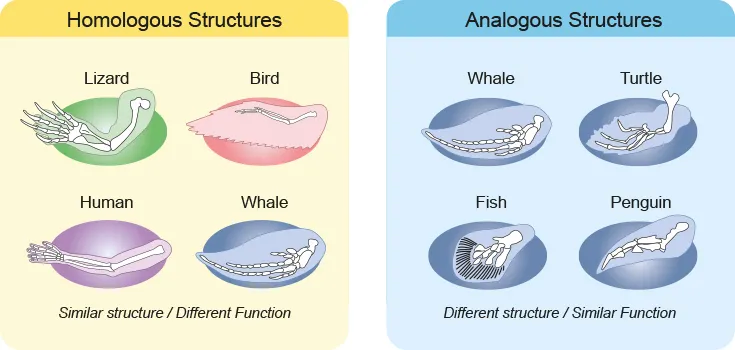
A4.1.4 Evidence for evolution from homologous structures
A4.1.5 Convergent evolution as the origin of analogous structures
A4.1.6 Speciation by splitting of pre-existing species
A4.1.7 Roles of reproductive isolation and differential selection in speciation
A4.1.8 Differences and similarities between sympatric and allopatric speciation (HL only)
A4.1.9 Adaptive radiation as a source of biodiversity (HL only)
A4.1.10 Barriers to hybridization and sterility of interspecific hybrids as mechanisms for preventing the mixing of alleles between species (HL only)
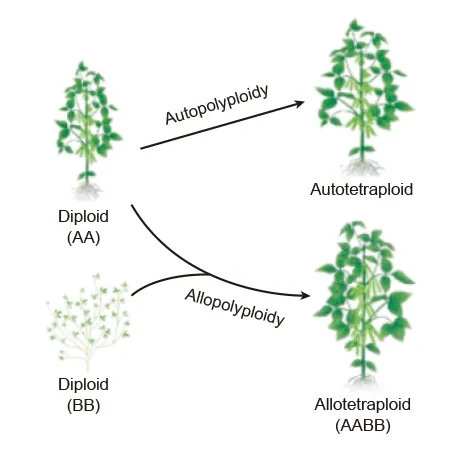
A4.1.11 Abrupt speciation in plants by hybridization and polyploidy (HL only) |
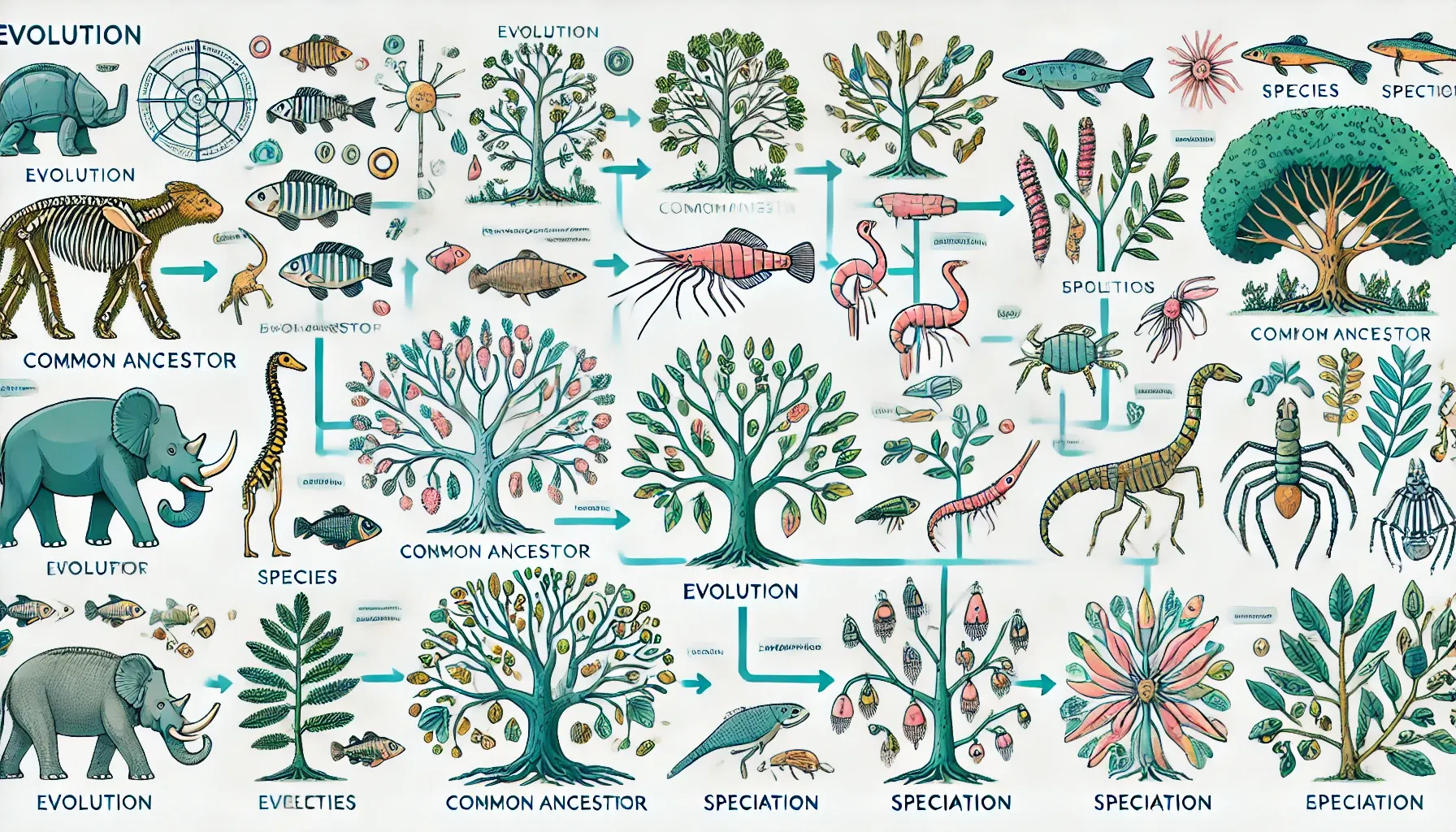
Evolution
Change in the heritable characteristics of a population
•
Lamarck: acquired characteristics are inherited
•
Darwin: genetic variation within a population leads to selection pressures that allow organisms that are better adapted to the environment to survive and reproduce
Evidence for evolution
Nucleotide and 𝛼𝛼 sequences
The more closely related two species are, the fewer differences in sequence
Selective breeding (artificial selection)
Selecting plants and animals with desirable traits for breeding
Homologous structures
Anatomical features that are similar in basic structure despite differences in function
•
Implies common ancestry
•
Result of divergent evolution
e.g. Pentadactyl limb: amphibians, birds, reptiles, mammals
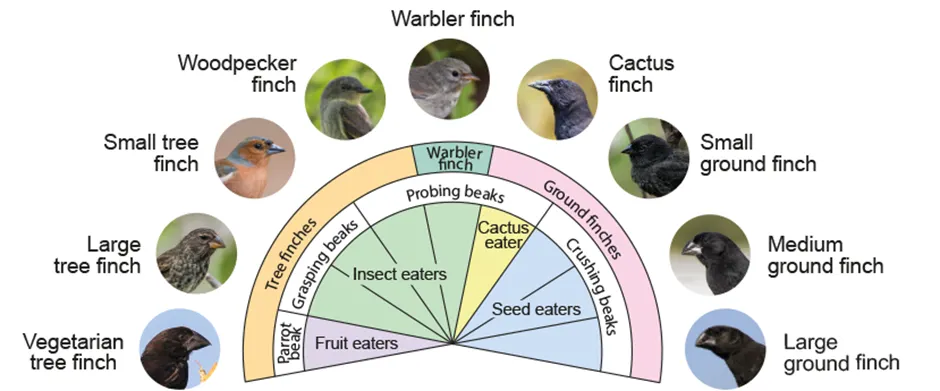
e.g. Darwin’s finches’ beaks: different shape depending on diet
Fossil record
Shows changes over time in a species
Shows intermediate stages in evolution
Fossilized organisms are different from existing ones yet share features with existing organisms


Convergent evolution
Independent evolution of similar features in species with distinct lineages
•
Different species occupy the same habitat and are thus subjected to the same selection pressures
•
This causes common adaptations to be selected in different species, resulting in functional similarity → “analogous structures”
Speciation
Formation of new species
•
Gradual divergence of populations due to natural selection → changes in the gene pools of separated populations → interbreeding becomes impossible


*(AHL)
Different modes of speciation
Sympatric | Allopatric |
In the same area | In different areas |
Behavioral isolation: different routines
Temporal isolation: different mating seasons | Geographic isolation: prevents movement of species |


Adaptive radiation
Species arising from a common ancestor occupy a range of ecological roles
•
A source of biodiversity
•
e.g. Galapagos finches’ beaks
Hybridization
Crossbreeding of different species that produces sterile offspring
•
e.g. mule = horse x donkey
•
Prezygotic barriers: differences in habitat, mating behavior, mating season
•
Postzygotic barriers: hybrids die prematurely or are infertile
Polyploidy
Gain of one or more sets of chromosomes
•
Due to failure of cell division, causes abrupt speciation in plants (wheat, peanut, strawberry)
•
Diploid + haploid → triploid
•
Diploid + diploid → tetraploid