Mission
People
Join Us
Pricing
FAQ
Mentoring Program Curriculum (1)
/
Subjects
/
Physics
/
Topics
/
E. Nuclear and quantum physics
Mentoring Program Curriculum (1)
/
Subjects
/
Physics
/
Topics
/
E. Nuclear and quantum physics
Share
Mission
People
Join Us
Pricing
FAQ
E. Nuclear and quantum physics
Created
2024/06/24 05:19
Tags
갤러리 보기
Search
Topics
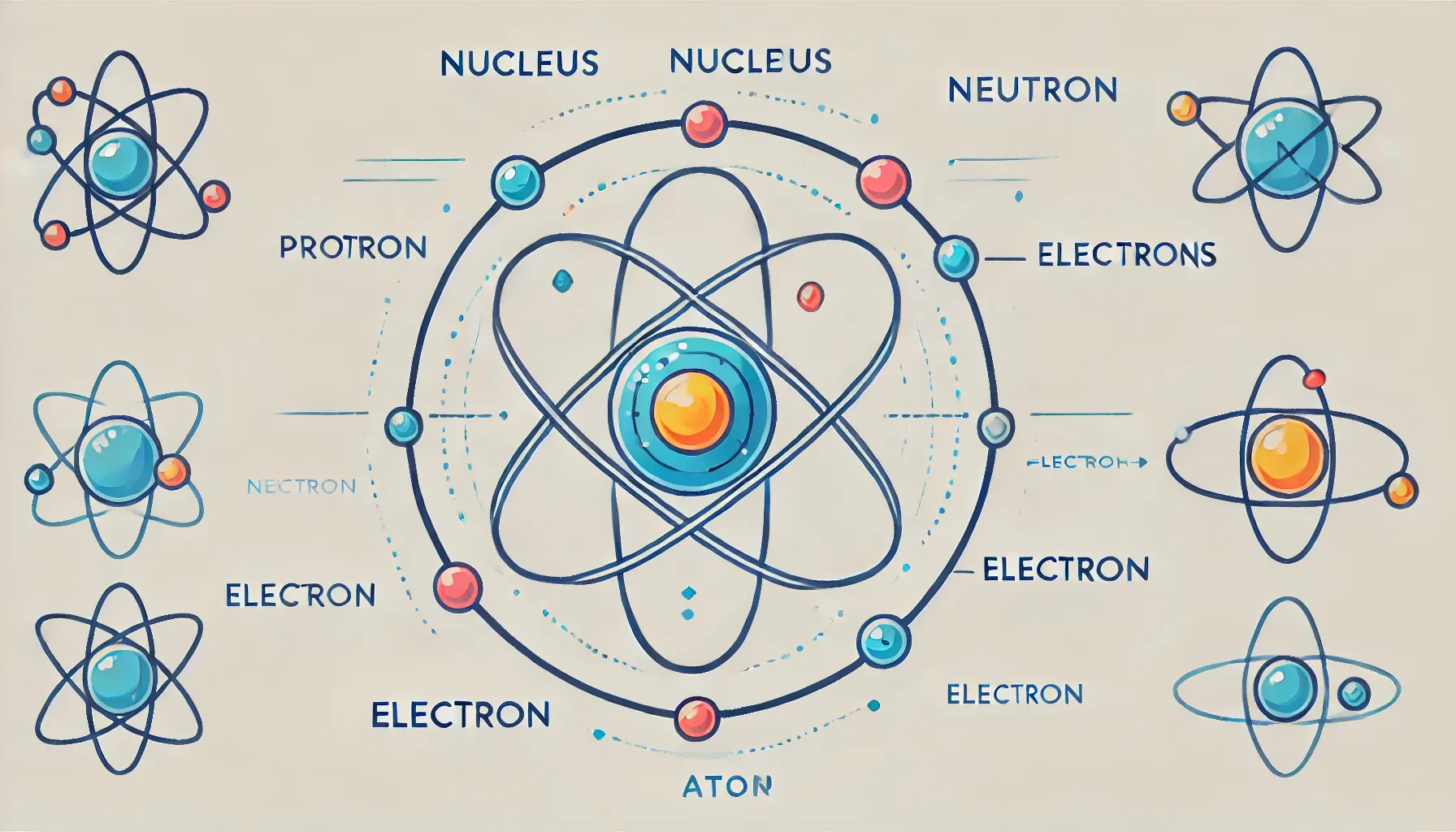
E.1.1 Discrete Energy
Discrete Energy Level and Spectrums
•
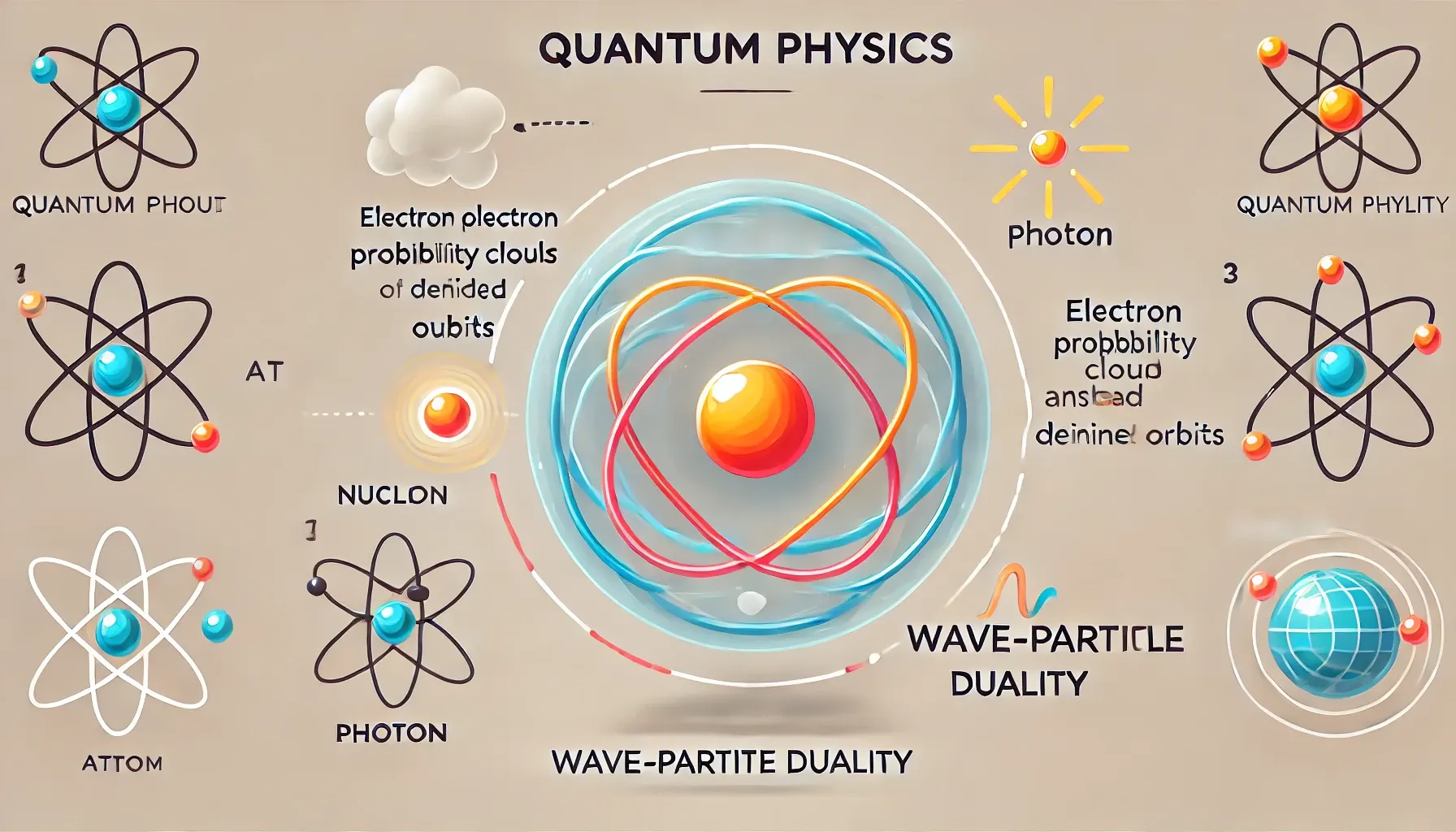
Photons are fundamental particles that make up all forms of electromagnetic radiation
•
A photon is a massless quantum of electromagnetic energy
E.1.1-1 Diagrams and equations explaining the duality of light
•
means that the energy is not transferred continuously but as discrete packets of energy
E.1 Structure of the Atom
E.2.1 Photoelectric Effect:
E.2.1-1 Photoelectric effect from the metal surface
•
Photoelectric effect is the emission of electrons when electromagnetic radiation, such as light, hits a material.
•
Electrons emitted in this manner are called photoelectrons.
•
This effect was experimentally found by Rober Einstein, the results of the experiment disagree with classical electromagnetism, which predicts that continuous light waves transfer energy to electrons, which would then be emitted when they accumulate enough energy.
•
The experiments instead show that the electrons are emitted only when the light has enough frequency, regardless of the light’s intensity or duration of exposure.
E.2 Quantum Physics
E.3.1 Radioactive Decay
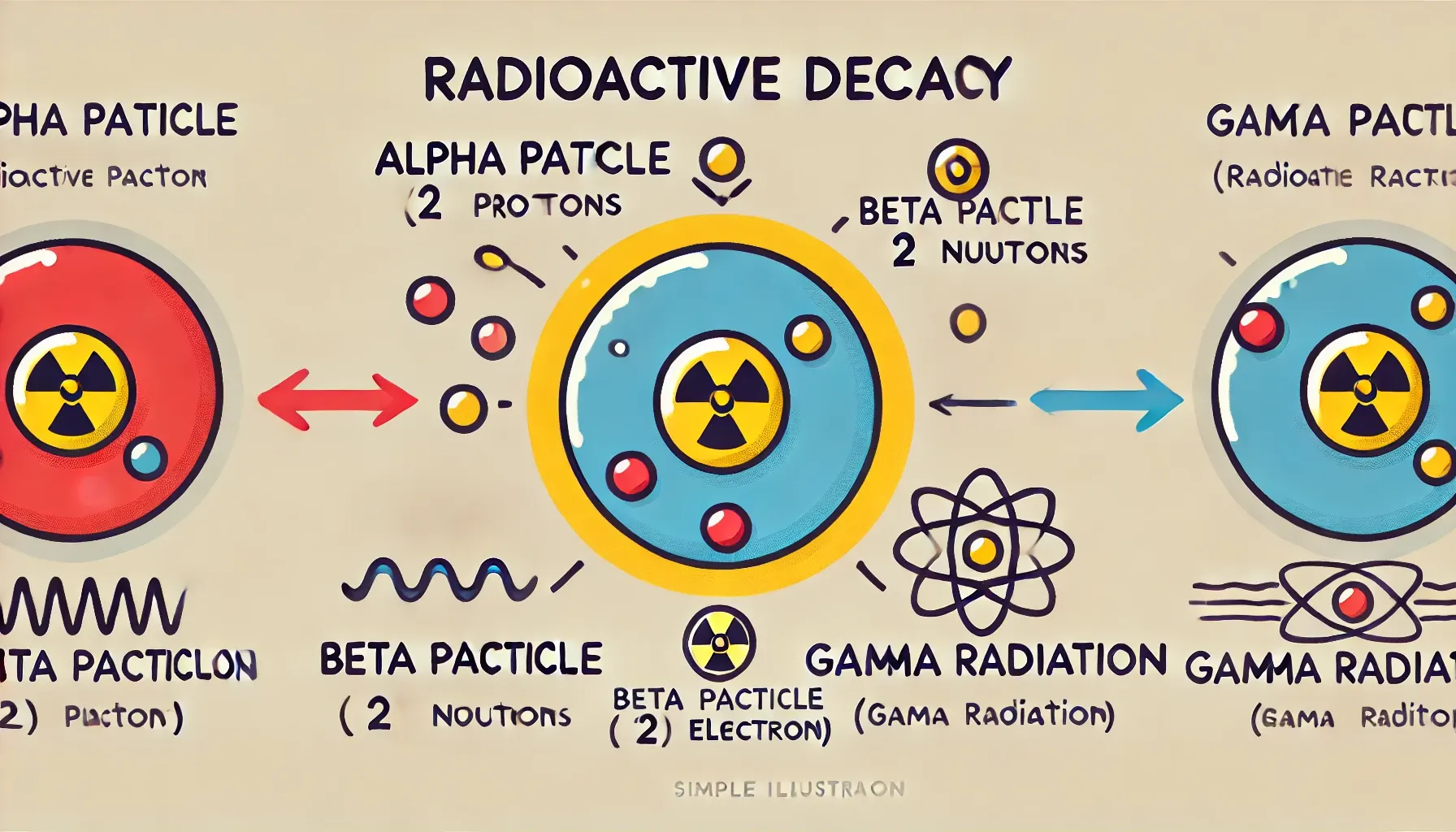
Radioactive decay and Rate of decay
•
Rate of decay is proportional to the number of particles left have not decayed
•
Activity A : rate of radioactive decay
A
=
Δ
N
Δ
t
A = \frac{\Delta N}{\Delta t}
A
=
Δ
t
Δ
N
Particles and Their Symbols
E.3 Radioactive Decay
E.4.1 Fusion and Fission
•
The greater the binding energy per nucleon, the more stable the nucleus
E.4.1-1 Graph of nucleon numbers and and average binding energy per nucleon
•
As shown in the figure above, nickel Ni-62 has the highest average binding energy per nucleon
•
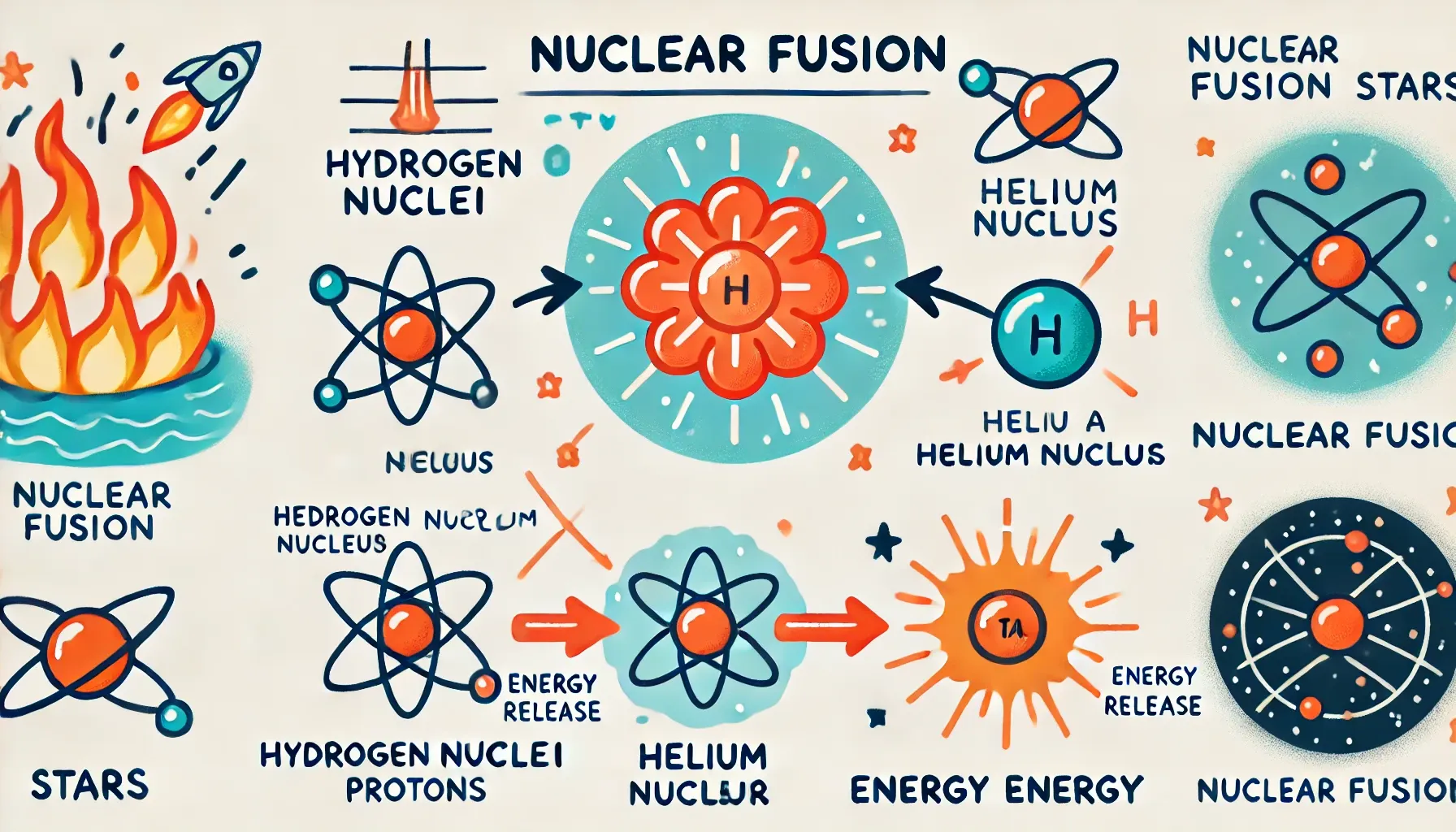
Elements to the left of Ni become more stable through nuclear fusion (light nucleis form into a heavier one)
◦
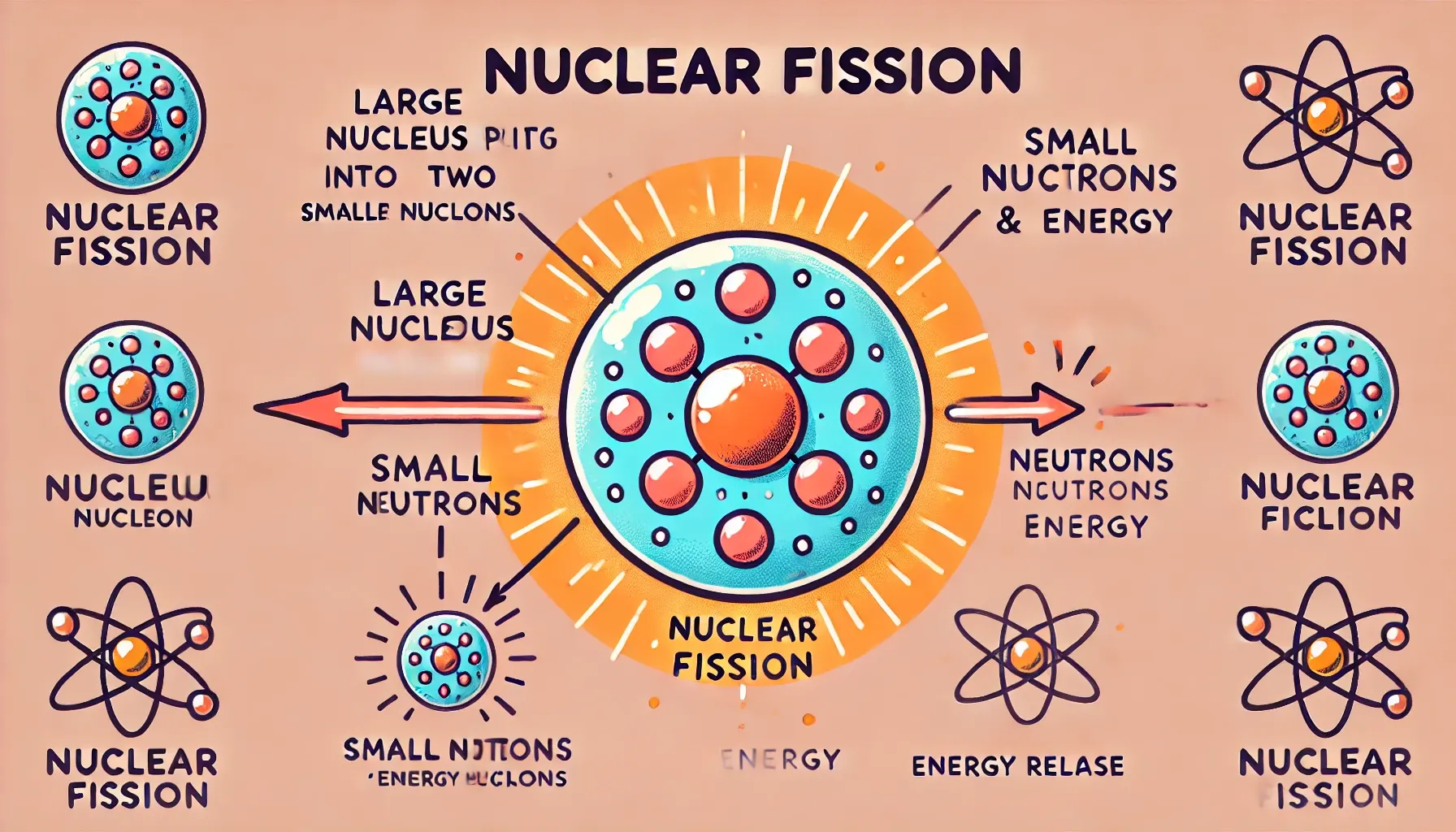
Elements to the right of Ni become more stable through nuclear fission
E.4 Fission
Proton Proton Cycle
E.5.1-1
Energy released
Radiation pressure
E.5.1-2
E.5 Fusion and Stars