

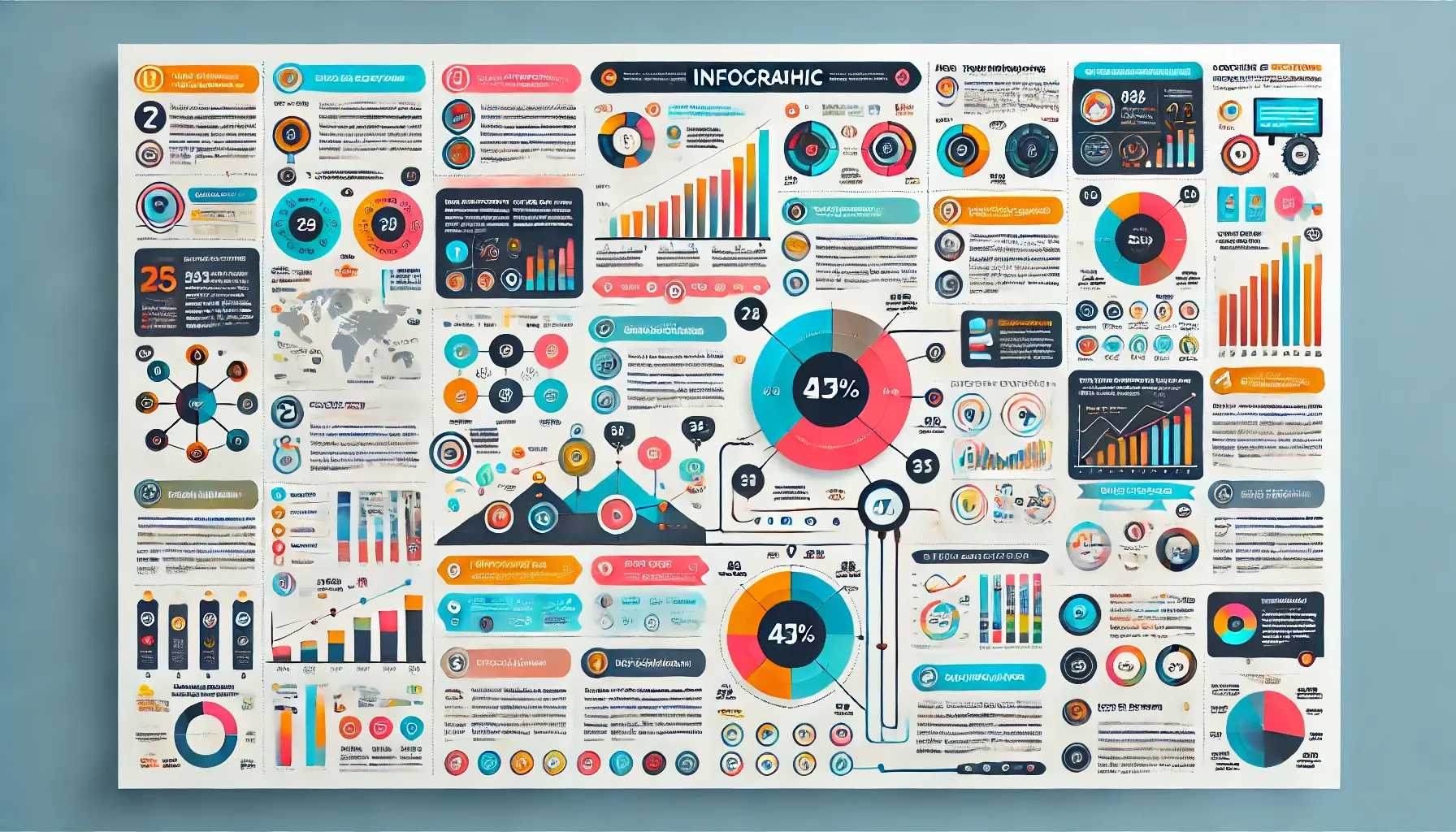
Purpose & Effect
 Purpose Purpose | Effect |
Enhanced Comprehension | Enhanced Understanding |
Fostering Engagement | Retention and Interaction |
Illustrations | Learning and Influence |
Educational Facilities | Academic Impact |
Enhanced Comprehension / Enhanced Understanding
Clarity: Simplify complicated data and clarify concepts into understandable visuals.Accessibility: Make detailed information more accessible to a broader audience through multiple mediums.Efficiency: Convey key messages quickly, allowing viewers to grasp the main points at a glance.Visual Learning: Enhance learning for visual learners through illustrations.Memory: Bitesize facts alongside visual elements are more likely to be remembered than text alone.Fostering Engagement / Retention and Interaction
Visual Appeal: Use attractive visuals to capture and maintain the audience's attention.Interest: Create interest in the subject matter through engaging design.Memory Retention: Help the audience remember information better through visual representation.Increase Reader Retention: Makes information more likely to be retained through fun visual representations.Interaction: Encouraging interaction, shareability, and exploration, especially in digital or interactive infographics.Shareability: Increasing the likelihood of information being shared on social media and other platforms.Illustrations / Learning and Influence
Data Visualization: Transform raw data into visual formats like charts, graphs, and maps.Insights: Highlight trends, patterns, and insights that might not be immediately apparent in text form.Visual Learning: Enhance learning for visual learners through illustrations.Credibility: Enhancing the credibility of the information presented through professional and polished design.Emotional Appeal: Using visuals to evoke emotions and connect with the audience on a deeper level.Educational Facilities / Academic Impact
Student Interaction: Can be used in educational facilities to foster student to student or student to teacher interaction.Ease of Access: Information is easily accessible on all types of education facilitiesWillingness to Learn: Fun and easily digestible information helps encourage learning in students.Knowledge Dissemination: Facilitating the spread of knowledge on a large scale, especially for public awareness campaigns.Examples of Effective Use of Infographics
•
Public Health Campaigns: Using infographics to spread awareness about health issues like vaccination benefits or disease prevention.
•
Business Reports: Presenting quarterly financial data in an easily understandable format for stakeholders.
•
Educational Content: Teaching complex scientific concepts or historical events in schools through visual aids.
•
Social Media: Creating shareable content that communicates key messages quickly and effectively to a broad audience.
By combining the above purposes and effects, infographics become powerful tools for communication, capable of transforming how information is conveyed, understood, and remembered.
Techniques
Infographics use a combination of design, visual, and textual techniques to present information clearly and engagingly. Here are some key techniques used in infographics:
Design | Color Scheme / Typography / Layout and Spacing / Icons and Symbols / Charts and Graphs |
Visual | Imagery / Diagrams / Maps |
Textual | Headings and Subheadings / Bullet Points / Callouts / Statistics and Facts |
Literary | Metaphors and Analogies / Narrative / Quorations / Anecdotes |
Interaction | Interactive Elements / Animations |
Examples of Effective Infographic Techniques
•
Color Coding: Using different colors to categorize information, making it easier to distinguish between different sections.
•
Iconography: Using universally recognized icons to represent concepts (e.g., a light bulb for ideas).
•
Data Simplification: Breaking down complex data into simple charts or graphs to facilitate quick comprehension.
•
Concise Text: Using brief, impactful text to convey the message without overwhelming the viewer.
•
Synesthesia: Using one form of sensory information to stimulate other senses (e.g: tasting words, linking colors to numbers and letters, etc).
By combining these techniques, infographics can effectively communicate complex information in a visually appealing and easily digestible format.
Gallery view
Search


