Mission
People
Join Us
Pricing
FAQ
Mentoring Program Curriculum (1)
/
Subjects
/
Physics
/
Topics
/
D. Fields
Mentoring Program Curriculum (1)
/
Subjects
/
Physics
/
Topics
/
D. Fields
Share
Mission
People
Join Us
Pricing
FAQ
D. Fields
Created
2024/06/24 03:31
Tags
갤러리 보기
Search
D.1.1 Newton's law of gravitation
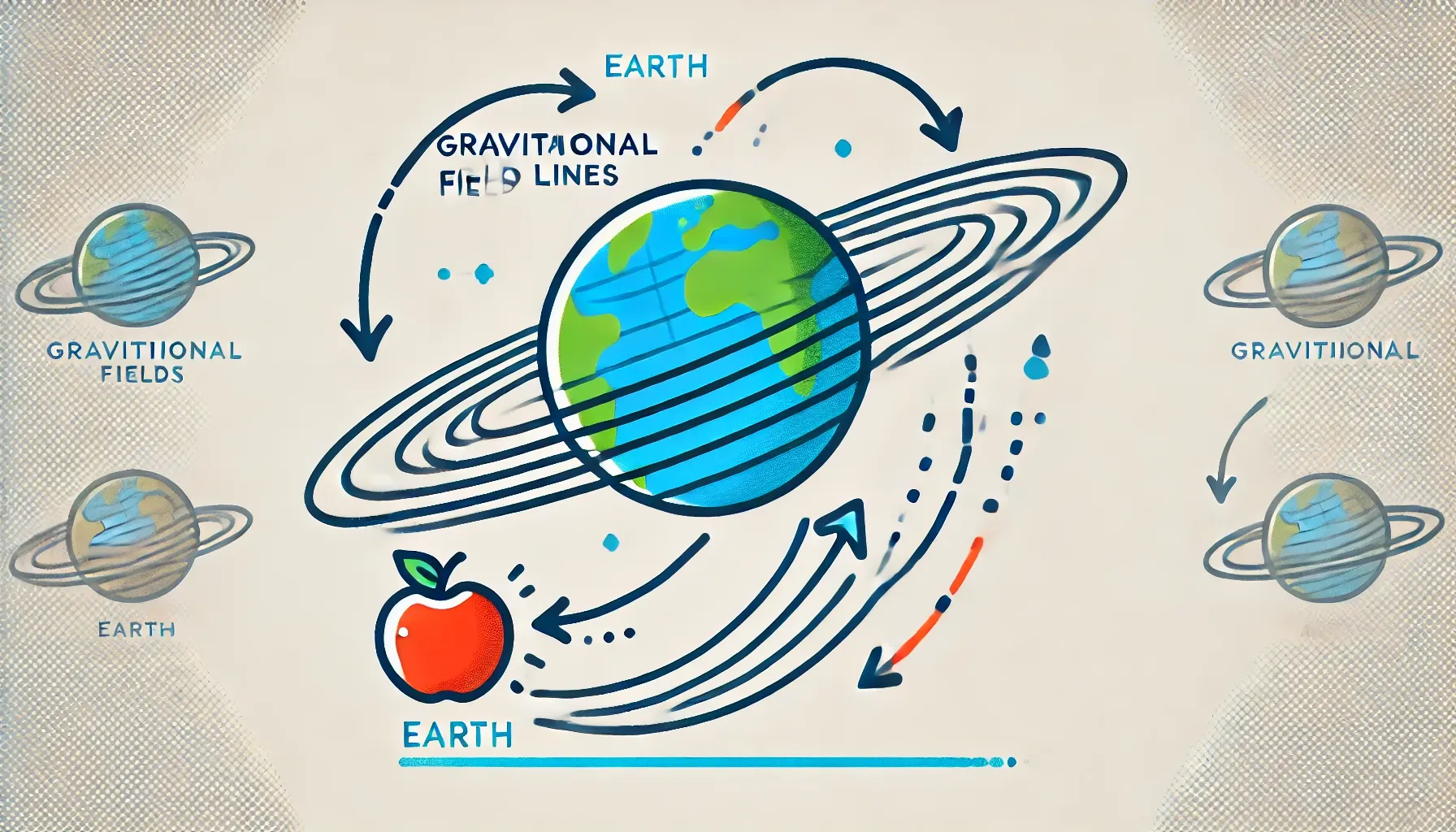
Newton’s law of gravitation
•
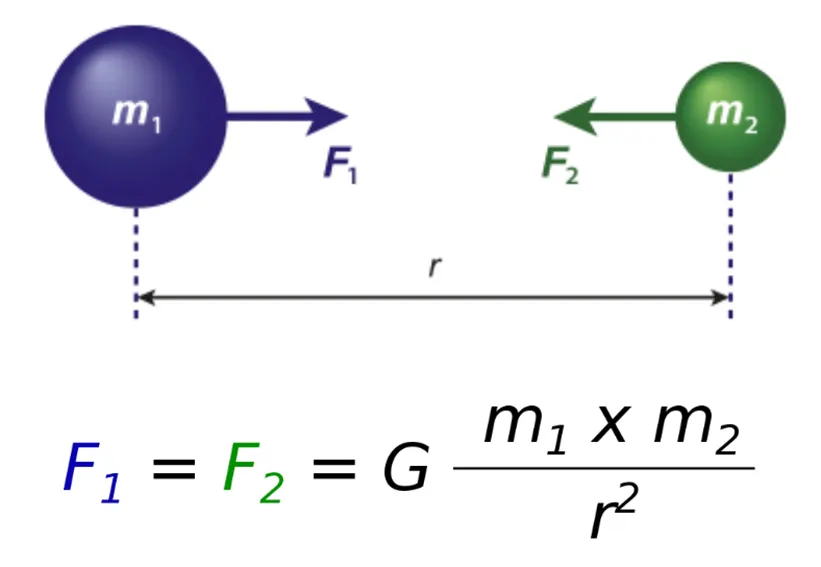
Gravitational force between two objects can be calculated using Newton’s universal law of gravitation
F
=
G
m
1
m
2
r
2
G
=
gravitational
constant
=
6.67
×
10
−
11
m
1
=
mass
of
object
1
,
m
2
=
mass
of
object
2
,
r
=
distance
between
objects
F = \frac{G m_1 m_2}{r^2}\\ G = \textit{gravitational constant} = 6.67 \times 10^{-11}\\ m_1 = \textit{mass of object 1}, \quad m_2 = \textit{mass of object 2}, \quad r = \textit{distance between objects}
F
=
r
2
G
m
1
m
2
G
=
gravitational constant
=
6.67
×
1
0
−
11
m
1
=
mass of object 1
,
m
2
=
mass of object 2
,
r
=
distance between objects
D.1.1-1 Diagram with equation explaining the gravitational force
D.1 Gravitational Fields
D.2.1 Charge and Coulomb Force
Charge
•
The unit of Charge is the coulomb (C), it is a scalar quantity
•
The coulomb is defined as the charge transported by a current of one ampere in one second
•
All electrons are identical with each one having a charge equal to 1.610-19C
•
Opposite Charge attracts, Like charge repel
D.2 Electric and Magnetic Fields
D.3.1 Magnetic fields
Magnetic and Electric Fields
•
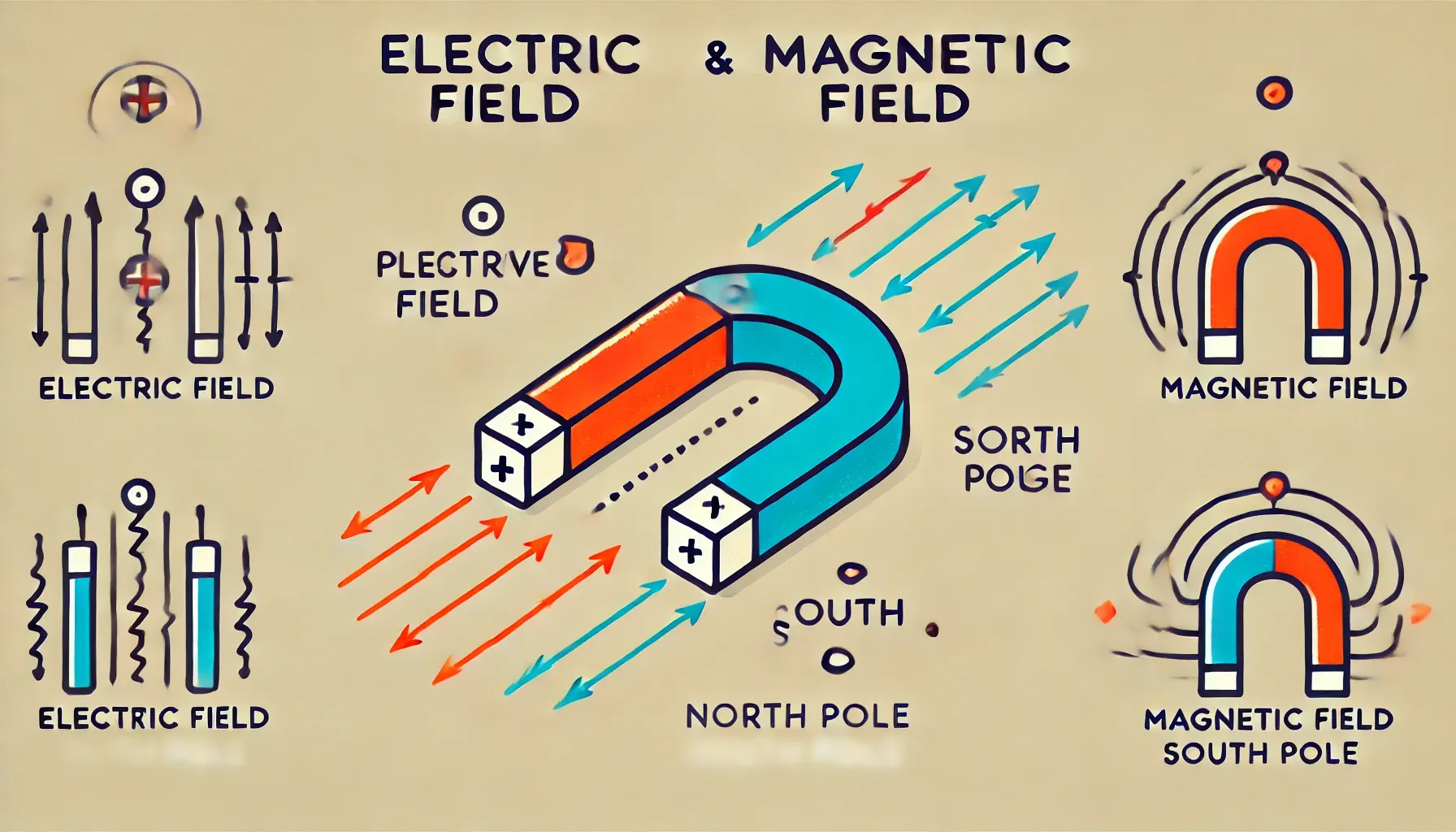
In order to visualize a magnetic field, we should once again use the concept of field lines
•
This time the field lines are lines of magnetic field- also called flux lines
◦
If a test magnetic north pole is placed in a magnetic field, it will feel a force
◦
The direction of the force is shown by the direction of the field lines
◦
The strength of the force is shown by how close the lines are to one another
D.3.1-1 Magnetic Field around magnets
D.3 Motion in Electromagnetic Fields
D.4.1 Electromotive Force (emf)
Electromagnetic Induction
•
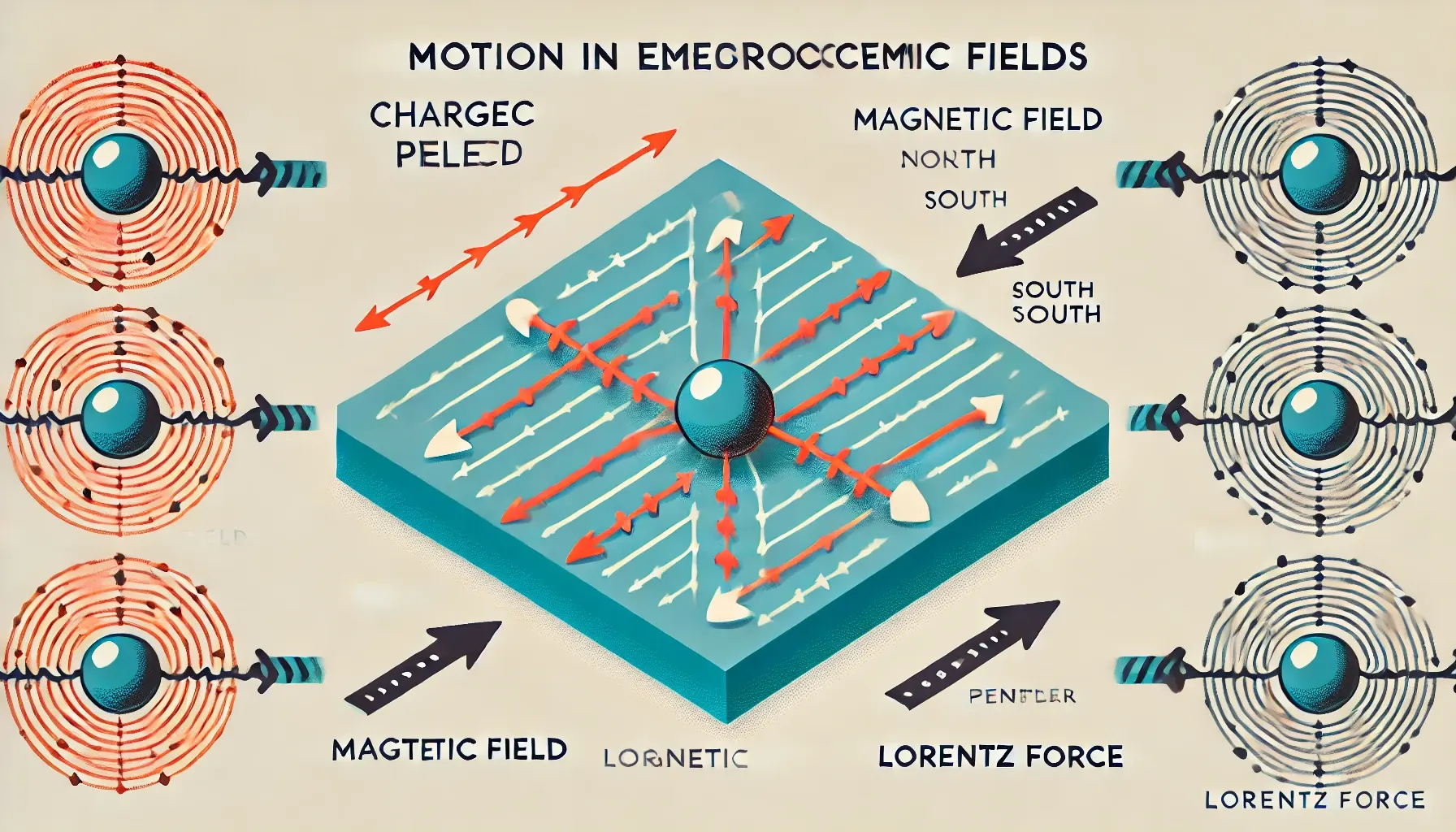
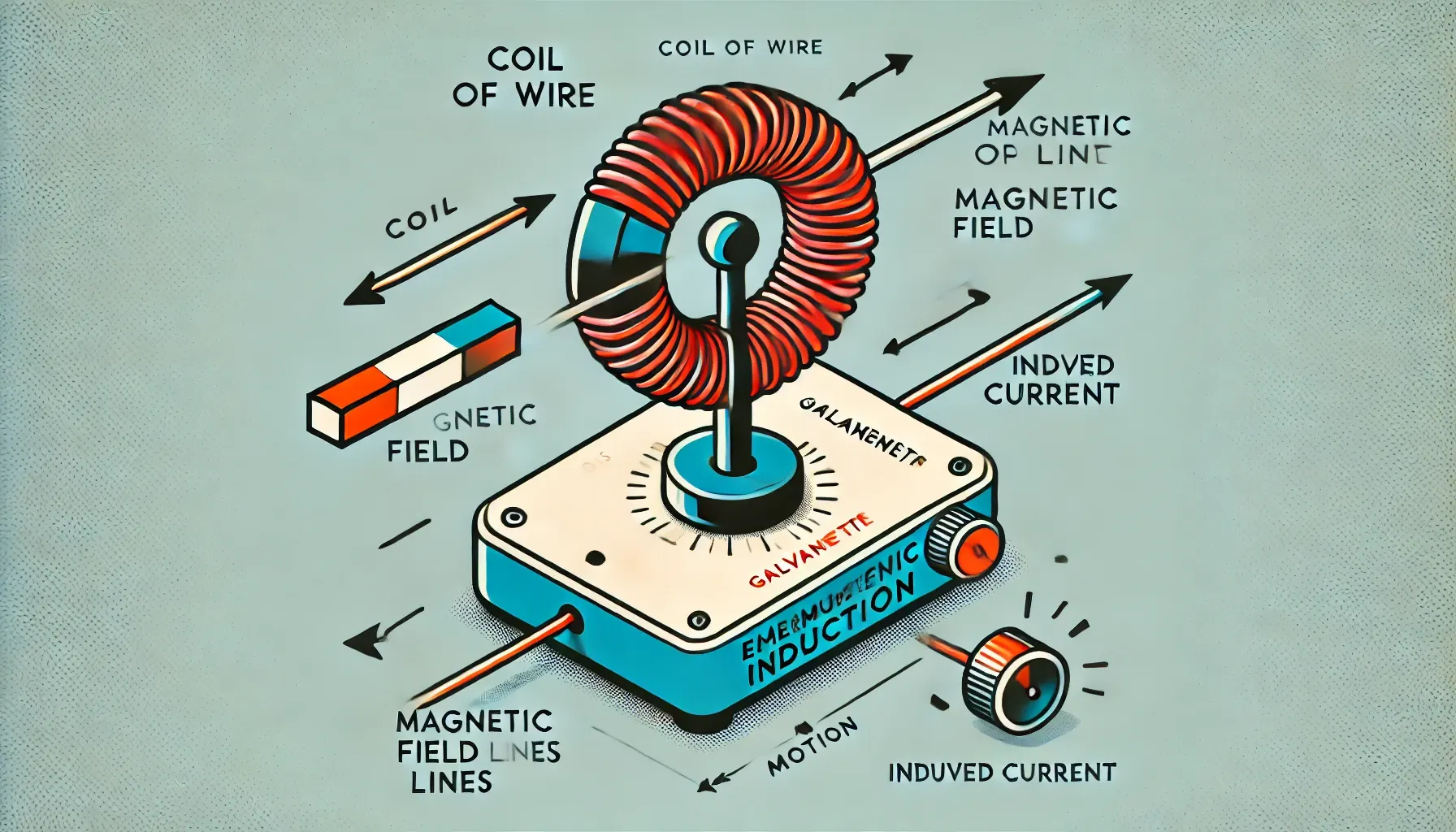
As in topic 5, the phenomenon that states the force acts on the charge when an electric charge moves in the magnetic field.
Solenoid Experiment
•
When moving a magnet in and out of the coil, an electrostatic current is generated through the solenoid.
•
Several rules of the phenomenon:
◦
Current appears when there is a relative motion of the magnet; if there is no motion, the current generated will be zero
◦
Current flows in the direction to oppose the motion of the magnet
◦
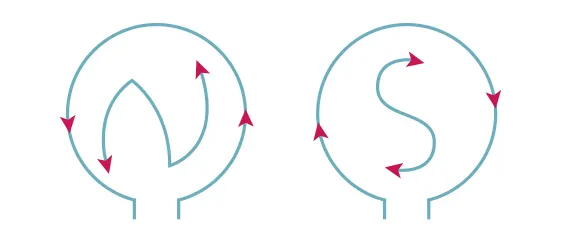
Clockwise flow at the end represents the south pole, and anti-clockwise flow represents the north pole
D.4.1-1 Direction of the magnetic force on the solenoid
D.4 Induction