

갤러리 보기
Search
 Understanding points
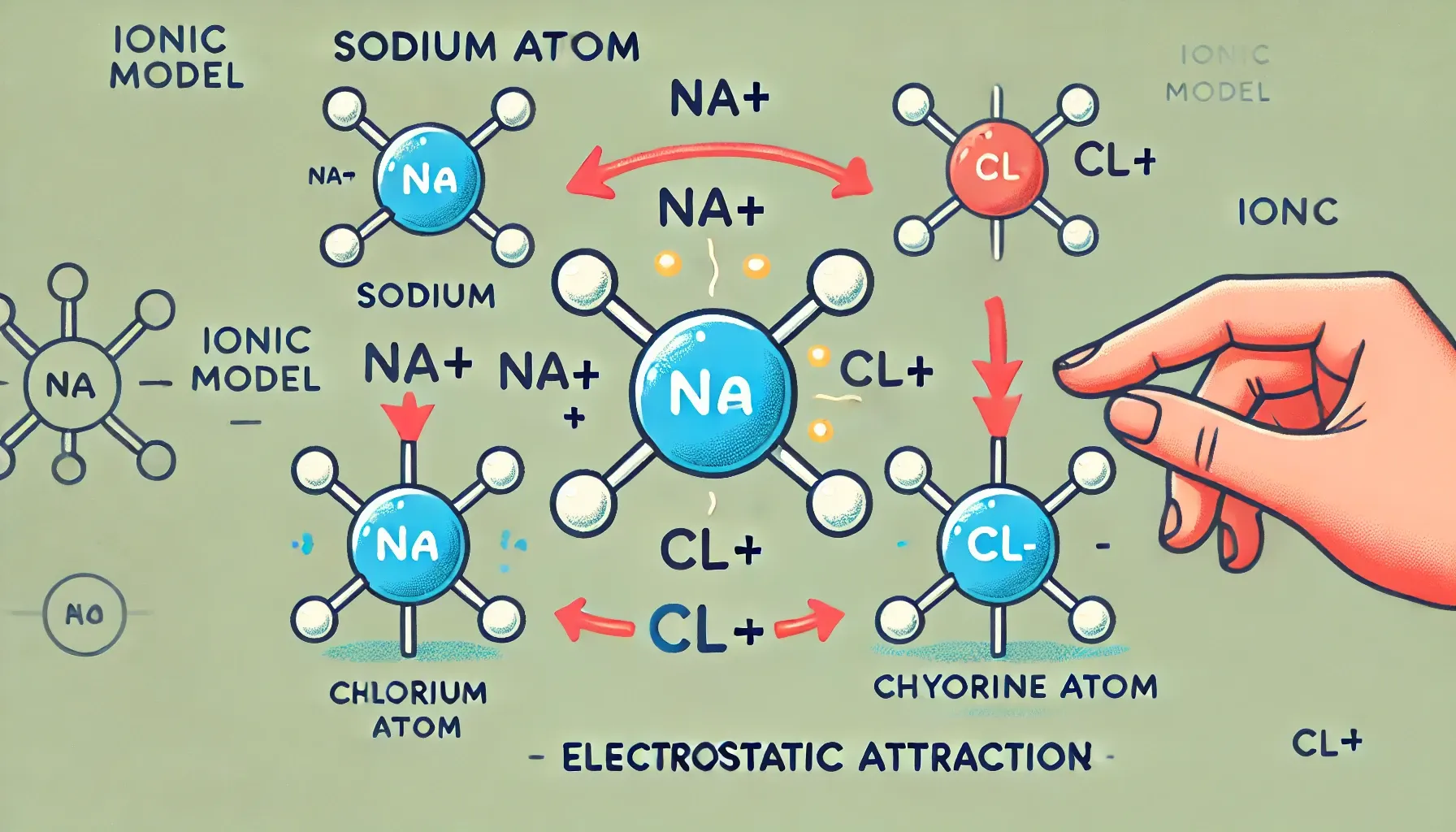
Structure 2.1.1—When metal atoms lose electrons, they form positive ions called cations.
When non-metal atoms gain electrons, they form negative ions called anions.
Structure 2.1.2—The ionic bond is formed by electrostatic attractions between oppositely charged ions.
Structure 2.1.3—Ionic compounds exist as three-dimensional lattice structures, represented by
empirical formulas. |
Ionic bond
•
Transfer of electron(s) from a metal to a non-metal and the resulting electrostatic attraction between oppositely charged ions
•
Metals lose valence electrons to form positive ions (cations)
•
Non-metals gain electrons to form negative ions (anions)
2.1 The ionic model
Understanding points
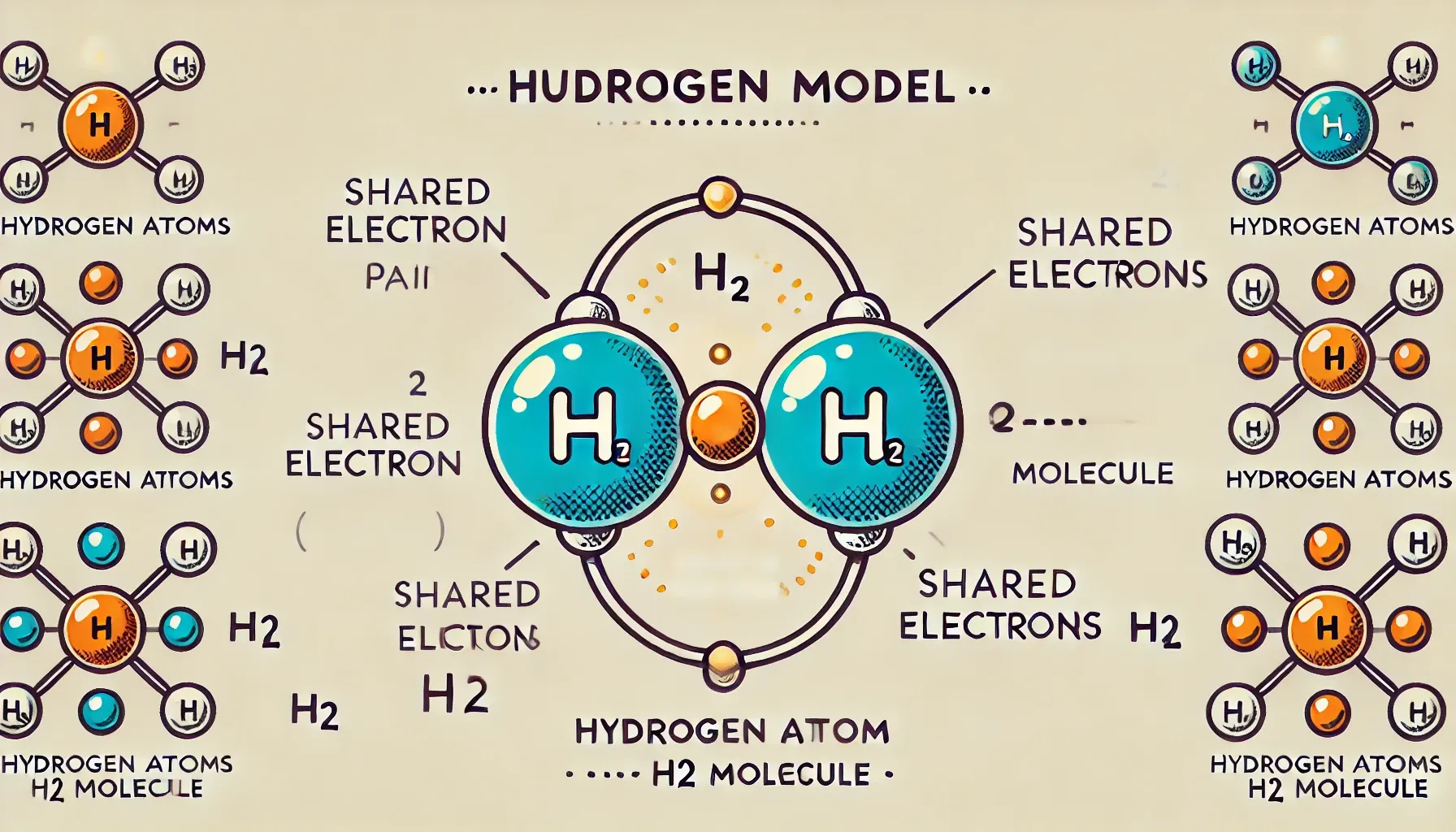
Structure 2.2.1—A covalent bond is formed by the electrostatic attraction between a shared pair of electrons and the positively charged nuclei.
Structure 2.2.2—Single, double and triple bonds involve one, two and three shared pairs of
electrons respectively.
Structure 2.2.3—A coordination bond is a covalent bond in which both the electrons of the shared pair originate from the same atom.
Structure 2.2.4—The valence shell electron pair repulsion (VSEPR) model enables the shapes of
molecules to be predicted from the repulsion of electron domains around a central atom.
Structure 2.2.5—Bond polarity results from the difference in electronegativities of the bonded
atoms.
Structure 2.2.6—Molecular polarity depends on both bond polarity and molecular geometry.
Structure 2.2.7—Carbon and silicon form covalent network structures.
Structure 2.2.8—The nature of the force that exists between molecules is determined by the size
and polarity of the molecules. Intermolecular forces include London (dispersion), dipole-induced
dipole, dipole–dipole and hydrogen bonding.
Structure 2.2.9—Given comparable molar mass, the relative strengths of intermolecular forces are generally: London (dispersion) forces < dipole–dipole forces < hydrogen bonding.
Structure 2.2.10—Chromatography is a technique used to separate the components of a mixture
based on their relative attractions involving intermolecular forces to mobile and stationary phases. |
Covalent bond
•
Sharing of electron pair(s) between two atoms and resulting electrostatic attraction between (-ve) shared electron pair(s) and (+ve) two bonding nuclei
Bond order | Example | Electrons involved | |
Single bond | 1 | F-F, C-C | 2 |
Double bond | 2 | O=O, C=C | 4 |
Triple bond | 3 | N≡N, C≡C | 6 |
2.2 The covalent model
-1.webp&blockId=0fc07ef4-782b-4813-a086-0b8deec578ec)
Understanding points
Structure 2.2.11—Resonance structures occur when there is more than one possible position for a double bond in a molecule. (AHL)
Structure 2.2.12—Benzene, C6H6, is an important example of a molecule that has resonance. (AHL)
Structure 2.2.13—Some atoms can form molecules in which they have an expanded octet of electrons. (AHL)
Structure 2.2.14—Formal charge values can be calculated for each atom in a species and used to determine which of several possible Lewis formulas is preferred. (AHL)
Structure 2.2.15—Sigma bonds (σ) form by the head-on combination of atomic orbitals where the electron density is concentrated along the bond axis. (AHL)
Structure 2.2.16—Hybridization is the concept of mixing atomic orbitals to form new hybrid
orbitals for bonding. (AHL) |
Resonance structures
•
Occurs when there is more than one position possible for double/triple bonds in a molecule
◦
Requires a network of alternating double/single bonds (at least 1 of each)
◦
Indicated by double headed arrow
•
Individual structures are called resonance forms
•
Actual electronic structure of species is called resonance hybrid: hybrid of the two resonance forms with delocalized e-s
2.2 The covalent model (AHL)
2.3 The metallic model
2.4 From models to materials
-1.webp&blockId=91269b52-7edc-4ec5-8309-47ba90ca260d)
2.4 From models to materials (AHL)